Recently, information about the so-called 40% discount on purchasing train tickets has appeared on many social and second-hand platforms. Some passengers place orders to buy tickets because they are eager to get cheaper. Little do they know that there is a new electronic fraud and money laundering chain behind such low-priced tickets, and they may become money laundering tools without knowing it.
The case investigated by the police showed that Ms. Lu, a citizen, bought low-price train tickets on a second-hand platform, and the police came to verify the situation. This case revealed the money laundering behind the low-price train tickets.
It is reported that regular train ticket discounts are only launched through the 12306 official channel, and the China Railway Group has never authorized any third-party platform to sell tickets.
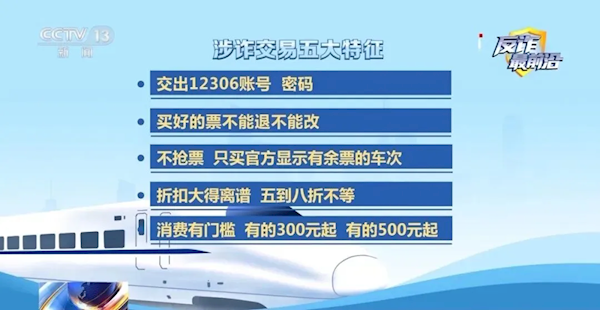
CCTV Legal Online reported that,These low-price tickets purchased on behalf of others have many unusual features: buyers are required to hand over their 12306 account and password, tickets cannot be refunded or changed, only trains with remaining tickets are purchased, discounts are as low as 50 to 20% off, and there is a minimum consumption threshold., these are the keys to identifying such scams.
This new money laundering chain has a clear division of labor and involves four roles: overseas electronic fraud gangs, informal order-taking platforms, second-hand platform sellers and ticket-buying passengers. After passengers pay the discounted ticket price on the platform, the seller does not purchase the ticket himself, but transfers the information to an informal platform. In the end, an overseas electronic fraud gang uses the stolen money to purchase the ticket in full at 12306.
Passengers get the tickets, and the sellers earn the difference. Through this process, the electronic fraud gangs convert the stolen money into normal travel consumption, avoiding police tracking. The passengers' ticket purchase behavior actually becomes a part of their money laundering.
After careful investigation, the police carried out simultaneous arrest operations in 16 provinces, autonomous regions and municipalities across the country. Within 40 minutes, 45 core suspects were arrested, a total of 56 people were arrested, and 670 online stores involved in the case were shut down.