Approximately 400 billion cups of coffee are consumed globally each year, resulting in approximately 18 million tons of wet coffee grounds, which is roughly equivalent in weight to three Giza pyramids. The vast majority of coffee grounds end up in landfills. However, these high-humidity organic wastes themselves have the potential to be converted into fuels, but their high water content has always been a key technical obstacle in the economic utilization process.
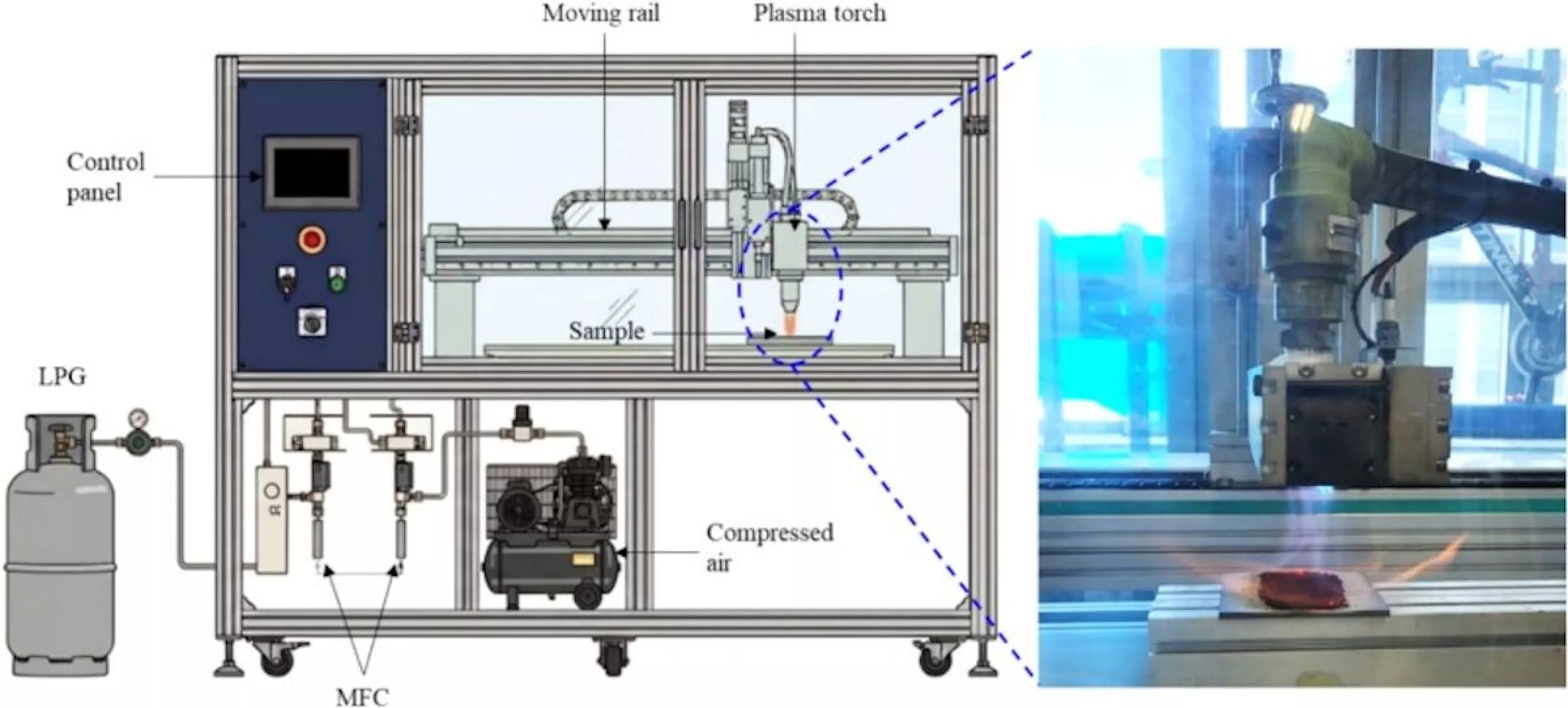
The scientific research team of the Korea Institute of Geological Resources (KIGAM) recently announced that they have developed a world-first "Flame Plasma Pyrolysis" (FPP) technology that can directly and quickly convert coffee grounds into high-grade solid biofuels when they are still in a high water content state. The entire process takes only about 90 seconds at the earliest. This technology instantly evaporates water by spraying a plasma flame with a temperature of 800 to 900 degrees Celsius, creating a popcorn-like swelling effect inside the particles, quickly turning the coffee grounds structure into porous biochar (biochar).
The scientific research team stated that the fuel performance of this new biochar is close to that of anthracite charcoal, while completely eliminating the time-consuming and energy-consuming pre-drying process in the traditional process. More importantly, the FPP process instead regards moisture as a favorable factor and converts it into a steam activator that promotes reactions and improves product quality, thereby achieving integrated processing of rapid carbonization and drying while maintaining high moisture content of raw materials.
The research paper was published in the journal Chemical Engineering. The moisture content of the coffee grounds used in the experiment is about 55%, which is still a typical high-humidity waste. During the process, the researchers used flame plasma generated by the combustion of liquefied petroleum gas (LPG) and compressed air to process the wet coffee grounds under normal pressure conditions. It only took 90 seconds to complete drying and carbonization, reducing the quality of the raw material by about 83.3%, and forming biochar particles with a loose structure and porous structure.
Test results show that the low-level calorific value of the biochar is about 29 MJ/kg, which means that every kilogram of fuel burned can release 29 megajoules of heat energy; in comparison, the calorific value of ordinary wood is usually 15~20 MJ/kg. The fixed carbon content of biochar has almost tripled, from the original 15.6% to 46.2%, which means that a larger proportion of the material is converted into high-energy carbon structures, which is beneficial to improving combustion efficiency and durability.
In terms of environmental performance, the FPP process completely removes sulfur compounds from the raw materials and avoids the emission of sulfur oxides that can easily cause acid rain and air pollution from the source. The specific surface area of the material has increased significantly from only 1.5 m²/g to 115.4 m²/g, which is close to the level of activated carbon. In addition to fuel, it also has potential applications such as water purification, air filtration and industrial adsorption. At the same time, the process produces almost no smoke and tar, helping to significantly reduce secondary pollutant emissions common in traditional biomass conversion processes.
Speed is another highlight of this technology. Traditional biomass conversion methods such as hydrothermal carbonization and torrefaction usually require processing times ranging from 30 minutes to 6 hours. KIGAM's FPP process only takes about 90 seconds to complete similar conversion, and the efficiency is up to about 240 times faster than traditional processes. This ultra-high processing rate makes it more realistic and feasible in large-scale waste resource utilization.
It is worth noting that this system also avoids the common problem of "high power consumption" in conventional plasma processing technology. The research team did not use high-energy-consuming electric plasma equipment, but used LPG combustion and compressed air to generate flame plasma, thereby reducing overall energy consumption while still providing the extremely high temperatures required to complete rapid conversion. This design further improves the economics and energy efficiency of the process.
The scientific research team pointed out that the biggest advantage of this technology is that "wet materials are directly fed into the furnace", which completely eliminates the drying process and is expected to reduce the energy consumption and operating costs of the entire system. Although the current research object is focused on coffee grounds, the scope of application of FPP technology is not limited to this. In the future, it can be extended to a variety of high-moisture organic wastes such as food waste, agricultural residues and even sludge, becoming a widely applicable waste-to-energy solution.
Dr. Park Taijun (transliteration), the first author of the paper, said: "This technology provides a new paradigm, so that waste is no longer regarded as just a burden to be treated, but as a valuable energy resource. We plan to expand this process to more high-moisture organic waste categories and continue to optimize the process to promote its commercial application on an industrial scale." The research team also emphasized that the FPP system equipment is relatively compact and is expected to be deployed in an on-site "waste-energy integration" system at the source to achieve on-site processing and on-site energy supply.
According to information released by the Korea Institute of Geological Resources through the EurekAlert platform, the further development direction of this technology will focus on process stability, continuous operation capabilities and parameter optimization of different waste types. The goal is to build it into a modular energy device that can be promoted in multiple scenarios such as urban solid waste treatment, agricultural waste management and sewage treatment plants in the medium and long term, providing a new technical path for building a cleaner and more efficient renewable solid fuel system.