MOIA America, a subsidiary of Volkswagen, and Uber announced that they have begun testing self-driving minibuses in Los Angeles, USA, in preparation for the commercial self-driving taxi service planned to be launched by the end of 2026. According to the plans previously announced by both parties, they will be based on the self-driving version of Volkswagen's electric ID. Buzz minibus and will successively land in many American cities in the next ten years. Los Angeles is the first pilot city to be launched.
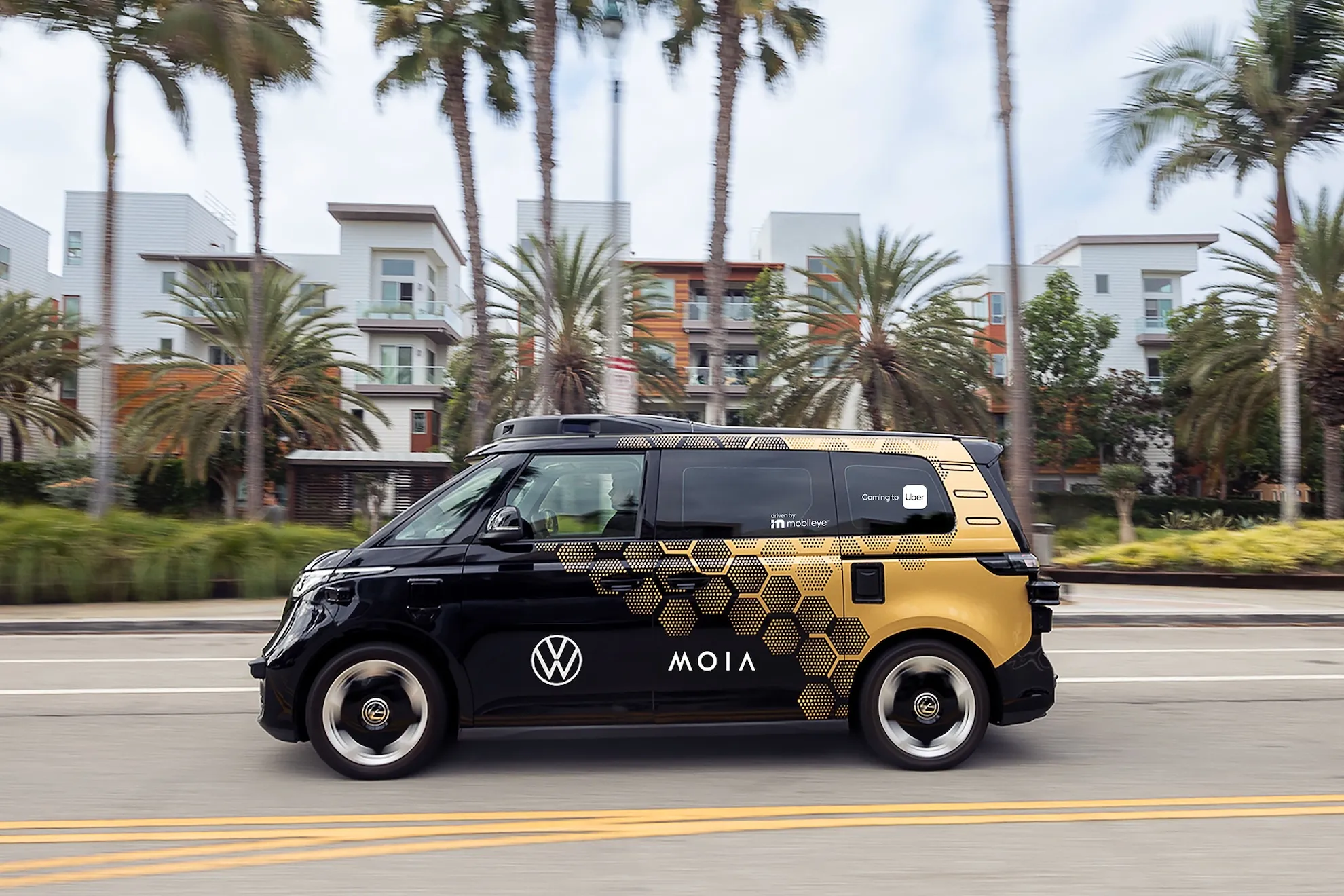
According to the company, the test will start in the next few weeks, and approximately 10 self-driving ID. Buzz vehicles will initially be deployed in Los Angeles for road testing and operational demonstrations. The mass-produced driverless model can carry 4 passengers and is designed for daily urban travel scenarios. Paul DeLong, MOIA America's president of commercialization, said Los Angeles "has a long history of shaping car culture and embracing new mobility technologies" and is therefore a "natural market" to introduce its self-driving ride-hailing service.
Since announcing their partnership last year, MOIA America and Uber have established a joint operations facility in Los Angeles for day-to-day fleet management and dispatch. The current test scale is still small, but Volkswagen said that the fleet size will be expanded to more than 100 self-driving ID. Buzz vehicles in the future. In the early stages of the project, vehicles will be equipped with an on-board safety officer to take over if necessary; Volkswagen does not expect that truly fully driverless operations will begin until 2027. Sascha Meyer, chief commercial officer of Volkswagen's self-driving travel business, said that this phased advancement reflects the accelerated implementation of the company's strategy of "bringing self-driving travel into real operating scenarios."
MOIA America is the new brand name for Volkswagen's autonomous driving business in the United States, which until earlier this year used the name "Volkswagen ADMT." The MOIA brand itself is no stranger. As early as 2016, Volkswagen launched this independent travel brand at the TechCrunch Disrupt London conference. It is currently carrying out shared travel services in Europe and conducting autonomous driving technology tests in cities such as Hamburg, Berlin, Munich and Oslo. The name change is designed to strengthen the connection between the U.S. and European operations and unify the brand image.
Although testing has begun, MOIA America still needs to go through a long and complicated regulatory road before it can actually launch a commercial self-driving taxi service for the public in California. In California, companies engaged in autonomous driving testing and formal operations need to obtain testing and deployment permits from the California Department of Motor Vehicles (DMV) respectively. In addition, if you are involved in providing paid ride-hailing services to the public, you must also obtain an online ride-hailing operation license issued by the California Public Utilities Commission (CPUC).
Uber, which is partnering with Volkswagen, has been making “multiple bets” on autonomous driving. Currently, Uber has established partnerships with 25 companies involved in autonomous driving technology, covering multiple application scenarios such as food delivery, drones, online ride-hailing and self-driving trucks. In the U.S. market, Uber’s most well-known autonomous driving partner is Waymo. At the same time, Uber is also expanding its presence globally, reaching agreements with a number of Chinese companies to launch self-driving taxi services in Europe and the Middle East, and collaborating with British startup Wayve and other companies to explore self-driving travel projects in more cities.
In terms of vehicle procurement, Uber recently signed an agreement with the US electric vehicle manufacturer Rivian to purchase 10,000 fully autonomous R2 self-driving taxis for use in self-driving fleets planned to launch in San Francisco and Miami in 2028. According to the agreement, Uber will make an initial investment of US$300 million in Rivian to lay the foundation for subsequent large-scale deployment.