Linus Torvalds has merged the first code to remove Intel 486 (i486) CPU support into the mainline kernel, and this change will take effect starting with Linux 7.1. Phoronix reported earlier this month that Linux 7.1 is expected to start the process of phasing out i486 support, and now this plan has officially come to fruition.
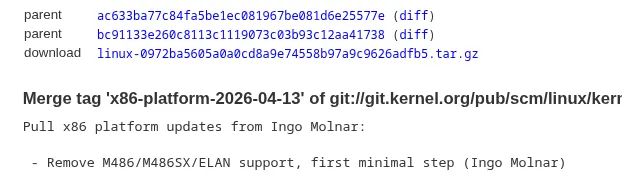
The first step in this change is to delete the Kconfig configuration options related to CPUs such as M486 / M486SX / ELAN in the kernel configuration system. Developers will no longer be able to build support for Intel 486 through these options in Linux 7.1 and subsequent versions. Affected are not only the Intel 486 series, but also compatible processors based on the 486 architecture from AMD, Cyrix, IBM and other manufacturers, specifically involving AMD/Cyrix/IBM/Intel SL/SLC/SLC2/SLC3/SX/SX2 and UMC U5S and other models. The original M486 Kconfig option was targeted at 486-class CPUs, such as AMD/Cyrix/IBM/Intel 486DX/DX2/DX4 and UMC U5D. As this option was removed, these processors were also excluded from the new kernel build target.
What is currently being merged is only the "beginning" at the configuration level, and subsequent versions will further clean up the actual code paths for i486. If no one makes a strong case for retaining support during the Linux 7.1 development cycle, it is likely that the i486-specific code will be removed in bulk starting with Linux 7.2, completing the platform's retirement from the mainline kernel. For users who are still somehow "miraculously" running i486 processors on modern Linux kernels, the author recommends sticking to long-term support releases like Linux 6.18 LTS to maintain official support for this type of older hardware for years to come.

It should be emphasized that this adjustment is mainly aimed at i486 and compatible CPUs. Later 32-bit processor architectures will still continue to be maintained, but don't expect these old platforms to get too many "exciting" new features from modern kernel versions. At the same time, there are other changes in Linux 7.1 that may have a negative impact on 32-bit system users. For example, a previously reported VFS-related change is considered to have an adverse impact on the 32-bit Linux experience.
From a technical management perspective, the official merge of the i486 removal patch is a merge request for x86/platform-related changes, which contains the patch for this removal of Kconfig support. This also means that on this issue, Linus Torvalds did not hesitate due to nostalgia or other non-technical factors, but decisively promoted the cleanup of the old platform to simplify the code maintenance burden. Also included in the same batch of merged content is a practical improvement related to AMD's new CPUs: when an AMD platform is detected, the kernel log will now print out the AGESA firmware version, making it easier for developers and users to debug and diagnose problems.
Looking at the longer-term evolution trend, eliminating extremely old platforms such as i486 is an important step for the Linux kernel to continue to reduce technical debt and focus on mainstream and future hardware. With an extremely limited user base and relatively high maintenance costs, it is almost inevitable that such platforms will be gradually moved out of mainline support, while the long-term support version provides a relatively smooth transition space for users who need to rely on old hardware.