When Microsoft announced the next-generation Xbox "Project Helix", it actually confirmed a key piece of information that has been circulated for a long time: Helix will be a "console and PC fusion" product that can run both PC games and Xbox games, and its positioning is very similar to the upcoming Valve Steam Machine. However, Microsoft has not yet officially given details as to what form this hybrid experience will ultimately take.

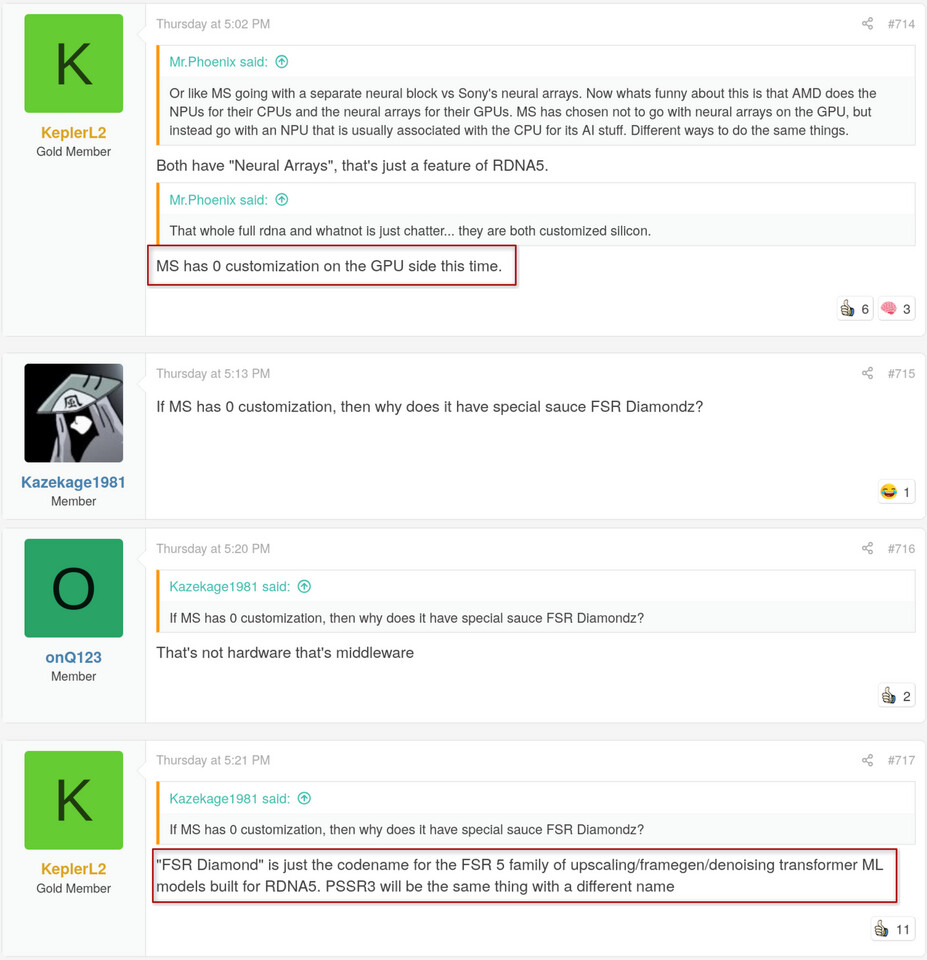
According to the latest news from the whistleblower KeplerL2 on the NeoGAF forum, some hardware orientations about Project Helix have surfaced. There were previous rumors that the performance of this generation of Xbox hardware is expected to surpass Sony's Canis and Orion custom APUs prepared for the PS6 series, but the latest exposure points to a completely different direction - Helix's APU may no longer be deeply customized at all, but directly adopts a standard PC-level off-the-shelf chip configuration, which is closer to "a PC with decent specifications" in terms of architecture.
If the above information comes true, the "custom chip battle" between Xbox and PlayStation in this generation of chasing each other around console performance will actually come to an end, and the console hardware will return to the same line as the PC to a greater extent at the bottom. This change will also have a knock-on impact on technologies such as scaling and super-resolution for graphics rendering. The report quoted KeplerL2 as saying that AMD's new FSR Diamond upscaling technology for the Helix platform will most likely be provided in a cross-platform manner, and will only be differentiated between different platforms through presets or detailed adjustments, instead of relying on highly platform-specific customization paths.
At the same time, there are recent rumors that Microsoft may "return to the platform exclusive strategy" for a period of time and re-emphasize the differentiated content of the Xbox camp after Sony strengthens its own exclusive lineup. In the context of Helix being regarded as a "highly compatible PC architecture", if this rumor finally comes to fruition, then Microsoft is more likely to promote a "dual-platform exclusive for PC and Xbox series" rather than a single-platform exclusive locked within the Xbox console system in the traditional sense.
At the specific hardware level, Helix is still believed to use AMD RDNA 5 architecture GPUs and Zen 6/6c architecture CPU cores, but their form will be closer to ready-made solutions such as Ryzen Z1 Extreme and Ryzen Z2 used in a large number of Windows handheld consoles in 2026, rather than highly customized SoCs like the past Xbox generation. From an industry perspective, this means that Microsoft may actively abandon its "unique console chip" positioning on the next-generation Xbox and instead achieve platform differentiation through the system, ecosystem and service levels based on standard PC architecture.
The above-mentioned breaking information comes from KeplerL2’s post on the NeoGAF forum, and has not yet been officially confirmed by Microsoft. However, combined with existing public roadmaps such as AMD’s confirmed launch of Steam Machine in 2026 and plans to provide RDNA 5-based SoC for Xbox in 2027, Helix’s move toward standard PC architecture is triggering a new round of discussion in the industry about the accelerated arrival of the “console and PC integration era.”