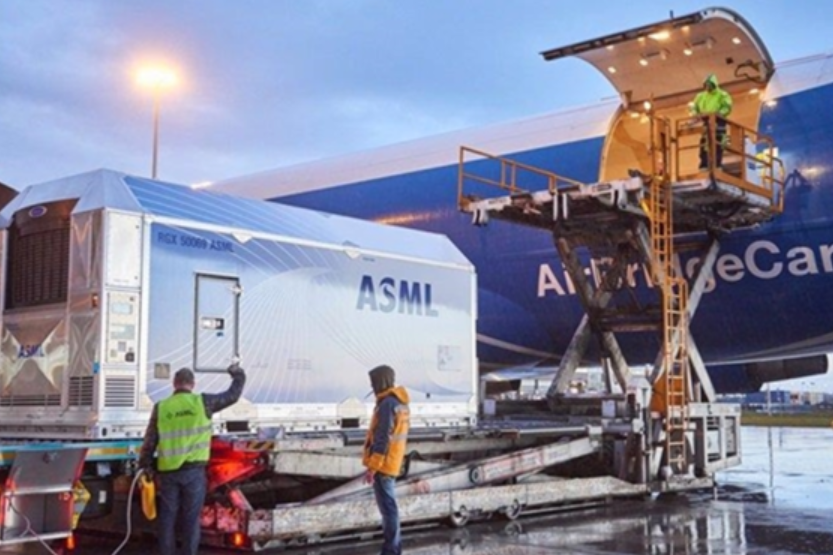
Recently, TSMC Deputy Chief Operating Officer Zhang Xiaoqiang made it clear at a public forum that the company will not purchase ASML’s latest High-NA EUV lithography machine at this stage. The core reason is that the equipment price is too high. The price of a single unit of this model exceeds 350 million euros, equivalent to nearly 2.8 billion yuan, far exceeding the current equipment level in the industry.
Zhang Xiaoqiang bluntly stated that the new generation of equipment is "very, very expensive" and said that existing EUV equipment can still give full play to its value and meet current production and research and development needs.
This lithography machine is the core equipment supporting advanced processes of 1.4nm and below. Its resolution and process capabilities are significantly better than the previous generation, but the cost has also increased significantly.
Its price is close to 1.8 times that of ordinary EUV equipment. The ultra-high pricing is due to exclusive optical components, complex light source systems and long debugging cycles. In addition, only ASML can supply it in the world, further pushing up the terminal selling price.
TSMC has not completely given up on this technology. It has previously purchased a small amount of equipment for research and development, but not for mass production.
The company is reducing its dependence on new equipment through process optimization. It recently announced two new processes, A13 and N2U, which are planned to be put into production in 2029 and 2028 respectively. They can improve chip energy efficiency and reduce area without relying on a new generation of lithography machines, taking into account both cost and performance.
As ASML's largest customer, TSMC's suspension of procurement will affect the latter's pace of mass production of new equipment.
ASML originally planned to mass-produce High‑NA EUV in 2027-2028 and set a revenue target for 2030. Now it faces the challenge of customers waiting and watching.
Currently, TSMC is under great pressure on capital expenditures, and its funds are prioritized for 3nm production expansion, 2nm R&D and production capacity layout.