This is a contest between men, not measured in terms of size, but in terms of energy and speed. Some time ago, an American company released a special competition information: In May, that is, next month, it will be held in Los Angeles, USA.The world's first sperm racing competition in 2026, there will be 128 "sperm contestants" representing different countries competing on the microscopic track. The first to reach the finish line will win, and the sperm owner will receive a bonus of US$100,000.

As soon as the news was released, the competition attracted global attention. It is said that more than 10,000 people have applied to participate, and they come from different places, including the United States, North Korea, Iran, Israel and other countries.

In fact, this is not the first time this company has held a similar event, it has already held one in 2025.
It’s just that there are only two contestants in 2025, limited to the United States. The sperm contestants come from two college students. The winner is Tristan Michael from the University of Southern California. His time is 1 minute and 3 seconds (the track is 20 centimeters).
This upcoming competition is the first time to recruit contestants from all over the world. The scale is much larger than before, and the requirements are more stringent.
First of all, there are 128 contestants competing, and each one is from a different country. That is to say, among the sperm contestants from the same country, only the strongest one will be selected to participate in the final competition.
Therefore, before the official competition, you have to go through a brutal knockout round.
The person who provides sperm must be over 18 years old, in good health and free of communicable diseases. He can only compete on behalf of the place of birth (or the place of birth of his parents).
This is not an anonymous competition. Once he agrees to participate, he must cooperate with the competition organizer to appear in the news if necessary.
Secondly, the entire competition process is huge.
Players do not need to be present. After applying, they will receive a test kit. After providing a sperm sample, the test kit can be sent back to California.
The laboratory will then conduct a series of processes such as testing, cleaning, centrifugation, and culture on these samples to finally prepare the most viable sperm for competition.
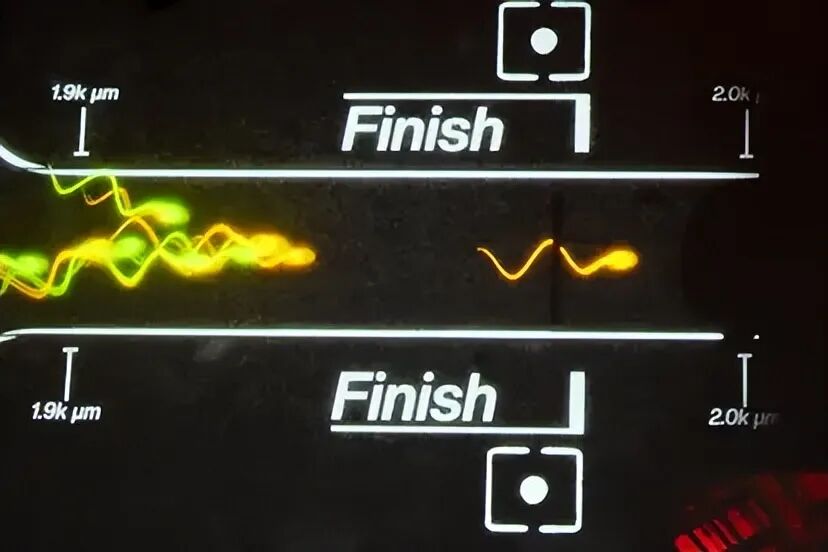
The only criterion for winning the competition is swimming speed. Since sperm themselves are very small, the track they have to participate in is also very small.The entire length is only 400 microns, and it simulates the natural liquid environment when sperm swims, with controllable microcurrent resistance set in the track.
It can take a few seconds to complete the track, or it can take dozens of minutes.
The track of the last competition had curves, and many sperm runners were stuck and did not complete the course. This time, they will choose to go straight on the track, which will be easier.
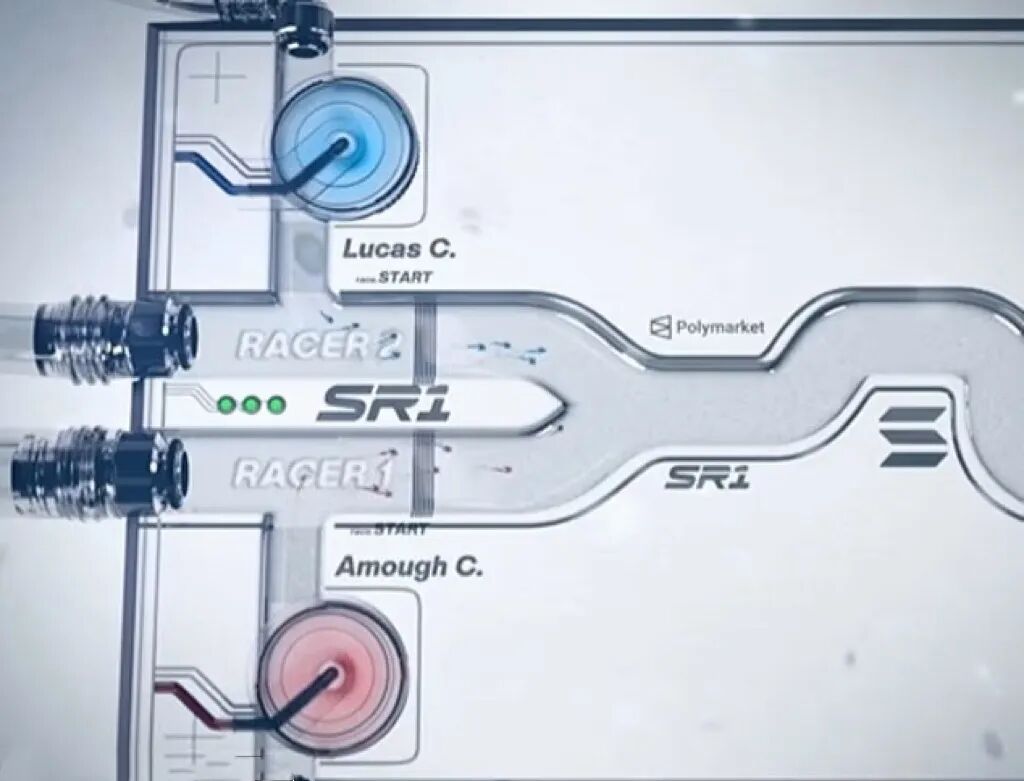
In order to make the game more visible, the company adopted online live broadcast and made the game more interesting.
Logically speaking, we cannot see sperm players with the naked eye. If we simply zoom in on the screen, the game will be boring.
As a result, the company built a computer vision system to track every sperm cell, every frame, every transcendence...and then convert this information into 3D renderings that viewers love.
During the live broadcast, it will also be equipped with a giant screen, commentary, real-time rankings and event progress, and the health data of the contestants will also be marked.
In short, except that the contestants are sperm cells, other aspects are the same as regular sports events. The audience can also cheer for their favorite "contestants" in front of the screen.
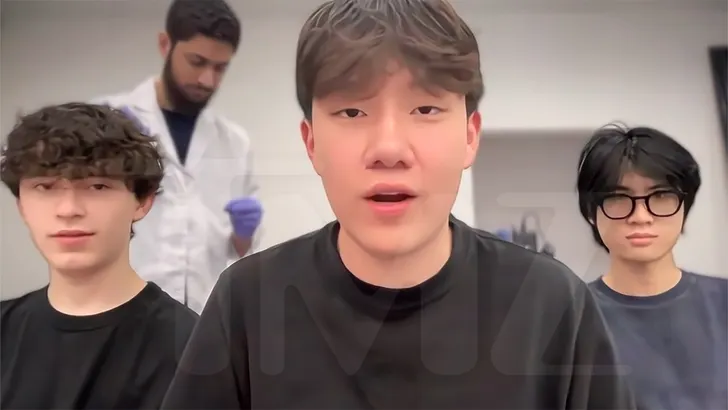
The founders of the company that organizes the sperm competition are four very young American teenagers. The competition is so weird and bold, and they are also controversial. Many people think that the competition is purely a gimmick to attract traffic.
But the four young people did not agree with this statement. Eric Zhu, one of the founders, said:
"Our goal is to select the healthiest people in each country. It seems nonsensical, but the essence is to hope that people will pay more attention to the health of tadpoles."