Against the background of the accelerated popularity of electric vehicles around the world, the U.S. electric vehicle market has fallen into a cold winter.The data intuitively shows the extent of the market cooling - in the first quarter of this year, the sales of new energy vehicles in the United States fell by about 27% to 28% year-on-year, to only 216,000 units, and the pure electric market penetration rate plummeted to 5.8%.
Even in California, the largest new energy vehicle market in the United States, the cooling of electric vehicles is shocking: in the first quarter, sales of pure electric vehicles in California plummeted 40.2% year-on-year, and the market share plummeted from 21% in 2025 to 13.7%, returning directly to the level of five years ago. It seems that once the tax rebate policy is gone, electric vehicles will lose their market competitiveness.
It is worth noting that Tesla has a subsidy policy in California. If the vehicle exceeds $50,000, the subsidy is limited to California local car companies. According to the official statement, the intention of this design is to promote more competitors to enter the market, rather than continue to strengthen the leading brands that already dominate the market. But the actual effect of this rule is to block most of Tesla’s main models from the market.
Analysts believe that California's policy is equivalent to directly squeezing Tesla out of the largest electric vehicle market in the United States, and more effectively squeezes Tesla's profit margins.
Withdraw all incentives
The cancellation of the federal electric vehicle tax rebate policy has been expected by the market. During the 2024 campaign, President Trump publicly announced that he would cancel all new energy incentives after taking office, including the $7,500 federal electric vehicle purchase tax rebate program, so that electric vehicles and traditional fuel vehicles can compete on the same level.
After Trump became president again, he worked with the Republican-dominated Congress to advance the plan and cancel all new energy incentive programs in multiple steps.
The first step is to revoke California’s exemption from the Clean Air Act and no longer allow California to independently set vehicle emission standards;
The second step is to pass the "Big Beauty Act" and revoke the $7,500 federal electric vehicle tax rebate on September 30.Cancellation of the federal government's plan to invest in the construction of charging networks and the cancellation of the federal fuel economy penalty mechanism. Traditional car companies no longer need to pay for failure to meet standards, and they no longer need to purchase zero-emission credits. The space for electric car companies to obtain revenue from selling credits has shrunk significantly;
The third step is to significantly lower fuel economy standards, from 50.4 mpg in the Biden era to 34.5 mpg.
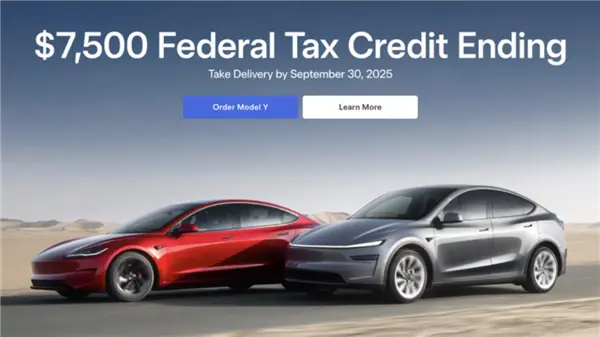
But for ordinary consumers, the most direct feeling is the cancellation of the $7,500 federal tax rebate policy for electric vehicles. This directly increases their actual car purchase expenses, making electric vehicles that are already expensive and have high insurance premiums even less attractive.
The University of California, Davis, had previously predicted that the loss of the $7,500 subsidy would cause electric vehicle sales to drop by about 20%; but in fact, electric vehicles in California plummeted by 40%, twice the theoretical prediction. The University of California, Davis believes that contraction on the demand side caused only about half of the decline, with the other half coming from an active retreat on the supply side.
Traditional car companies retreat directly
Yes, this winter of electric vehicles is not just about consumers not buying them, but also car companies not wanting to sell them. Originally, they were making electric vehicles at huge losses, but now that the government has canceled new energy incentives, they will withdraw directly.
Ford stopped the F-150 Lightning electric pickup truck project at the end of last year, and also cut off the next-generation pure electric pickup truck project, and instead developed an extended-range pickup truck that will be launched in 2027 for about US$30,000. In addition, Ford has set aside US$19.5 billion in impairments, part of which will be booked gradually from 2026 to 2027. Ford's EV division Model e will record an operating loss of US$5.1 billion in 2024 alone.
Stellantis canceled its Ram electric pickup truck plan and instead invested in the Ram 1500 REV, an extended-range pickup truck equipped with a 3.6-liter gasoline engine-driven generator set. In addition, Stellantis made a provision of approximately 22.2 billion euros (approximately 26.2 billion to 27 billion U.S. dollars), which is the largest EV impairment by a single car company in global automotive history. As a result, Stellantis recorded its first annual net loss in history in fiscal year 2025, with a loss of 22.3 billion euros (approximately 26.3 billion U.S. dollars).
GM booked about $7.6 billion in impairments and said there could be more in 2026. The Detroit Three's electric vehicle accrual losses alone totaled US$52.1 billion, which is 1.5 times the total profit of the Detroit Three's full-year profits of US$34.1 billion in 2024.
The Volkswagen Group has set aside approximately US$6 billion in impairments, mainly due to the reduction of Porsche's electrification plan; the discontinuation of ID.4 production at the Chattanooga plant in Tennessee, and the discontinuation of sales of the ID Buzz classic style electric car in the U.S. market.
Now that traditional car companies have retreated in the face of difficulties, the previous commitment to full electrification has also come to nothing.
General Motors had previously promised to convert all of its models to pure electric vehicles by 2035, but now it has publicly abandoned this timetable. The current stance is to "flexibly adjust according to market demand" and hybrid and fuel vehicles will coexist for a long time.
Ford withdrew its commitment to full electrification in 2035, and CEO Jim Farley directly stated: "The market has changed." Ford has shifted to hybrid and extended-range routes, and the new pickup truck launched in 2027 will be an extended-range pickup rather than pure electric.
Stellantis originally planned to be 100% pure electric in Europe and 50% pure electric in the United States by 2030. After the new management took office, it has completely overturned this strategy and is rewriting the long-term plan. The final direction has not yet been announced. The new CEO’s public statement is that the previous strategy was a serious overestimation of the speed of energy transition.
Toyota's hybrid profit takes off
Hybrids have become the biggest winner in the cold winter of electric vehicles in the United States, and Toyota, which was the first to deploy it, has made a lot of money. In the fourth quarter of last year, hybrid models' market share in the United States soared to 19.7%, compared with only 11% to 12% in the same period last year. In the first quarter of this year, the market share reached a record 26%, and Toyota alone accounted for 43% of hybrid sales in the United States.
In the first quarter of this year, Toyota sold 569,400 vehicles in the United States, basically the same as last year. Among them, electrified models (mainly hybrids) accounted for 50.5% of total sales. In March, this proportion reached 54.5%. This was achieved against the backdrop of a 6.5% decline in the overall auto market. Toyota was almost the only traditional mainstream car company that did not experience a sharp decline in the first quarter.
Cox Automotive predicts that Toyota's market share will rise to 15.8% in the first half of 2026, while General Motors' share is expected to decline by nearly 1 percentage point to 16.8%. The gap between the two has narrowed to only 1 percentage point - analysts predict that Toyota may replace General Motors as the largest car company in the United States as soon as 2027.
In the first quarter of 2026, the market share of hybrid vehicles in California soared to 20.9%, surpassing pure electric vehicles for the first time. During the same period, the market share of fuel vehicles rebounded from 54% to 61.1%. In the context of oil prices rising to over $5 per gallon in California during the same period due to the situation in Iran, consumers’ calculations are clear: hybrids are the most economical transition option at the moment.
In contrast, Toyota is having a hard time in China. According to data from the China Passenger Car Federation, in the first four months of this year, Toyota China's sales fell 10% year-on-year to 477,100 units, and fell 25% in April. In May, sales plummeted 31.7% to 102,300 units, the fourth consecutive month of decline.
The fundamental reason why Toyota hit a wall in China is that it failed to keep up with the pace of new energy in the Chinese market. In April this year, the penetration rate of China's new energy sources (including plug-in hybrids and pure electric vehicles) exceeded 60%, while sales of traditional fuel vehicles plummeted 37% year-on-year. Toyota's main product in China has long been centered on reliable fuel vehicles, and it happened to hit this wall.
California launches bailout measures
California is the largest electric vehicle market in the United States, accounting for nearly one-third of all electric vehicle sales in the United States. Against the backdrop of a sharp cooling of the U.S. electric vehicle market, sales of electric vehicles in California have also fallen into a freezing point after the federal electric vehicle tax rebate was cancelled.
In the first quarter of this year, California electric vehicle sales plummeted 40% year-on-year, and the market penetration rate plummeted from 21% to 13.7%. Against the background of the overall decline, the specific figures of each brand are shocking: Mercedes-Benz pure electric model registrations plummeted 81.9%; Chevrolet fell 59.6%; BMW fell 58.9%; Ford fell 58.8%; Kia fell 48.2%; Hyundai fell 30.4%.
California-based Rivian's sales fell 35.9% to only 1,841 vehicles. The company's full-year delivery guidance of 62,000 to 67,000 vehicles means that it must deliver an average of about 17,000 vehicles in each subsequent quarter, which is nearly twice the actual level in the first quarter, which is extremely stressful. The only pure electric unicorn to rise against the trend is California-based Lucid, which grew 37.1% year-on-year in the first quarter. However, more than 40% of its global deliveries came from California, and its dependence on a single market is worrying.
Tesla's sales fell by 24.3%. Although the actual sales volume dropped by more than 10,000 units, which was the largest decrease among all car companies, the decline was much smaller than the 40.2% of the overall market. As a result, its California pure electric market share increased from 44.2% to 56%.
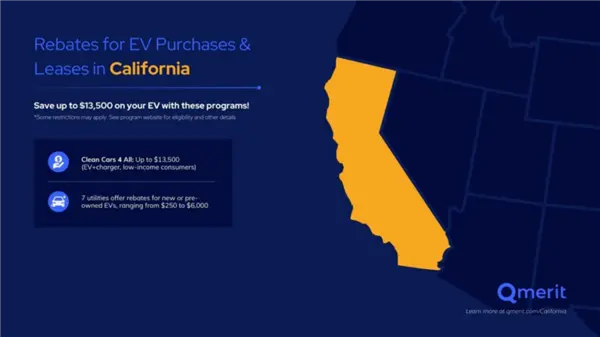
As the earliest and most important promoter of new energy in the United States, the California government cannot sit still. At the end of last year, California Governor Newsom proposed an electric vehicle incentive plan totaling US$200 million, and began to implement it this month. The plan provides a state-level subsidy of US$3,500 for first-time consumers purchasing electric vehicles, which can be directly deducted through dealers without waiting for annual tax refunds.
Although the amount of California's subsidy is only half of the original federal tax rebate of $7,500, it can directly reduce the purchase price of the car, instead of waiting for more than half a year to get it like the tax rebate. This is an important improvement to the federal tax refund mechanism.
Subsidies designed to crowd out Tesla
However, California’s subsidy policy has a core constraint: the price limit for electric vehicles is $50,000. If the vehicle is over $50,000, the subsidy is limited to California-based car companies. This means that the two California electric car companies, Lucid and Rivian, are the biggest beneficiaries.
According to the official statement, the intention of this design is to promote more competitors to enter the market, rather than continue to strengthen the leading brands that already dominate the market. But the actual effect of this rule is to block most of Tesla’s main models from the market.
Although Tesla continues to produce cars at the Fremont factory, because it will move the company's headquarters from Palo Alto to Austin, Texas in 2021, it does not meet the California headquarters certification standards and cannot enjoy the excess subsidy channel. The California government specifically limits subsidy standards to the location of the headquarters, not the location of production. This is also believed to be aimed at Tesla.
The California Governor’s Office stated: The purpose of this policy is to create market conditions for more competitors to take root in the zero-emission vehicle market. The subtext is not difficult to understand: Tesla’s market share in California has exceeded 56%, and continuing to allow the absolutely dominant brand to enjoy public subsidies is not in line with the policy’s goal of promoting competition.
It should be explained that the price limit of California's subsidy policy is calculated based on the delivery price of the complete vehicle, including option packages, but excluding taxes and fees. Therefore, although Model 3 and Model Y each have low-end versions priced under $50,000, if consumers add a few options, it can easily exceed $50,000, thus exceeding the subsidy threshold.
This means Tesla cannot benefit from the subsidy channel of more than $50,000 reserved for California car companies. Only buyers of the basic configuration of the "Beggars Edition" car can receive the California subsidy. Generally speaking, option packages are actually the most profitable part for car companies. California's policy is equivalent to directly crowding out Tesla in the largest electric vehicle market in the United States, and more effectively squeezing Tesla's profit margins.
Musk has long had a feud with California
At the end of last year, when the proposal first came out, Musk had already issued his evaluation on X, and his tone was extremely dissatisfied. “Tesla is the only company in California making electric cars locally! That’s crazy.”
The policy has sparked much criticism in California political circles. San Jose Mayor Matt Mahan and Congressman Ro Khanna publicly criticized Newsom for playing politics, arguing that excluding Tesla from subsidy policies could hit California jobs.
Although both men are Democrats, employees at Tesla's California factory are among their constituents. Republican Congressman Kevin Kiley seized the opportunity to attack the Newsom administration's move as "stupid, petty, corrupt and counterproductive."
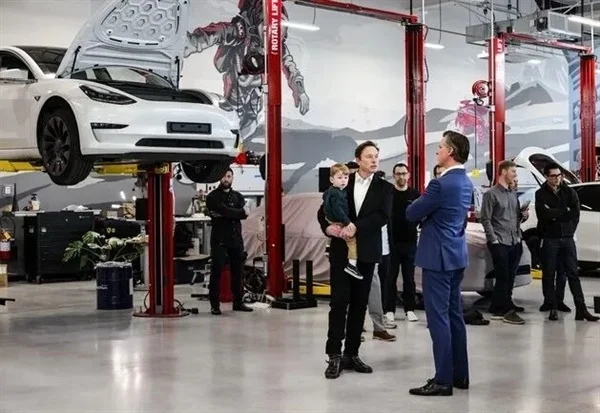
Although Tesla moved its headquarters to Texas and built a super factory in Texas, they still have more than 40,000 employees at the Fremont, California, factory and produce hundreds of thousands of cars every year. Although Lucid and Rivian are headquartered in California, their assembly plants are in other states where costs are lower.
From this perspective, Musk’s anger has a business logic: a company that manufactures the most electric vehicles and provides the most job opportunities in California cannot enjoy California’s incentive policies designed specifically for electric vehicles.
Many people will naturally think of Musk’s feud with the California government and Governor Newsom. Although Tesla grew up under many subsidies and support policies from the California government, and Musk was once closely related to Newsom, after Musk became the world's richest man, his conflicts with the California government gradually intensified due to many family, tax and regulatory issues, and the relationship eventually broke down completely.
In the past few years, Musk not only moved the headquarters of Tesla and SpaceX to Texas, but also sold out all his real estate in California. He also quarreled with California Governor Newsom many times because of his support for Trump's presidential campaign and California's Child Sexual Orientation Protection Act.
However, it was Musk who invested more than 200 million US dollars in the 2024 election and spared no effort to help Trump canvass votes, and then sent the Republican former president to the White House again to implement his policy ideas. Moreover, Trump made it clear during the campaign that he would abolish all new energy stimulus policies.
In other words, Musk actually has nothing to complain about the current bleak situation in the U.S. electric vehicle market, because he himself is the main promoter. Moreover, although Tesla's sales have also declined significantly, compared with other new forces or traditional car companies, Tesla is also the only new energy car company that can achieve profitability and survive this electric vehicle winter.
Confused after the policy ebbs
The market shock caused by the disappearance of federal tax rebates has revealed a deeper structural fragility in the U.S. electric vehicle market: the rapid growth in the past few years has been largely supported by subsidy policies, rather than completely driven by product competitiveness and consumer demand.
Although the cancellation of tax rebate subsidies has severely affected consumers' willingness to buy cars, the supply side has shrunk greatly. Many traditional car companies have taken the initiative to reduce the supply and marketing investment of electric vehicles in an environment of policy uncertainty. This means that this market decline is an industry-wide collective brake.
California launched a US$200 million incentive plan at this time in an attempt to re-provide an anchor for both supply and demand after the federal withdrawal. The logic is clear. However, California’s budget of only US$200 million is only for first-time electric vehicle owners. Compared with the amount and scale of the previous federal tax rebate of US$7,500, it can only be said to be a drop in the bucket.
The bigger question mark lies with traditional car companies. When Ford, General Motors, and Volkswagen withdraw one after another, when Detroit's investment shifts from pure electric vehicles to hybrid vehicles, and when the retreat of the supply side becomes an important driver of market shrinkage, will a state-level subsidy of US$3,500 be enough to convince car companies to re-increase the supply of electric vehicle products? There is currently no answer to this question.