According to the Economic Daily, TSMC is carrying out a large-scale transformation of Factory A of the 15th Factory in the Central Science Park, upgrading the production line from the original 28/22 nm process to the 4 nm process. Existing old equipment is being gradually moved out and replaced with new generation production equipment. Including clean room renovations and machine updates, the overall investment is expected to exceed NT$100 billion (approximately US$3.16 billion).
The replaced 28/22 nm machines will not be idle, but will be shipped to TSMC's new factory in Dresden, Germany. The factory plans to introduce mature processes for mass production in 2027, mainly for automotive and industrial market segments. Factory B of Factory 15 will temporarily maintain 7 nm production and is not within the scope of this round of adjustments.
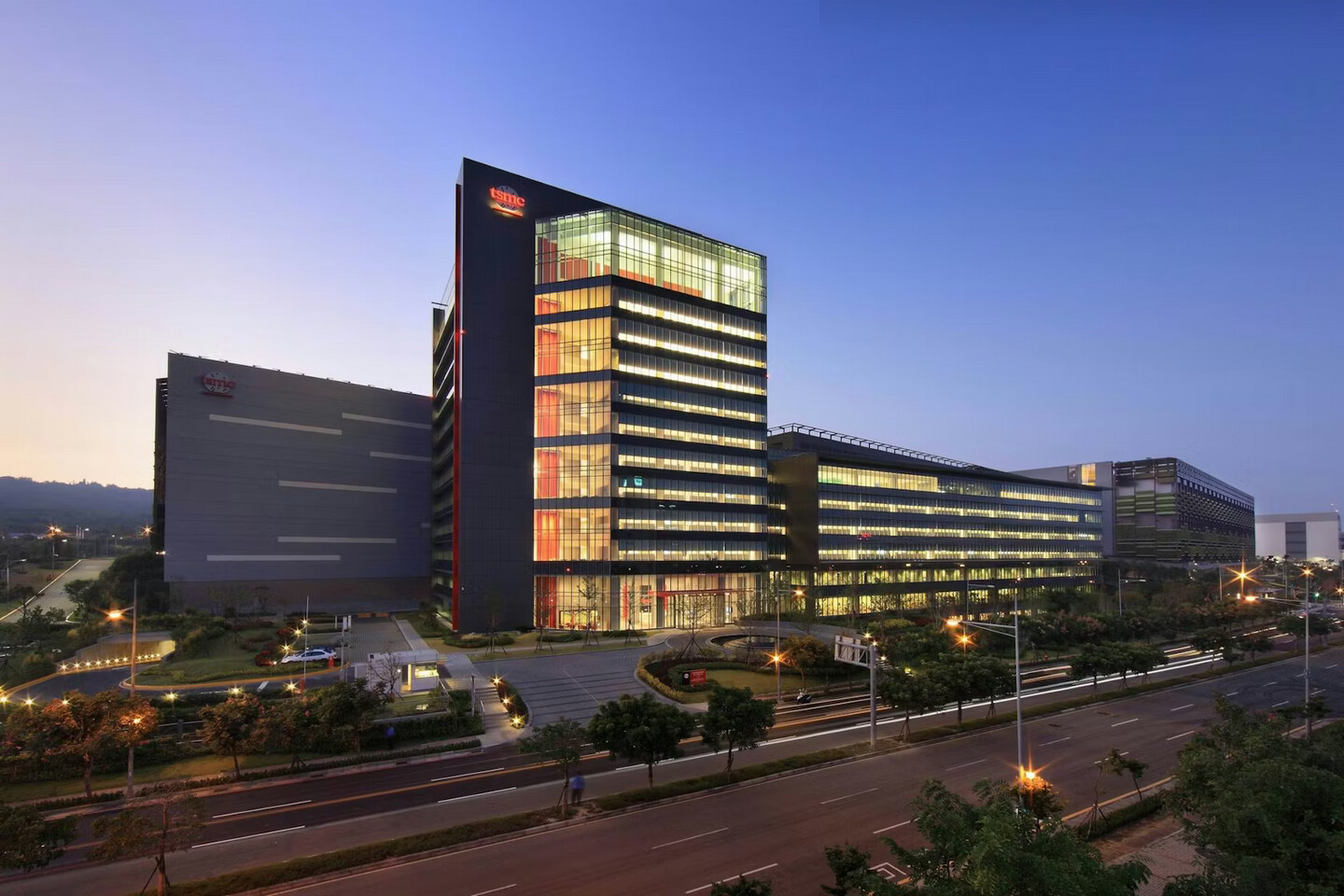
In terms of more advanced processes, the construction progress of TSMC's Zhongke Phase II 1.4nm plant in Taichung is significantly faster than the original schedule. The relevant basic works have been largely completed, and subsequent bidding for civil engineering and equipment installation is expected to begin soon. If subsequent progress goes smoothly, TSMC is expected to launch 1.4 nm trial production in the third quarter of 2027 and enter full mass production in the second half of 2028. At the same time, there is news in the industry that the 1 nm process is also expected to be implemented in the central park earlier than the established plan, but at present, internal planning and evaluation are still the main focus.
It is worth noting that the 1.4 nm process is not included in the mass production blueprint of TSMC’s US factory. According to the current plan, once all four of the second phase of Zhongke's factories are put into operation and operate at full capacity, the Taichung Park will become the single largest AI and high-performance computing (HPC) chip production base in the world. In April this year, TSMC officially released the A13 (1.3 nm) process at the 2026 North American Technology Forum, positioning it as a direct scaled-down version of the previously announced A14 (1.4 nm) node. Compared with A14, A13 has further reduced the transistor density by about 6% through collaborative optimization of design and process, while simultaneously improving performance and energy efficiency. A13 is fully compatible with A14 in terms of design rules, allowing customers to smoothly migrate to more advanced nodes based on existing 1.4 nm designs. According to the current roadmap given by TSMC, A14 is expected to be mass-produced in 2028, and A13 will take over and enter mass production in 2029.