As Microsoft accelerates its deployment of AI data centers around the world, the tech giant is internally considering delaying or scaling back one of its most ambitious clean energy goals. Bloomberg reports that Microsoft is conducting internal discussions on its goal of "matching clean energy by the hour," which is seen as one of the industry's most aggressive emissions reduction commitments.
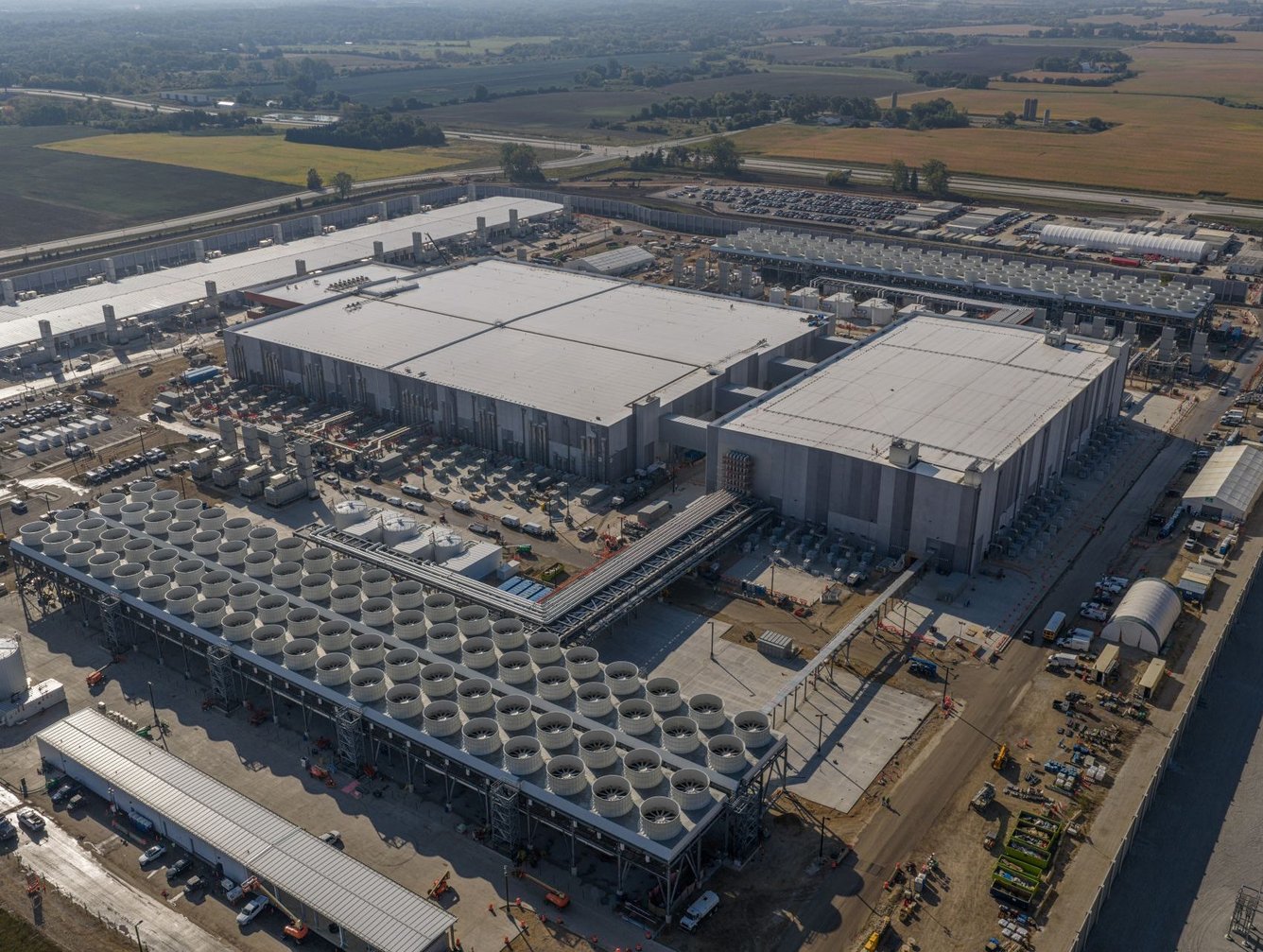
Microsoft has previously committed to matching 100% of the company's electricity needs with the same amount of clean electricity on an hourly basis within its grid by 2030. However, as the demand for AI computing power soars and data centers expand rapidly, this commitment is gradually seen within the company as a "constraint" that may restrict business expansion. As of now, Microsoft has not made any public statement on this. It only emphasized through a spokesperson that the company will continue to "continue to look for opportunities and maintain the clean power matching goal on an annual basis."
Compared with the widely used annual matching, hourly matching is generally considered more stringent and can better reflect the true emission reduction effect. The power system needs to maintain a balance of supply and demand on a near-real-time scale, and hourly matching means that the clean power sources promoted by enterprises need to be closer to their own electricity consumption curves, rather than just achieving "average annual hedging" on the books. Annual targets that are common in the current industry are regarded by many critics as "accounting tricks": companies can purchase solar power that far exceeds their own needs during the noon period and have it consumed by other users in the grid, but investors fully claim its "green attributes" in carbon accounting. This model has indeed accelerated the deployment of wind power, photovoltaic and energy storage projects, but if it only stays at the annual level, it is still insufficient to completely get rid of fossil energy and build a power system that is close to true "net zero".
Among large technology companies, Microsoft, Meta, Google and Apple have always been the most aggressive in terms of emission reduction targets. They have promised to achieve net-zero emissions in a relatively short period of time, and have even "zeroed out" their annual carbon accounting. Microsoft announced earlier this year that it has offset all emissions on an annual basis and will continue to advance along the net-zero path. However, with the rapid expansion of the scale and number of data centers, these enterprises are increasingly relying on natural gas power generation as a "backstop" in terms of actual energy consumption structure. Microsoft is one of them: last month, the company announced that it would join hands with Chevron and investment institution Engine No. 1 to build a very large natural gas power plant in west Texas, USA, with a power generation capacity of up to 5 gigawatts at full load to support the operation of its data center cluster.
Even so, Microsoft is still regarded by the outside world as the "leader" in the technology industry on the road to net zero. The company plans to become "carbon negative" by 2030, meaning it will remove more carbon dioxide from the atmosphere than is emitted from its own operations. One of the important factors supporting this strategy is the "carbon tax" mechanism implemented internally by Microsoft: each business unit needs to pay internal carbon costs for its own emissions, so that environmental costs can be more fully taken into account in investment and operational decisions. However, Microsoft did not respond to whether this carbon tax mechanism will remain intact, and what role it will play in the internal game of matching hourly targets. Some analysts believe that if the carbon tax continues to be implemented, the discussion around hourly matching is likely to be a re-weighing of costs and benefits.
For Microsoft, if it ultimately abandons or weakens its hourly matching goals, the impact will be more than just a string of numbers on its internal carbon ledger. In the process of promoting new data center projects around the world, energy structure is often one of the key selling points used by Microsoft to persuade local people and governments. As data centers are being deployed intensively in many areas, opposition from local people and community organizations is rising, with external concerns focusing on issues such as pollution emissions, rising electricity prices and water pressure. Under the current discourse system, if Microsoft can introduce new clean power capacity to the project, it will have reason to claim that it has at least made advance arrangements in terms of emissions and electricity prices, thus resolving external doubts to a certain extent. Once the promise of hourly matching is weakened, the power of this persuasive tool will inevitably be reduced, and social resistance to new projects may further increase.
As the competition for computing power driven by AI intensifies, the choices faced by Microsoft reflect the paradox of the entire large-scale technology industry: on the one hand, they hope to occupy the moral and governance high ground through internal carbon taxes, net-zero commitments, and stricter clean energy standards; on the other hand, the actual power demand to support huge model training and inference tasks continues to push them to natural gas and other fossil fuel projects that have greater carbon lock-in risks. Microsoft's internal debate over hourly matching targets may be just the beginning of this long-term pull, and will also become one of the key windows to observe how technology giants redraw the line between "AI expansion" and "climate commitments."