The federal court in Oakland, California, entered a key scene on Thursday local time: the iconic legal battle between Elon Musk and OpenAI entered the closing argument stage. The ruling in this lawsuit is widely believed to have a profound impact on the future direction of the artificial intelligence industry. Musk is a co-founder of OpenAI, which launched in 2015 and later launched the ChatGPT product that sparked global attention.
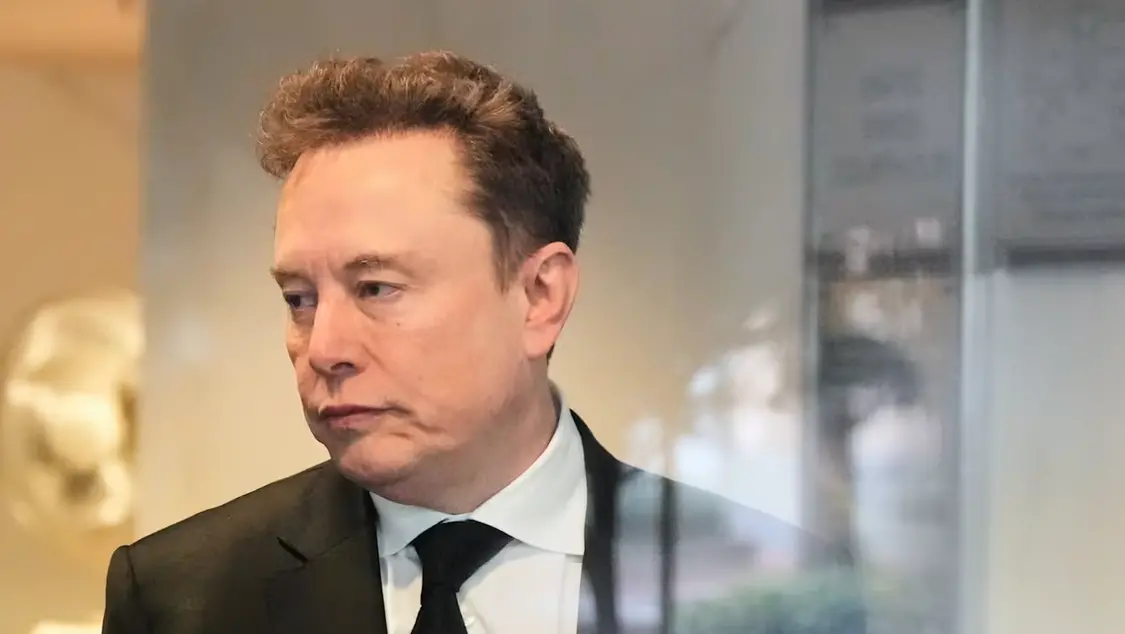 He filed a lawsuit in 2024, accusing current OpenAI CEO Sam Altman and his core team of abandoning their original intention of keeping OpenAI as a long-term non-profit organization and instead dramatically shifting the organizational structure and operational focus toward a for-profit model without his knowledge.
It is generally believed that the outcome of this lawsuit may change the current power structure in the field of artificial intelligence. While breakthroughs in generative AI technology are driving economic and social changes, they have also triggered continued concerns about unemployment, social stability, and even risks to human survival. Against this backdrop, questions surrounding Altman’s leadership have put additional pressure on OpenAI and its rivals, including Musk’s own AI company and Anthropic, founded by seven former OpenAI executives. All three companies are currently moving toward initial public offerings (IPOs) in what is expected to be one of the largest technology listings in history. Musk not only made claims in the complaint, but also asked the court to promote the adjustment of OpenAI's corporate governance structure and remove Altman from management. Once the lawsuit is won, OpenAI's IPO plan is likely to be interrupted or postponed.
For the jury, the first key issue that needs to be resolved is whether Musk filed the lawsuit within the statute of limitations stipulated in the law. A large amount of testimony in the trial centered on the operations of OpenAI in its early days, but Musk's accusations of "violation of charitable fiduciary obligations" and "unjust enrichment" were subject to the statute of limitations. OpenAI argued that Musk sued too late to claim damages for conduct that occurred before August 2021. The federal judge hearing the case previously stated in a written document that if the jury determines that Musk's prosecution has exceeded the statute of limitations, she is "extremely likely" to accept that finding and make a favorable ruling for the defendant accordingly.
If the jury finds that the lawsuit is within the statute of limitations, the next step to determine is whether OpenAI has a "charitable trust" that was violated on a factual basis. Musk also accuses Altman, OpenAI co-founder and president Greg Brockman, and OpenAI as a whole of "improperly profiting" on his personal investment through changes in its organizational structure and business model. For Microsoft, which is also named as a defendant, the jury needs to decide whether the company played a role in "aiding and abetting" the breach of fiduciary duties in the process. Public information shows that Musk invested approximately US$38 million in the early days of OpenAI’s founding. After his exit, Microsoft gradually became OpenAI’s largest external investor.
On the day of closing arguments, Altman and Brockman appeared in court, while Musk was visiting China with U.S. President Trump and many technology giant executives. Musk's attorney, Steven Morrow, told jurors in court that the Tesla CEO "regrets not being able to appear in person." In the following statement, Morrow focused on attacking Altmann's "integrity issues" and quoted the testimony of multiple witnesses, saying that these key figures who had worked with Altmann for many years all accused him of being a "liar" when testifying under oath. Morrow emphasized in court: "Sam Altman's credibility is at the heart of this case. The defense has to rely on you to believe Altman, and if you don't trust him and believe what he says, they can't win."
According to Musk's argument, since he, Altman and Brockman never signed a formal contract clearly stipulating the rights and obligations of the so-called "charitable trust", the jury should comprehensively consider the email exchanges between the three, internal communication records, public statements on the OpenAI official website, and interviews with external media to determine that the two parties have established a binding trust relationship at the factual level. During Morrow's statement, a court episode about "whether Musk seeks monetary compensation" also briefly interrupted the rhythm of the trial. After the jury left the court, the judge severely criticized Musk's lawyer's previous suggestion to the jury that "Musk no longer pursues any financial interests" as misleading. Although Musk gave up his claim for personal damages before the trial began, he still requested in the complaint that OpenAI and related individuals be ordered to pay an unspecified and large sum of money to support "public welfare projects" of OpenAI's charity arm. The judge bluntly stated that Musk was actually seeking "billions of dollars in return" and asked his lawyers to either retract their previous misleading statements to the jury in court or formally abandon this part of the request. In the end, the two sides reached a compromise and the judge provided clarification to the jury.
Sarah Eddy, a lawyer representing OpenAI in court, countered in her closing argument that it was Musk himself who really distorted the facts, not Altman. She said: "Mr. Morrow said that Sam Altman was not credible, and Mr. Musk's testimony was contradictory to all other witnesses." OpenAI has maintained throughout the trial that Musk knew and supported the establishment of a for-profit entity to support the research and development investment and computing power consumption required to achieve the long-term mission of "benefiting mankind." Eddy pointed out that Musk tried to convince the jury that his donation came with certain "additional conditions" that would not only permanently bind OpenAI's development path, but also give him some kind of "permanent interest" in the company. "But Musk is nowhere near that standard of proof," she said.
When talking about Musk's personal motivations, Eddy quoted court testimony and revealed that Musk had discussed letting his children take over control of OpenAI in the future. She pointed out that it is this "desire for dominance of general artificial intelligence (AGI)" that makes negotiations around control of the company highly tense. In her view, "This is not about an abstract public welfare vision, but about who controls this technology that is regarded as the next generation of infrastructure."
Outside the court, more than ten demonstrators gathered at the door, expressing strong distrust and protest against both camps. Many slogans regarded Musk and Altman as "billionaires from the same camp" and accused them of promoting technology industries that are eroding the environment, employment and public mental health, and may even "erase the future of mankind" in the long run. Some signs read, “Stop replacing health care workers with chatbots!” “In Musk-Altman’s fascist world, workers have no future.” "No matter who wins in court, we are actually losing. The only real winners are the two of them," said Saroo Jayaraman, an activist involved in pushing for a referendum this fall to raise the minimum wage to $30 an hour.
Phoebe Thomas Thorngan, a pacifist activist from Berkeley, California, who called for a "global ban" on artificial intelligence, said in an interview that "all parties in this trial are terrible" except for the jurors and protesters. "Both sides are complete hypocrites," she said. "They both claim to be developing AI for the benefit of humanity, but that is a lie. What they are really chasing is greed."
So far, the jury has not yet made a ruling on the statute of limitations and substantive liability, but all parties generally believe that the final outcome of this case will set an important precedent for the rapidly evolving artificial intelligence industry. Regardless of whether Musk or OpenAI wins, how AI strikes a balance between pursuing commercial interests and fulfilling public responsibilities will continue to be a long-term issue that regulators, companies, and the public must face.