The U.S. Army has selected three suppliers to upgrade its night vision systems for the 21st century, replacing legacy systems that have been in service for more than 20 years with next-generation binocular night vision observation devices (BiNOD).
Since it was put into service in 2000, the US military and NATO allies have relied heavily on the AN/PVS-14 monocular system as the primary night vision device, and its importance cannot be underestimated. In the not-too-distant past, when wars ended almost as soon as the sun set, the loss of light meant retreating to safe positions until dawn, and night operations relied on a full moon, illumination by artillery fire, or the dispatch of small squads for limited strikes. After World War II, night vision systems that amplified ambient light or operated in the infrared spectrum began to change that, but early systems were expensive, bulky, and unstable and were primarily suitable for reconnaissance or sniper missions. By the 1990s, night vision technology had become more practical, but its high cost and complexity still limited its use to vehicle crews and specialized reconnaissance units.

The emergence of AN/PVS-14 in 2000 fundamentally changed this pattern. Compact, lightweight and cheap enough to be mass-produced and issued to ordinary soldiers as standard field equipment, mounted on rifles or helmets, the device revolutionized military strategy and tactics by turning night into day, making combat an all-weather affair. However, this system also has obvious flaws. The AN/PVS-14 is a monocular system using a single image intensification tube, which means that the user sees a flat two-dimensional image without real depth perception. Due to the limited field of view, the observation effect is like looking through a toilet paper roll. In addition, this third-generation system relies on light enhancement and uses green fluorescent displays, which provide relatively poor contrast. Worse, in low-light conditions, the human eye mainly interprets the environment through brightness differences rather than color. The green hue forces the brain to process color changes instead of the contrast information it really needs, leading to increased eye fatigue.
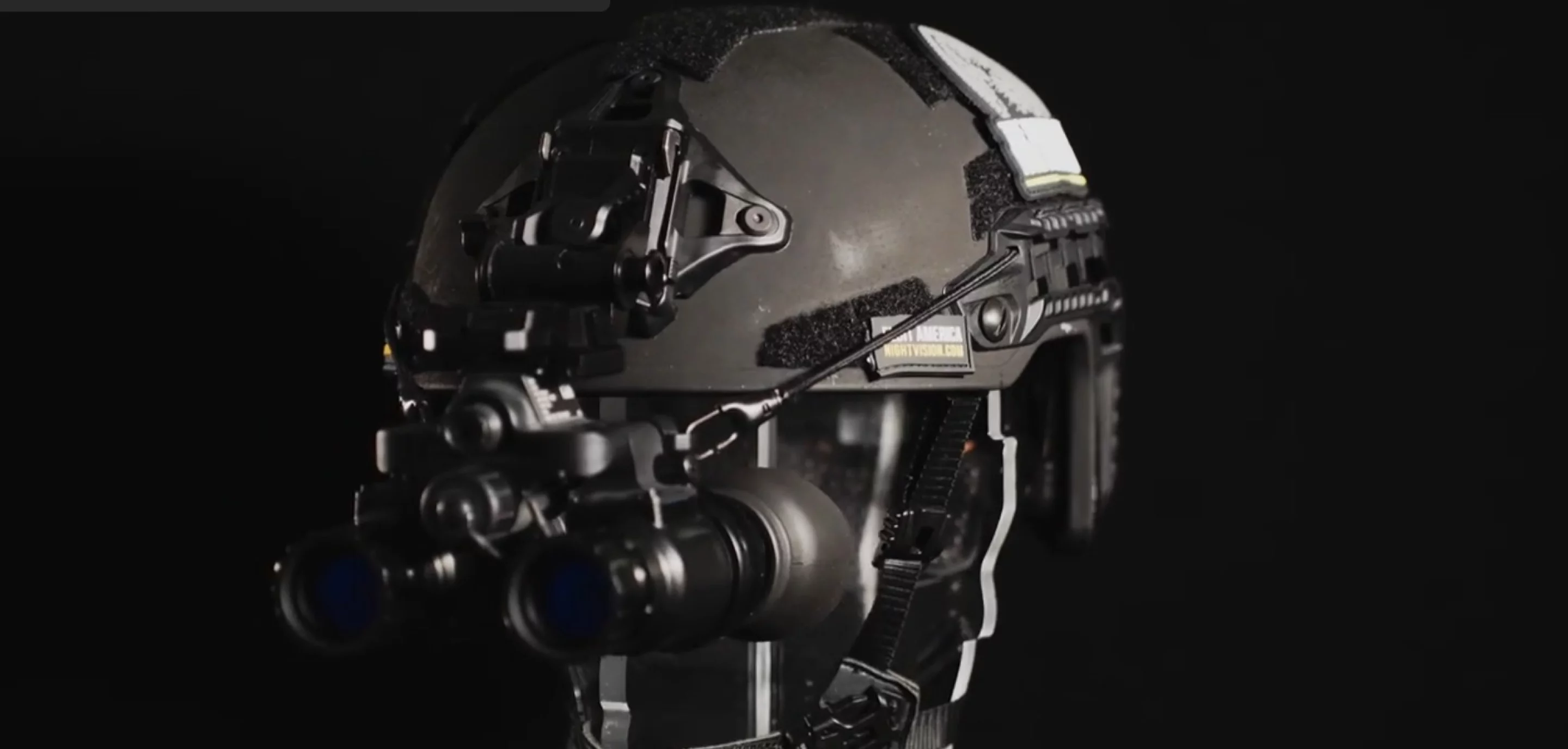
The U.S. Army has awarded contracts to three companies for a major upgrade in night vision capabilities, in line with the government's policy of encouraging competition among defense contractors while ensuring redundancy and adequate production capacity. All three contracts are fixed-price contracts for the development, production and testing of respective binocular night vision observation equipment. The systems submitted by Elbit America, L3Harris, and Photonis all reflect the shift from monocular to binocular systems, providing a wider field of view, improved situational awareness, and proper depth perception to reduce tripping over air in the dark. Together, these systems also switch from green fluorescent displays to white fluorescent technology, producing black and white images that are less confusing to the eyes, more comfortable for the brain and reduce eye fatigue.
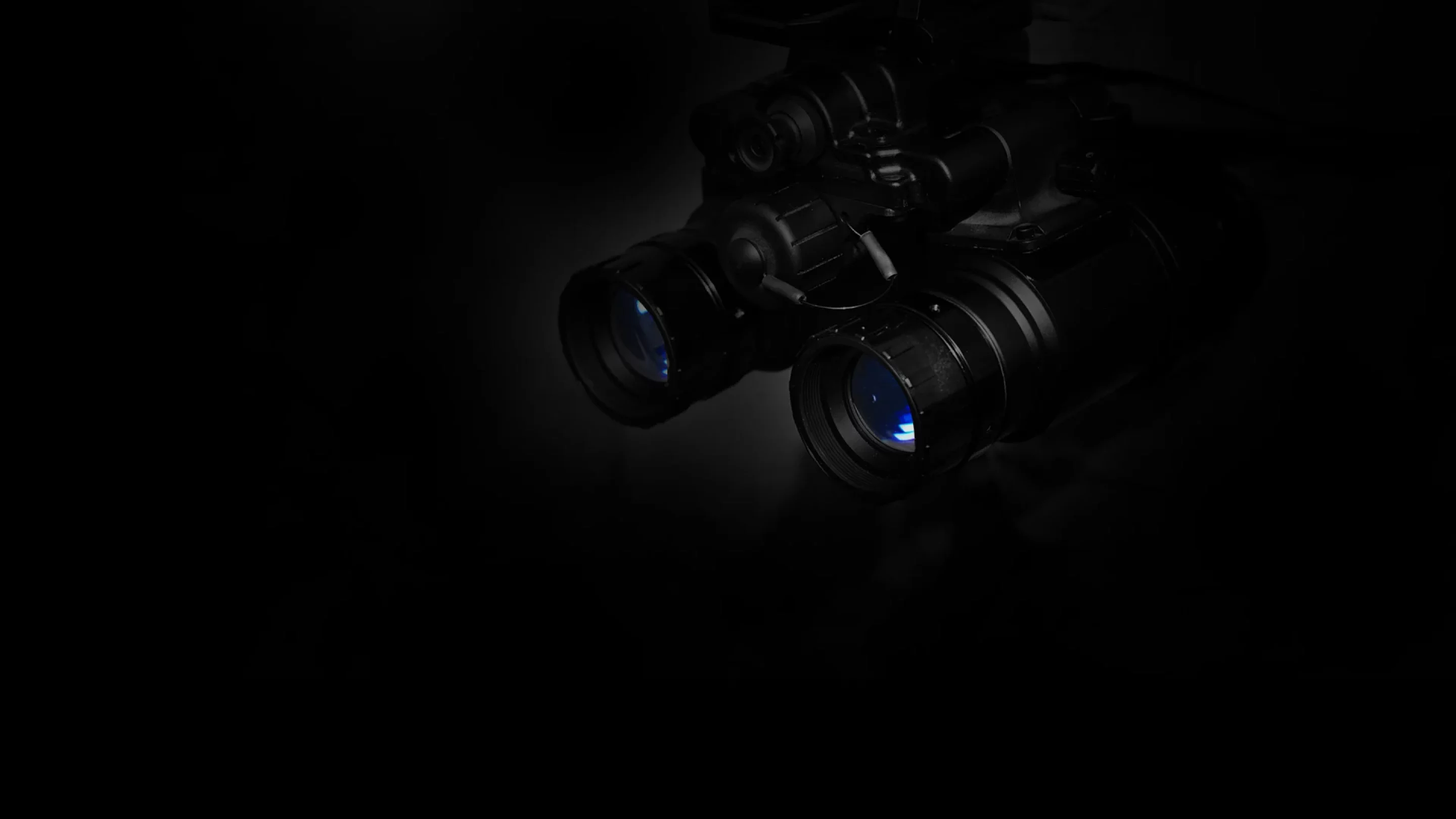
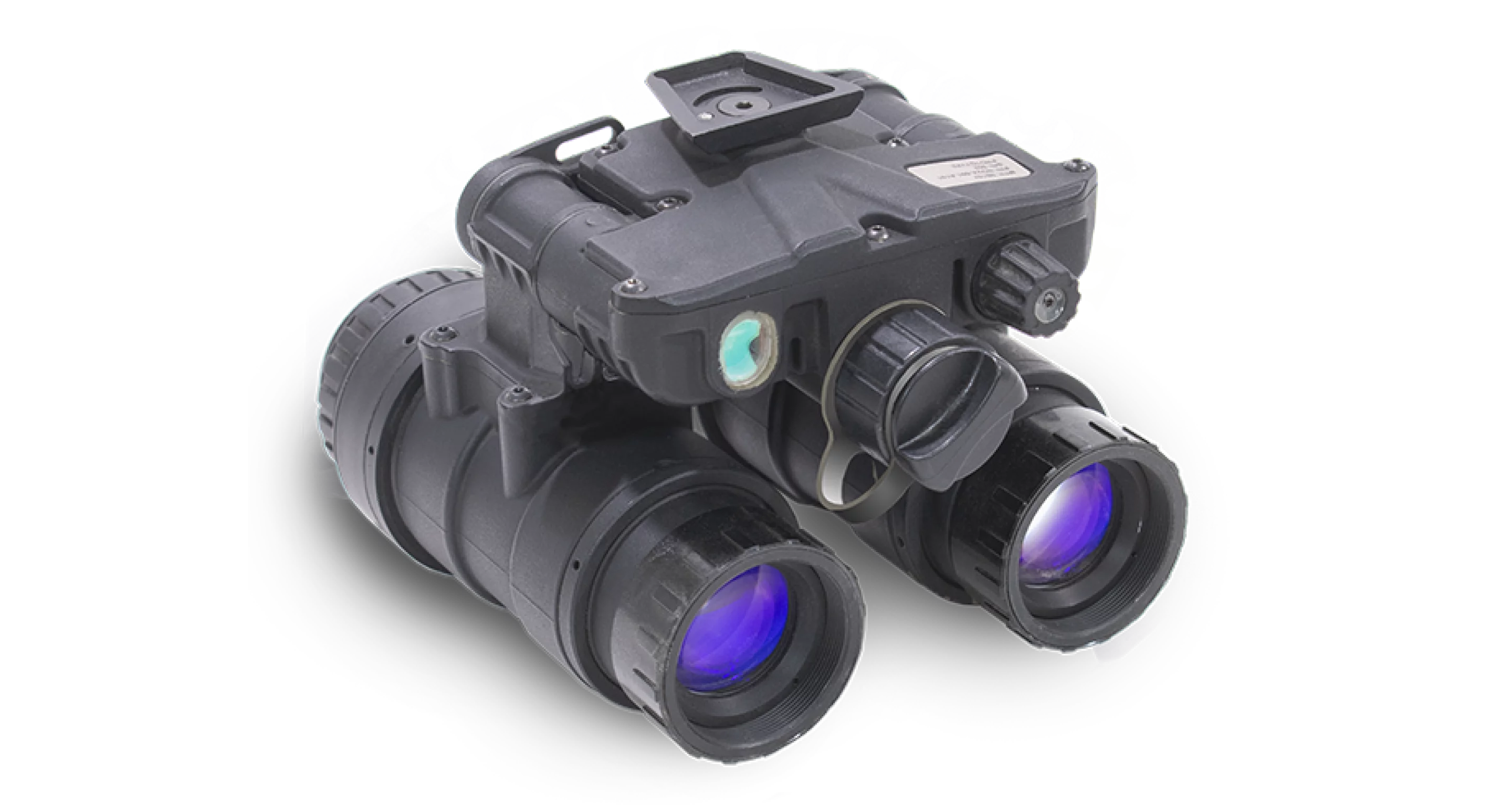
Additionally, all three systems are designed so that the barrels can rotate independently, allowing the wearer to flip one barrel open to maintain natural night vision in one eye while using enhanced vision in the other. When not in use, both tubes can be folded back against the helmet, lowering the center of gravity for improved comfort and reducing the risk of the device hitting door frames or vehicle hatches. When the lens barrel of any system is flipped up, it automatically shuts down to save power and avoid projecting a noticeable glow, and when the entire device is flipped up, it powers down completely. All BiNOD systems are waterproof to a depth of 66 feet (20 meters) for at least two hours and can operate in temperatures ranging from -40°C to 49°C. They also use the same dovetail grooves, making them compatible with standard helmet mounts, and the visors can be adjusted to fit the operator's interpupillary distance, and the diopter can be adjusted for users who require prescription lenses.
Elbit America's BiNOD candidate features an upgraded optical system that delivers sharper edge-to-edge sharpness compared to the older fleet's aging lens designs. Its light amplification system has been expanded to include optional thermal imaging and optical overlays, and the architecture is modular to simplify future upgrades. Ergonomics have also been improved, with the device's center of gravity more balanced to reduce eye and neck stress for infantry personnel who may need to wear the device for up to 10 hours a night. L3Harris’ NOVA system also adopts a modular design to facilitate upgrades and field repairs. Each lens barrel can be disassembled with only four screws, greatly reducing downtime and minimizing the need for special tools. Inside the NOVA goggles are L3Harris’ proprietary film-free third-generation image enhancement technology. By removing the ion-blocking film in standard third-generation tubes, NOVA claims to achieve higher clarity and greater light sensitivity, especially in almost total darkness. The design also integrates an infrared illuminator for close-range tasks.
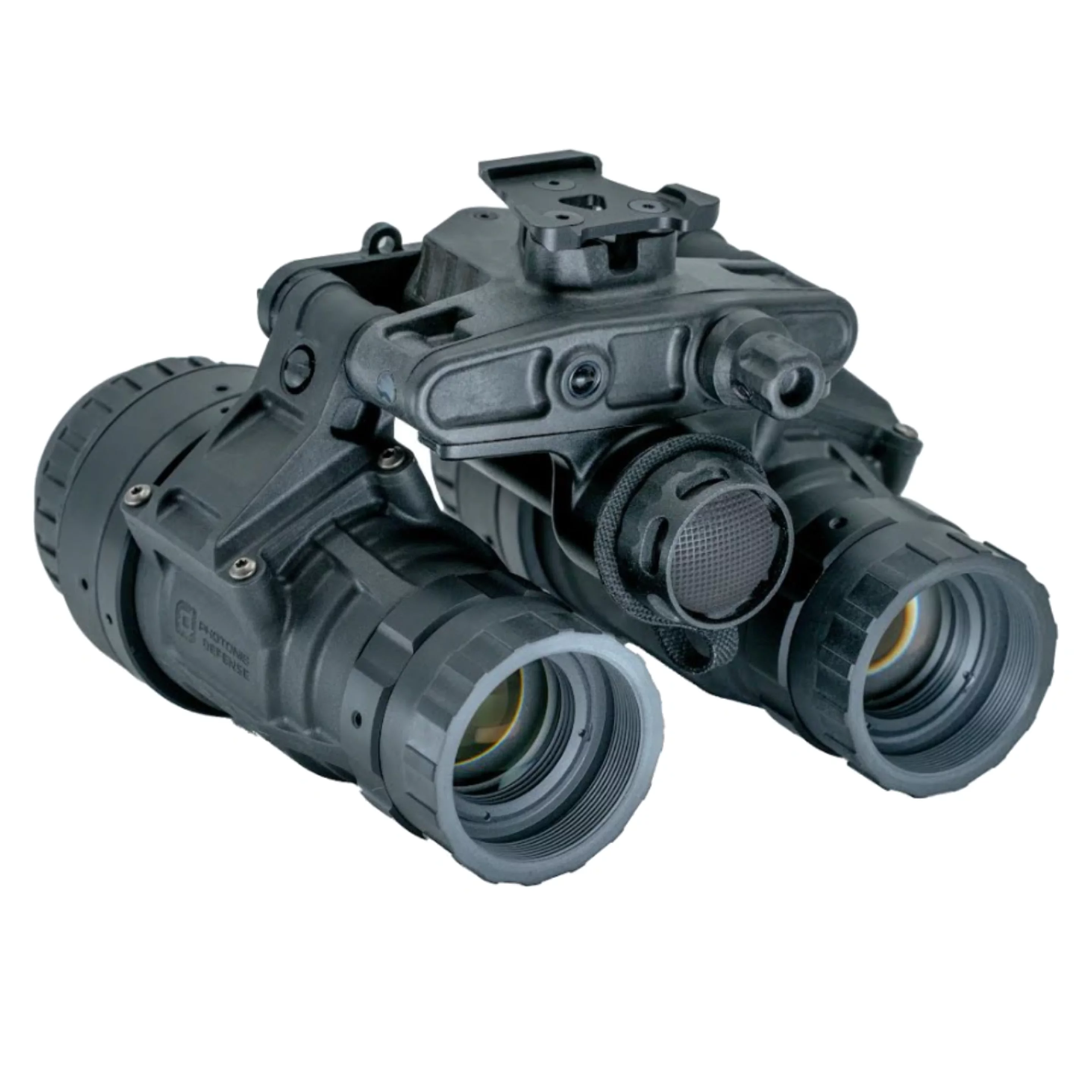
Photonis Defense's Vyper Pro focuses on ultra-lightweight construction, replacing magnesium or aluminum alloys with a high-strength carbon fiber-reinforced polymer shell to reduce weight and improve impact resistance. Unlike standard third-generation systems, Vyper Pro has "out-of-band" capabilities, allowing operators to see a wider spectrum of light, including high-frequency infrared lasers and ultraviolet markers not visible with comparable systems. In addition, Vyper includes ultra-fast auto-gated power specifically designed for urban combat, functioning in situations where sudden flashes such as muzzle flashes, explosions or street lights may cause traditional night vision equipment to "overexpose" or fade. With such a diverse selection, the Army will not only be well-prepared for night operations, but may also have enough spare capacity to start a nice side business helping late-night bar patrons find their lost keys.