The Iranian government is seeking to charge the world's largest technology companies for using undersea internet cables laid under the Strait of Hormuz, CNN reported. Iranian officials and their affiliated media also issued vague threats that if companies refused to pay, relevant network traffic may be disrupted.
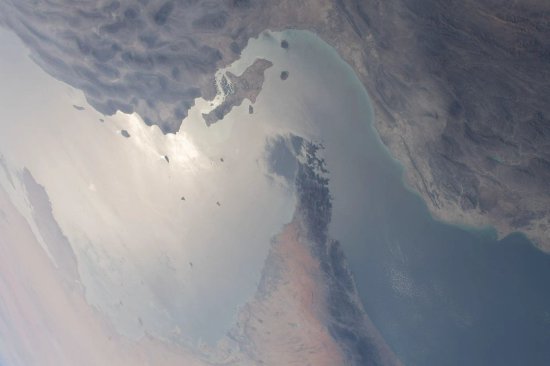
Reports indicate that Tehran lawmakers last week discussed a plan to build multiple undersea cables connecting Arab countries with Europe and Asia. Iranian military spokesman Ibrahim Zolfagari recently stated on the Some companies have previously invested in cables laid through the Strait of Hormuz and the Persian Gulf, but it is unclear whether these cables actually cross Iranian territorial waters.
However, even if Tehran makes a request for fees, the outside world generally questions the possibility of its implementation. Due to the severe sanctions imposed by the United States on Iran, relevant technology companies are prohibited from making payments to Iran, so these companies may regard Iran's stance as a gesture declaration rather than an implementable policy. Despite this, Iranian state media have continued to issue "point-and-shoot" threats, suggesting that if the cable is damaged, it may impact trillions of dollars in global data transmission and have an impact on the world's Internet connectivity.
CNN cited an analysis by Dina Esfandiari, head of Middle East affairs at Bloomberg Economics, saying that Iran's move is part of its strategy to demonstrate its leverage to control the Strait of Hormuz and ensure the survival of the regime. "It is trying to make it more difficult for any country to attack Iran easily by raising the potential cost to the global economy," Esfandiari said. The Strait of Hormuz is one of the key passages for global energy and data transportation. Undersea optical cables are intensively intertwined here, giving the area significant strategic sensitivity.
The report pointed out that these undersea cables carry a large amount of Internet and financial data traffic between Europe, Asia and the Persian Gulf. The consequences of attacking them will go far beyond a decrease in network speed. The scope of the impact may extend to banking systems, military communications, artificial intelligence cloud infrastructure, and various online services such as remote working, online games, and video streaming.
CNN also spoke with Mustafa Ahmed, a senior researcher at the UAE-based Habtoor Research Center, who has published papers analyzing the potential impact of large-scale attacks on undersea communications infrastructure in the Gulf. Ahmed pointed out that the Islamic Revolutionary Guard Corps has combat divers, small submarines and underwater drones, which give it the ability to pose a real threat to underwater cables. He warned that an attack on cables could trigger a domino effect of "digital disaster" across continents.
At a regional level, countries across the Persian Gulf could face severe internet outages that threaten not only their oil and gas exports but also the functioning of their banking systems. Ahmed predicts that India will also be significantly affected, with a large portion of its Internet traffic transmitted via related submarine cables, which could cause billions of dollars in losses to its huge outsourcing services industry. In addition, financial transactions and cross-border payments between Europe and Asia may be delayed, and parts of East Africa may even experience widespread network outages. If Iran's proxy forces adopt similar tactics in the Red Sea, the consequences of damage may be further magnified.
Overall, Iran's dual signals of "charging and threatening" through the Strait of Hormuz submarine optical cable are regarded by the outside world as a new round of actions to seek strategic bargaining chips under the pressure of current regional conflicts and sanctions. At a time when technology is highly dependent on undersea infrastructure, this attitude towards critical communication lifelines is arousing high vigilance from governments, technology giants and financial institutions.