According to news on May 19, Ben Gawiser, director of software engineering at Oracle, sued Tesla in the small claims court in Texas, USA, because of Tesla's delay in fulfilling its "fully autonomous driving" promise, and received a default judgment of more than $10,000.
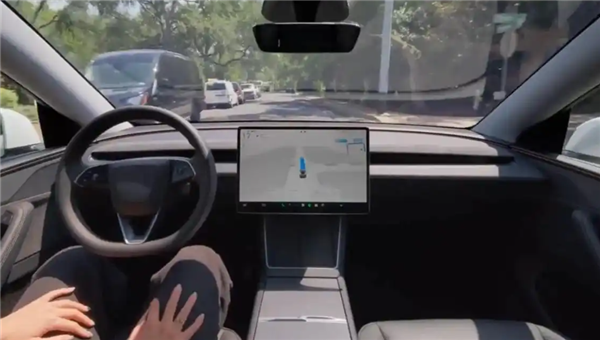
According to Business Insider, Galweather purchased a Tesla Model 3 long-range version in August 2021 and spent an additional $10,000 to purchase the Full Self-Driving (FSD) function. A few years later, what he was waiting for was not autonomous driving without human supervision, but Musk's admission that some old Tesla models would not be able to support unsupervised FSD without major upgrades.
Garweiser sued Tesla earlier this year in small claims court in Travis County, Texas, for failing to deliver unsupervised FSD. Tesla did not appear in court at the April 1 hearing. Court records show that Gaweisse received a default judgment of $10,600 and $72.88 in legal costs.
Tesla's legal team later tried to apply for an extension of the appeal deadline on the grounds of "ignorance of the hearing and judgment," but was rejected by the judge. Gaweisse told the media that if Tesla refuses to pay compensation, he plans to apply to the court for an enforcement order and directly seize the assets of Tesla showrooms.
Does $10,000 buy you today’s functionality or a promise for the future?
The core of the Tesla FSD controversy is not just whether the software was upgraded on time, but what the users actually bought that year.
As early as 2016, Tesla began to emphasize that its vehicles are already equipped with the hardware required to achieve autonomous driving in the future, saying that the ultimate safety will be significantly higher than that of human driving. But the reality is much slower than promised. Many car owners who bought Tesla before 2023 can only use the FSD version that still requires human supervision, and cannot directly obtain truly unsupervised fully autonomous driving.
Musk confirmed in an investor communication last month that Tesla vehicles equipped with older hardware would not be able to support unsupervised FSD without a major upgrade. He also mentioned that relevant car owners may receive discounted replacements or comprehensive modifications to the vehicle's AI computer and camera.
For car owners who have paid thousands or even tens of thousands of dollars for FSD, this explanation is difficult to fully satisfy. Because what they originally purchased was not just an "assisted driving function", but also their expectations for fully autonomous driving capabilities in the future.
Gaweisse's experience is representative of this gap.
He said that he also test-drove other electric vehicles such as the Ford Mustang Mach-E, but ultimately chose Tesla because he wanted Tesla's technical capabilities, especially FSD. He said that he has received almost no communication from Tesla about this capability since buying the car, "basically complete silence." In his opinion, Tesla failed to deliver on its promises and he deserved to get his money back.
The vision can be radical, but the contract cannot be vague
Garweiser isn't someone who doesn't understand the risks of technology.
He has worked in the technology industry for a long time and knows that it may take time to implement new technologies. But his judgment was that the CEO could set a far-sighted goal for the company, but should not write unfulfilled goals into contracts with customers.
This sentence hits home the embarrassment of Tesla FSD over the years.
Tesla is not just selling cars, it is also selling a future version: if you buy your car today, it will become more and more powerful through software upgrades in the future, and one day you can even drive it by yourself, make money by yourself, and join the robotaxi network. This narrative is very attractive and helps widen the image gap between Tesla and traditional car companies.
But as time went on, the promises were not fulfilled as scheduled, and the hardware proved unable to keep up, the question changed from "the technology is still iterating" to "whether the promises made during sales misled users."
If FSD is just an experimental function, the risk is more voluntarily borne by the user; if FSD is a high-priced sales option and has long been described as a ticket to fully autonomous driving, then it is not a simple emotional rebound when car owners ask for refunds or compensation.
Smart cars are also selling a future version
Tesla is not the only one facing Garweiser now.
Business Insider mentioned that there have been multiple lawsuits against Tesla's FSD advertising promises in the United States; European users may also take legal action after the supervisory version of FSD is launched in the Netherlands. Tesla executives said that the company plans to launch a lite version of the new FSD for owners of older models in June and promote it to the international market.
But it’s hard to say whether the lightweight version can repair trust.
For old car owners, what they care about most is not whether the software can continue to be upgraded, but whether the company admits that the promises of fully autonomous driving have affected their purchasing decisions. Gaweisse said that many people who bought and paid for FSD at the same time as him have "little trust left."
Interestingly, he doesn't hate his car.
Galweather said he still loves the Model 3 and even said it was the best car he had ever owned. Herein lies the paradox: A car can be great to drive, and a company can simultaneously disappoint customers with its sales promises.
The smart car industry is making more and more features available as software packages, subscriptions, and promises of future upgrades. What car owners buy is no longer just the configuration that can be used today, but also a future version that is constantly being updated.
This must answer a question: If future versions are delayed, or the hardware proves to be unable to sustain the original promise, who should bear the responsibility?
Garweiser's small-claim lawsuit is small, but it serves as a reminder to all companies selling "future features" that vision can inspire people and contracts can chase them.