Is there really other life in the universe? The famous "Fermi Paradox" uses statistics to propose that life should be very common in a universe full of stars and planets, but we have yet to find conclusive evidence. Now, a scientific research team at the University of California, Riverside, has proposed a new statistical method, trying to provide a new breakthrough for this ancient problem through the "hidden order" between molecules.
Researchers have discovered that the existence of life depends not only on the specific molecules themselves, but also on a special organization or "hidden order" between these molecules. They claim that this organizing principle can be identified statistically, allowing them to "sniff out" signs of extraterrestrial life based solely on the distribution patterns of molecules in organic chemistry samples. "Our work shows that life produces mixtures of molecules with characteristic patterns that are distinct from non-living systems," Fabian Klenner, assistant professor of planetary science and co-author of the paper, said in an interview. "Through our statistical methods, these patterns can be clearly detected."
A big advantage of this approach is that it can be applied not only to future tasks, but also to retrospectively analyze existing data sets. In other words, humans may have already "encountered" clues of extraterrestrial life in a large amount of historical observation data, but they have not yet used the appropriate tools to identify them.
For a long time, scientists have mainly looked for "biosignature" molecules to judge the possible existence of alien life. For example, on Mars, NASA's "Perseverance" and "Curiosity" rovers are analyzing rock and atmospheric samples for organic compounds and other potential signs of microbial life. The new research published in "Nature Astronomy" emphasizes the importance of "molecular ordering" and shifts the focus from "what molecules are there" to "how these molecules are organized by life."
Specifically, the team found that if a mixture of molecules was produced by life, the amino acids in it are usually more diverse and more evenly distributed in quantity. The opposite is true for fatty acids, where life-produced fatty acids are less uniformly distributed and more diverse. Scientists believe that this so-called "molecular diversity signature" itself can serve as a detectable biosignature and is no longer limited to the presence or absence of individual "signature molecules of life."
In order to find out the organizational principles that support life, the team analyzed the diversity of molecular mixtures in different systems, focusing on two points: first, how many different molecules exist, and second, whether the distribution of these molecules is balanced. They found that biological systems (that is, life) and non-living systems differ systematically in the way they organize their molecules - living things produce patterns that embody some of the fundamental principles of life, while non-living processes have difficulty replicating this "order".
It is worth noting that this method does not rely on new large-scale instruments at the technical level. Klenner says their method can be directly applied as long as the mission itself can measure information about the "relative abundance" of related organic molecules of the same type. This means that many deep space missions already being planned or about to be implemented may become potential "testing grounds" for this method.
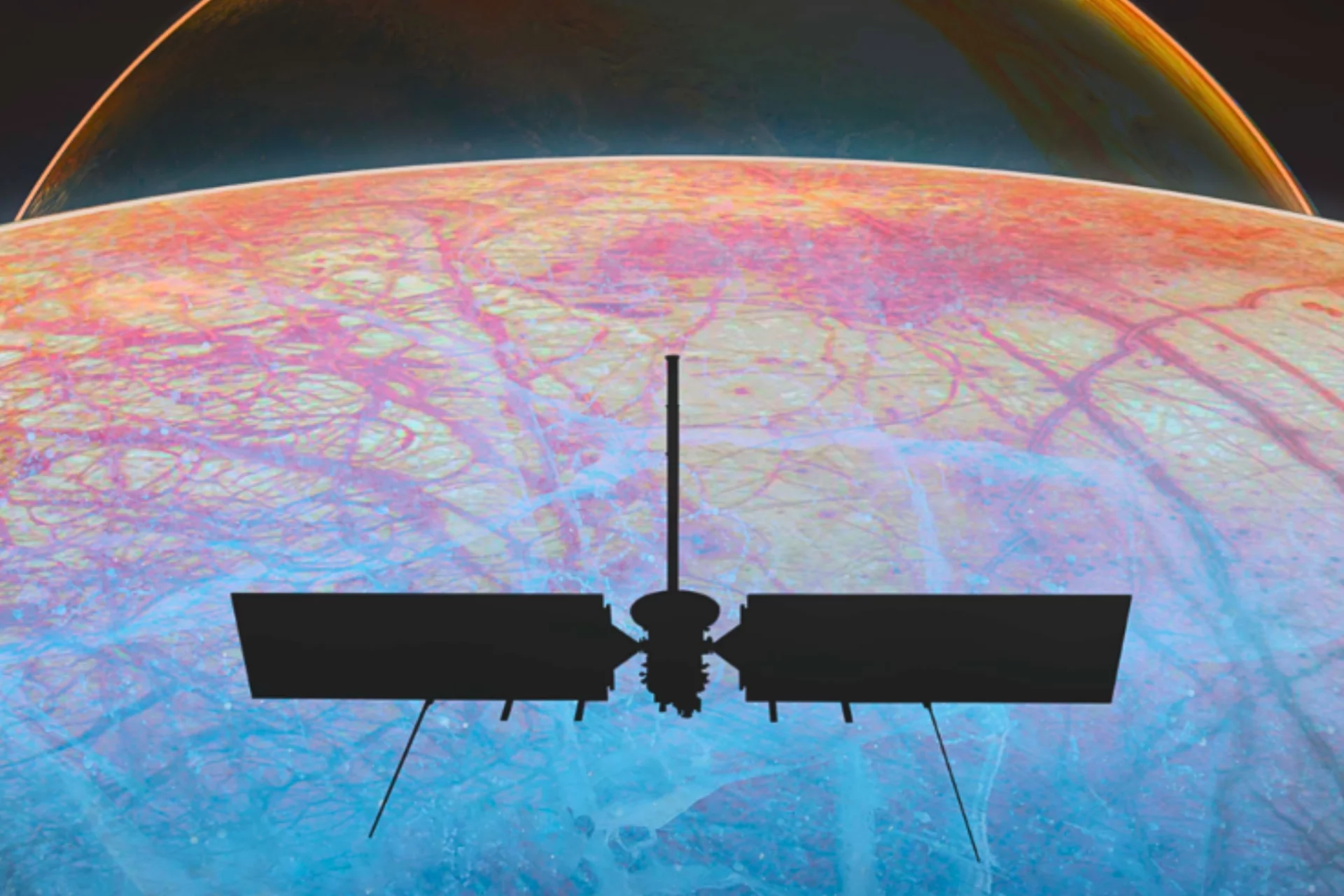
Among them, NASA's "Europa Clipper" mission planned to travel to Jupiter's moon Europa is considered to have great potential. The probe is expected to perform multiple close flybys beginning in 2031, focusing on detecting the environmental conditions of this icy satellite that may have a vast underground ocean, and assessing whether it has the potential to harbor life. The shipboard instrument "Surface Dust Analyzer" (SUDA) can measure the abundance of organic molecules. If it captures a sufficiently rich family of organic molecules and their relative abundance information, the statistical method proposed by the research team is expected to be used to determine whether these molecular patterns are closer to biological or abiotic processes.
Despite this, the researchers also emphasized that this method cannot alone "announce the discovery of extraterrestrial life." "Our approach is more like part of a broad biosignature framework." Klenner pointed out, "When exploring extraterrestrial life, no single signal can be regarded as absolute proof." But this method is expected to greatly broaden the scope of scientists' concept of "life forms" and help discover those life forms that do not fit the traditional life chemistry paradigm and may otherwise be ignored.
This potential breakthrough stems from a key feature of the method itself: it focuses on the organization of molecules, rather than the "typical molecules" listed in biochemistry textbooks. As Klenner says, "Our study focused on the organization of molecules themselves. In principle, this method could potentially be sensitive to an unfamiliar life form as long as it organizes molecules differently from non-biological processes."
Furthermore, this method is entirely based on statistical calculations and can therefore be applied on a large scale to a variety of archival data. Klenner points out that because the method is computational in nature and does not require specialized new instrumentation, if the existing data set contains sufficient information on molecular abundance, then this "diversity analysis" idea can be used to revisit the data. This not only means that the "search surface" for potential life signals will be significantly expanded, but also that any acquisition of new data may produce "unexpected surprises" in the comprehensive analysis with old data.
With the joint action of multiple data channels such as the James Webb Space Telescope, the Search for Extraterrestrial Intelligence (SETI), and the upcoming Europa Clipper, the new method of the University of California, Riverside team is regarded as one of the important puzzle pieces to further increase the "probability of major discoveries." Perhaps, humanity is one small step closer to the moment when it finally proves that “we are not alone.”