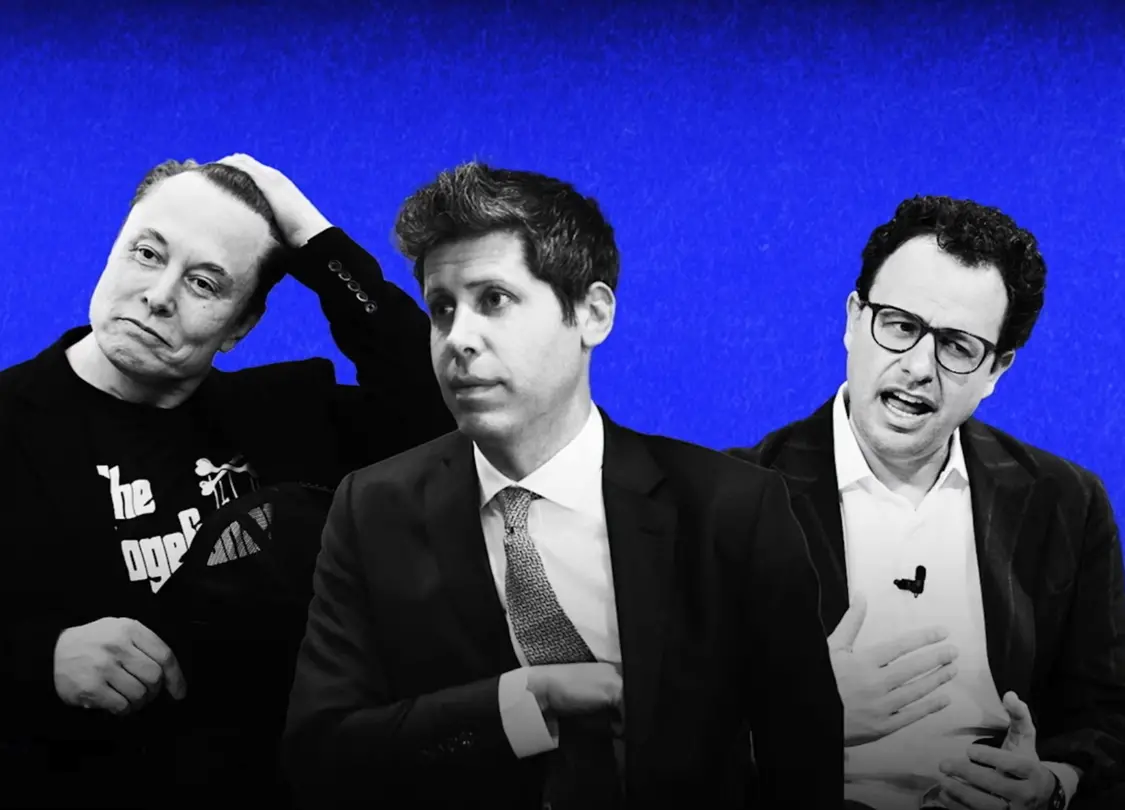
On May 25, the Financial Times reported that Elon Musk, Sam Altman and Dario Amodei had debated how OpenAI could catch up with Google in the field of AI. Now, the three are preparing for a blockbuster IPO. These listing plans may not only give birth to trillion-dollar companies, but may also reactivate the long-dormant U.S. IPO market and test the ability of public market investors to digest the surging wave of technology company listings.

Three tycoon's companies gather for IPO
IPO New Year
Musk and Amodei broke up with OpenAI in 2018 and 2020 respectively, which made the competition between the three more intense and evolved into a contest of "who can attract the most capital."
Amodei's Anthropic, Musk's SpaceX and Altman's OpenAI may make 2026 the hottest year in the history of the U.S. IPO market. If all three companies complete their listings, their total financing will far exceed the record $156 billion in 2021 and end the four-year downturn of venture capital institutions and Wall Street investment banks.
Investors, bankers and advisers involved in the IPOs said executives at the three companies are currently evaluating how to raise as much money as possible through IPOs without blowing up the market.

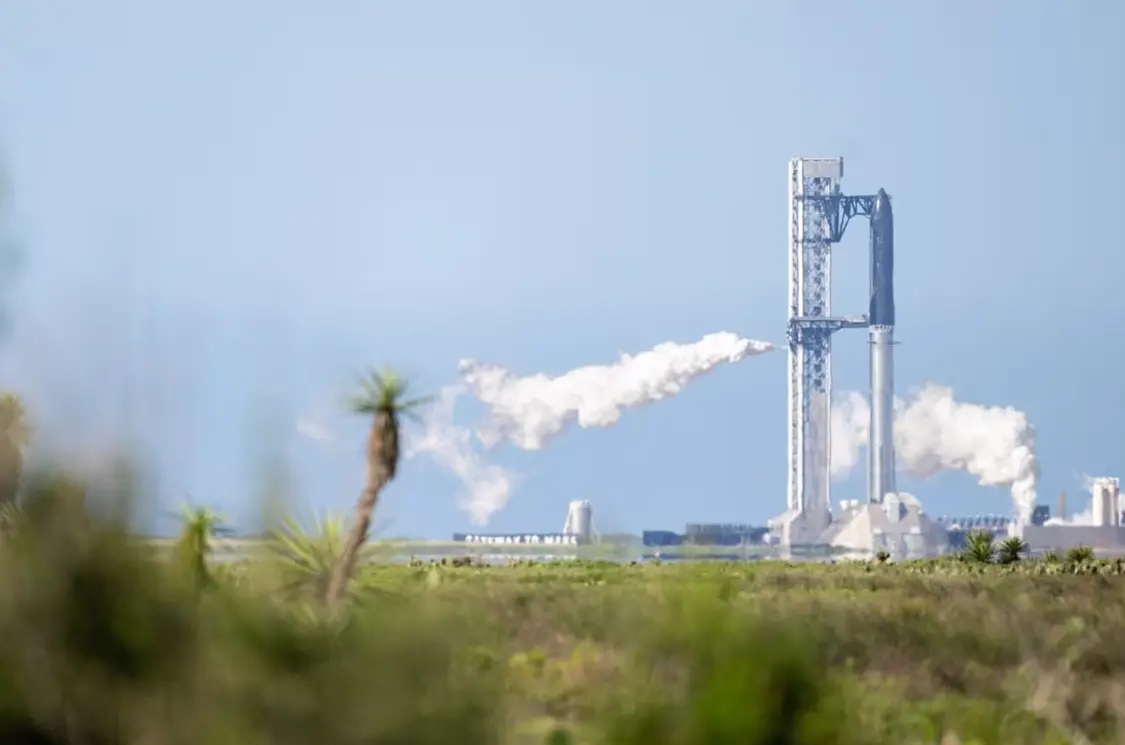
Starship V3
A poor performance on the first day of listing could also undermine optimism about AI, which has driven U.S. stocks higher despite inflation and geopolitical turmoil.
It’s no coincidence that they all went public together
This week, all three privately held companies took another step toward going public. Rumors of OpenAI accelerating its IPO schedule, news of Anthropic's first quarterly profit, and SpaceX's submission of the highly anticipated S-1 document are competing to grab market attention.
These news send a signal to public market investors: These AI laboratories may follow in the footsteps of SpaceX and be listed one after another in the short term.
Rob Hilmer, founder of investment firm Goanna Capital, which holds shares in all three companies, said it was no coincidence that all three companies were preparing to go public at the same time.
"We've been in a strong risk-on environment for some time. After five years of no big tech IPOs, how many more can we expect to emerge?" Hilmer said. "In a world that's looking for growth, the public markets are lacking exactly these types of assets... I think they're going to be extremely popular."
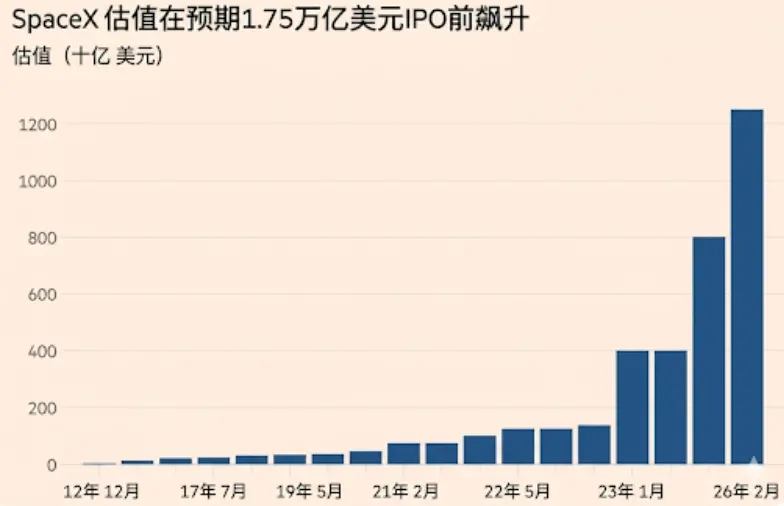
Backers believe these companies can ride the wave of enthusiasm for AI from institutional and retail investors. SpaceX aims to raise about $75 billion at a $1.75 trillion valuation, while OpenAI was recently valued at $852 billion and Anthropic is about to close a $30 billion funding round at a $900 billion valuation.
Can the market bear it?
"There are about US$8 trillion in money market funds today. From this perspective, absorbing SpaceX's estimated US$75 billion IPO financing only accounts for 1% of it. There is a lot of 'cash to be deployed' in the market." Another investor who holds shares in all three companies said.
Public market investors have been gaining exposure to AI through indirect means over the past few years, particularly through chip stocks such as Nvidia, they added. Once they are able to invest directly in these AI labs, they will switch to direct holdings. The challenge then will not be for them, but for the rest of the market.
Peter Hébert, co-founder of venture capital firm Lux Capital, also believes that public markets have the ability to absorb these giant IPOs. "SpaceX's massive $75 billion financing is not even the largest primary market financing announced since the beginning of 2026, a record held by OpenAI," he said, referring to the $122 billion round OpenAI completed earlier this year.
However, all three companies are still heavily in the red, and public market investors may be less patient than private investors about huge cash burns and unfunded commitments.

SpaceX valuation surges
At the $1.75 trillion target valuation set by investment banks, SpaceX would be valued at 91 times its $19 billion in revenue over the past year, a price-to-sales ratio that exceeds that of its most expensive big tech peers. In comparison, the most expensive among the "Seven Big Technology Stocks" in terms of revenue is NVIDIA, with a price-to-sales ratio of 21 times and huge profits.
IPO selling points
To take SpaceX public, Musk not only needs investors to believe the numbers, but also needs them to buy into his vision. The SpaceX prospectus reads like a financial disclosure document as much as a manifesto: 14 of the first 16 pages are taken up by images of rockets, satellites and planets.
According to people familiar with the matter, SpaceX also invites investors to visit its Starship base headquarters in Texas to better tell its development story.
“If you haven’t seen it, you can’t really feel it. If you can’t feel it, you don’t really understand it,” said Justin Fishner-Wolfson of 137 Ventures, whose firm first invested in SpaceX in 2011.
"One of the largest buildings you will see in the world is building rockets, probably close to the scale of the aircraft industry, as well as two launch pads and supporting launch tower facilities," Wolfson said.
He pointed out that the fully reusable rocket that SpaceX is building will support the entire business landscape, from providing satellite Internet and mobile communication services to the earth to building data centers in space.
As expenses increase, Anthropic's profitability could be fleeting. The company signed on this month to become SpaceX's largest customer, agreeing to spend $15 billion annually on data center capacity and computing power. It has previously struck deals worth hundreds of billions of dollars with Google and Amazon.
OpenAI’s spending is even bigger. The company had nearly $6 billion in revenue last quarter, driven by growing use of ChatGPT and its programming tool Codex, a person familiar with the matter said. But at the same time, the company also told investors that it expected to burn through about $600 billion before reaching profitability by 2030. As the largest-funded startup in history, it has raised huge sums of money from large technology companies and sovereign investors, and is turning to public market investors to extend its "funding runway."
Part of OpenAI's IPO selling point is that it will be the first to realize general artificial intelligence (AGI), and believes that the returns will far exceed the current huge investment. AGI is a vaguely defined moment when AI surpasses human capabilities.
question
But grand visions that are popular in private markets may not always stand the test of time in the public markets.
WeWork, a co-working space, once proposed a mission to "raise the world's consciousness by renting office space with ping pong tables and beer taps." This narrative was enthusiastically pursued by private investors including Masayoshi Son, but received a cold reception from public market investors, ultimately leading the company to withdraw its $47 billion listing plan in 2019.
The incident still scares some private investors.
But others are more optimistic. Goanna's Hilmer said comparing the doomed office space company to today's AI darlings "confuses the difference between one big company with a terrible business and three of the best companies ever. These are well-managed, high-growth businesses."
"The least thing I worry about is whether there is capital to invest in them," Hilmer said.