Elon Musk, Sam Altman and Dario Amodei had a fierce dispute over how OpenAI could catch up with Google's artificial intelligence business. Now, these three industry leaders are preparing for an unprecedented scale IPO. This group of listed entities is expected to grow into companies with a market capitalization of trillions of dollars, revitalizing the continued sluggish U.S. new stock market, and will also test whether public investors can handle this successive wave of technology company listings.
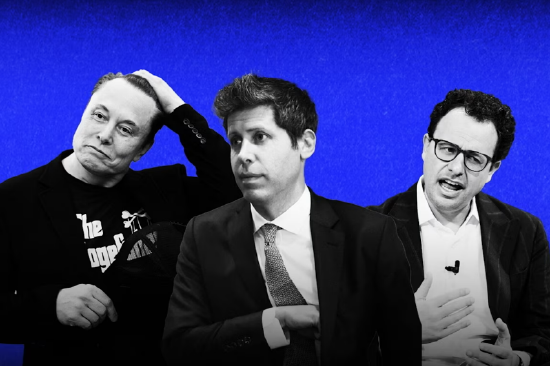
In 2018, Musk and Amodei broke up with OpenAI and resigned in 2020, further intensifying the competition between the two parties. Now, this competition has also evolved into a capital competition-who among the three companies can gather the strongest funds.
Anthropic, run by Amodei, SpaceX owned by Musk, and OpenAI, run by Altman, may make 2026 the largest year in the history of new stock issuances in the United States. The three companies have raised funds simultaneously, and the total amount will far exceed the historical record of US$156 billion set in 2021, bringing a turnaround for venture capital institutions and Wall Street investment banks that have been struggling to raise funds for four consecutive years.
Investors, bankers and consultants involved in the listing project said that corporate management is weighing the size of the three simultaneous fundraisings to avoid overloading market funds.
Once the performance of new stocks is weak on the first day of listing, it will also dampen the market's optimism about the artificial intelligence sector. Even with the current high inflation and turbulent geopolitical situation, the artificial intelligence boom is still driving U.S. stocks higher, and this confidence may be shaken as a result.
This week, the listing process of three unlisted companies has made substantial progress: OpenAI has accelerated its listing timetable, and rumors of Anthropic achieving quarterly profits for the first time have spread one after another. At the same time, SpaceX, which the market has long awaited, has also officially submitted its S-1 listing application documents.
Various signals indicate to secondary market investors that these two artificial intelligence laboratories will most likely follow in the footsteps of SpaceX and launch listings soon.
Rob Hilmer, founder of Gaona Capital, holds shares in three companies at the same time. He believes that it is no coincidence that the three companies are preparing to go public.
"The market has been in an environment of rising risk appetite for a long time. After five years of hiatus in the listing of large technology stocks, it is reasonable for a batch of blockbuster new stocks to appear."
He added: "Today, the secondary market is extremely short of targets with high growth potential, and all parties in the market are seeking growth opportunities. I believe the stocks of these companies will be enthusiastically sought after by the market."
Investors believe that both institutional investors and individual retail investors are enthusiastic about the artificial intelligence track, and the three companies can take advantage of this situation to obtain sufficient funds. SpaceX plans to raise approximately US$75 billion, with a valuation of US$1.75 trillion; OpenAI’s recent valuation is US$852 billion; Anthropic is also about to complete a US$30 billion round of financing, with a post-money valuation of US$900 billion.
Another investor who has also invested in three companies said: "The total size of money market funds is currently close to US$8 trillion, and only 1% of SpaceX's estimated US$75 billion fundraising has been used. There is a large amount of idle funds in the market waiting to enter the market."
For many years, secondary market investors have only been able to lay out the artificial intelligence track through indirect means, mainly buying semiconductor stocks such as Nvidia. Nowadays, once they can directly invest in leading artificial intelligence laboratories, investors will inevitably allocate actively. The real challenge does not come from these few companies, but that this craze will be transmitted to the entire market.
Peter Ebel, co-founder of venture capital firm Lux Capital, is also optimistic about the secondary market’s ability to undertake large-scale listings. He said: "SpaceX plans to raise a huge amount of US$75 billion, which is not even the largest first-round fundraising since the beginning of 2026. This record is still held by OpenAI." He was referring to the US$122 billion in financing completed by the ChatGPT developer earlier this year.
However, the three companies are still suffering substantial losses. Compared with private equity investors, public investors tend to have lower tolerance for companies to burn high amounts of money and fail to deliver on their promises.
Based on the US$1.75 trillion target valuation given by investment banks, SpaceX's revenue in the past year was US$19 billion, corresponding to a market-to-sales ratio of 91 times, far exceeding that of its American technology giant peers. NVIDIA, which has the highest price-to-sales ratio among the "seven major technology leaders" in the U.S. stock market, has a price-to-sales ratio of 21 times in the past twelve months, and its profitability is very impressive.
To successfully complete the listing, Musk not only needs investors to approve the financial report data, but also needs to agree with his development vision. According to people familiar with the matter, SpaceX's listing prospectus is more like a development manifesto than a simple financial document: 14 of the first 16 pages display large-scale images of rockets, satellites and interstellar images. The company also invites investors to visit the Starbase headquarters in Texas to promote the company's development blueprint.
Justin Fishner-Wolfson of 137 Ventures, a venture capital organization that has invested in SpaceX since 2011, said: "Hearing is believing, seeing is believing. Only by experiencing it personally can you truly understand this company."
He said: "You can see that the world's top factories are mass-producing rockets, and the production capacity is expected to be comparable to aircraft manufacturing; there are also two launch pads and supporting towers built in the park."
He also mentioned that SpaceX is building fully reusable rocket technology, which will support the company's full business landscape, covering areas such as satellite Internet, ground mobile communications and even space data centers.
As expenses increase, Anthropic's profitability may not be sustainable. This month, the company finalized its cooperation and became SpaceX's largest customer, committing to invest US$15 billion annually in leasing data center facilities and computing resources. In addition, it has also reached cooperation with Google and Amazon, making a cumulative investment commitment of hundreds of billions of dollars.
OpenAI’s capital investment plan is even more ambitious. According to people familiar with the matter, relying on the popularity of ChatGPT and coding tool Codex, the company’s revenue last quarter was close to US$6 billion.
However, OpenAI admitted to investors that it is expected that the company will burn approximately US$600 billion in cumulative cash before achieving profitability, and the profit node is set in 2030. The total amount of financing of this company has reached the highest level among startups in the world, and it has gathered major technology giants and sovereign capital behind it. Now it is counting on secondary market investors to continue to provide financial support for the company's operations.
One of the core promotional highlights of OpenAI is that it is expected to be the first to realize general artificial intelligence - a stage in which the comprehensive capabilities of artificial intelligence surpass that of humans (this concept has not yet been clearly defined), and claims that the benefits created by then will far exceed the current investment costs.
However, the grand visions that are highly sought after in the private equity market may not be feasible in the secondary market.
WeWork, a co-working office company, once put forward the slogan of "enhancing global awareness" and won the favor of private equity investors such as SoftBank Masayoshi Son with its office space model with table tennis tables and beer machines. However, secondary market funds did not buy it, and the company ultimately gave up its listing plan with a valuation of US$470 billion in 2019.
This lesson has made some private equity investors worried.
But many people are optimistic. Hilmer of Gaona Capital said that it is unreasonable to compare Uber, which was poorly managed back then, with the three top artificial intelligence companies today. "The former is just an ordinary company with flaws in its business model, while these three are high-quality companies with stable operations and rapid growth. I am not worried at all that the market will not have funds to invest in them."