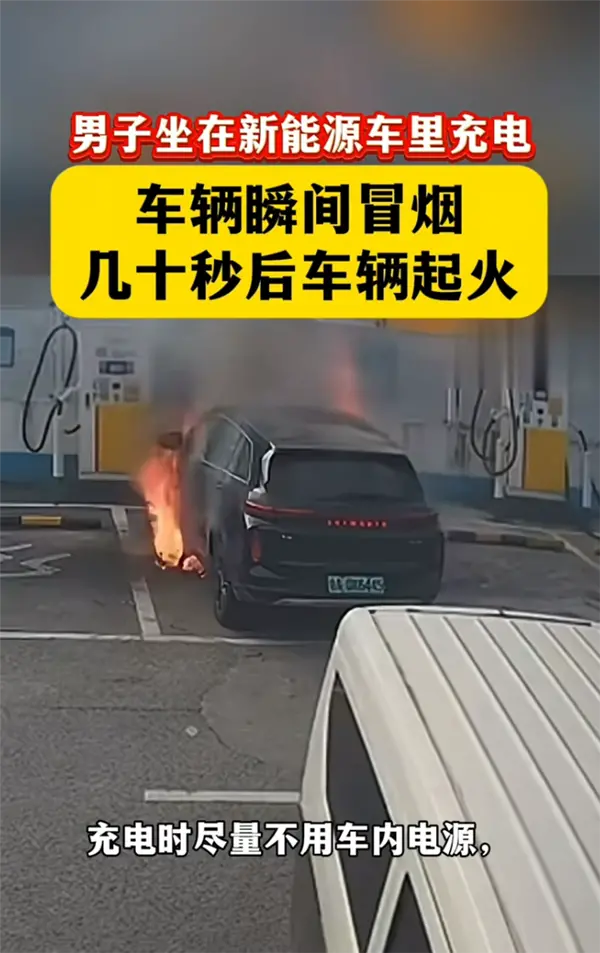
Recently, a video of a new energy vehicle suddenly emitting smoke while charging at a public station triggered a heated discussion on the Internet:While the car owner was sitting in the car waiting to recharge, a large amount of thick smoke suddenly came out from the chassis of the car. After noticing the abnormality, the car owner quickly opened the door and evacuated, and luckily avoided further expansion of the fire.Judging from the scene footage, an abnormality occurred shortly after the vehicle was connected to the public DC fast charger, and thick smoke spread rapidly from the chassis. Fortunately, the owner responded in time to avoid danger.
Under DC fast charging conditions, the power battery is in a high-voltage and large-current input state, and the battery core generates a large amount of heat. Even if the vehicle is equipped with a BMS battery temperature control system, old models and vehicles with battery loss still have local overheating and fire hazards due to line failures. Once the heat breaks out of control, the airtight compartment will greatly compress the escape space.
In response to the charging and riding regulations that car owners are generally concerned about, industry experts provide clear answers based on scenarios.
In DC fast charging scenarios, it is not recommended that drivers and passengers stay in the car. Especially when the remaining power of the vehicle is less than 20%, the internal resistance of the battery is high, and the heat load of fast charging doubles. The risk is even higher in environments such as high temperature exposure and closed underground charging stations. Try to wait in the rest area of the charging station to deal with dangers such as abnormal noise, smoke, and burnt vehicles as soon as possible.
Home AC slow charging generates low heat and can only be used for a short period of time. When staying, leave a ventilation gap in the car window. It is strictly prohibited to turn on high-power vehicle appliances such as air conditioners and seat heaters to avoid adding extra load to the battery and inducing abnormal heating of the battery cells.
In this regard, in view of charging safety hazards, you should check whether there is water, damage, or foreign matter in the charging port before charging, and give priority to compliant charging piles with national standard certification.
Once you smell a burnt smell or see smoke during charging, immediately press the emergency stop button on the charging pile and stay more than 50 meters away from the vehicle. Do not open the cover for maintenance or try to put out a fire.
In extreme weather conditions such as high temperatures and thunderstorms, outdoor fast charging should be avoided as much as possible, and energy replenishment at Jishui Station should be suspended.