As mass production of Apple's upcoming first foldable screen iPhone approaches, it has not yet been finalized whether it will be available in black. The well-known Weibo whistleblower "Sensa Digital" recently said that Apple "has not even decided whether there will be a black version of the folding screen" and half-jokingly said "does it have a grudge against black", implying that black is still under consideration, but has not been locked as one of the colors on the market. For a new product that is expected to be released as early as September this year and is about to enter mass production, the core appearance plan is still uncertain, attracting attention from the outside world.
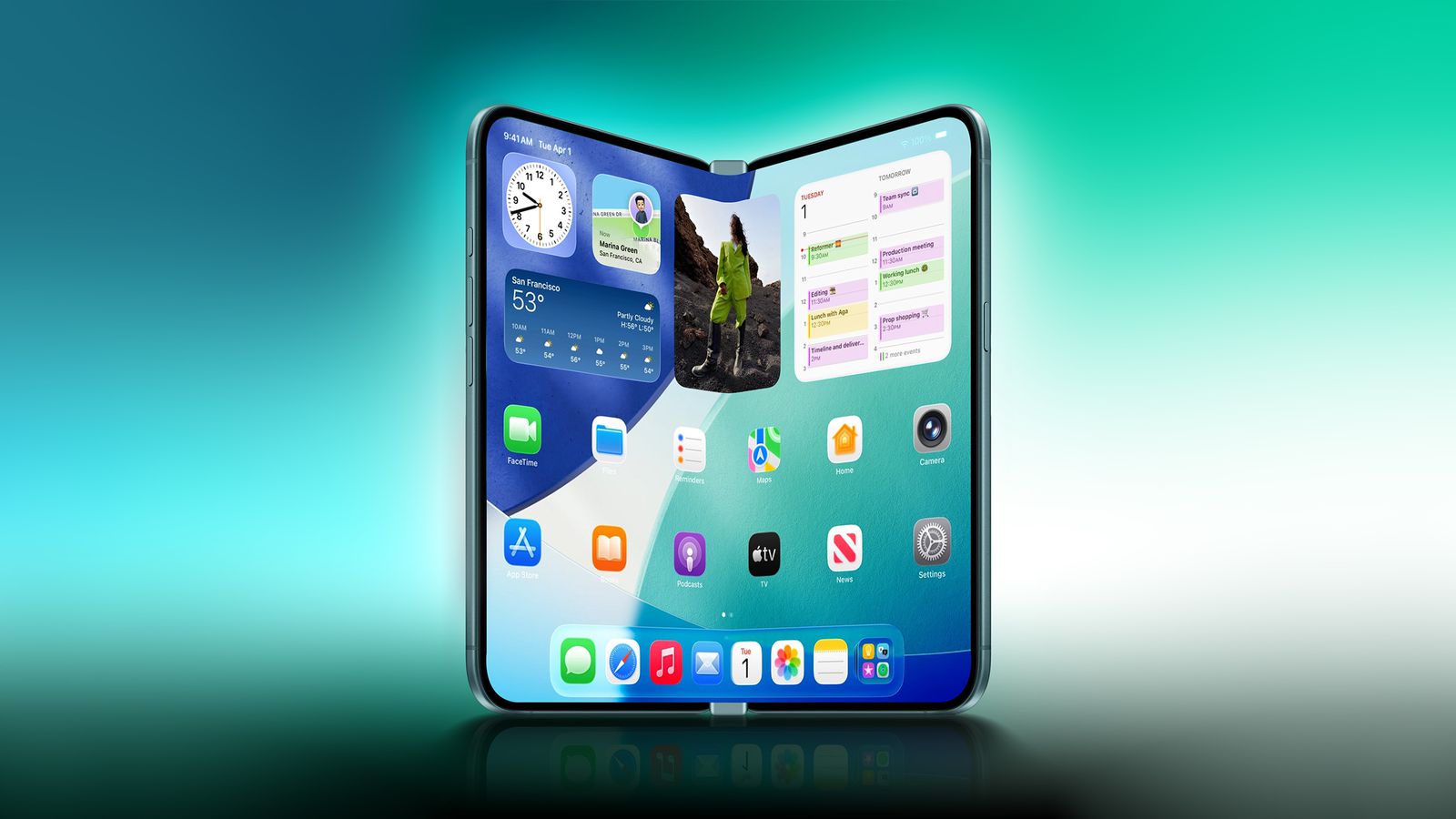
In February this year, the whistleblower said that this folding screen iPhone will only be available in two colors, of which white has been basically confirmed and the other color has not yet been disclosed. When it talked about the device again in May, it did not overturn its previous statement of "only two colors", making the outside world generally believe that the color selection in the early stage of launch will be quite restrained. The latest statement that black has not yet been finalized does not directly deny the "two-color scheme", but further amplifies the question of what the second color is.
On the other hand, there are also statements from different sources in the industry. Technology media Macworld quoted supply chain sources as saying that in addition to the traditional silver-white model, another color scheme of the folding screen iPhone may be an indigo version similar to the "Deep Blue" of the iPhone 17 Pro. The source also pointed out that the folding screen iPhone will have fewer colors than the iPhone 18 Pro series and will not use bright, highly saturated colors, but more stable tones. Bloomberg reporter Mark Gurman also previously reported that Apple will "avoid so-called 'fun colors'" in the product's color strategy, favoring traditional silver/white and dark colors (such as space gray or black) styles.
Currently, Samsung Display has begun mass production of OLED panels for this foldable device, and the overall production pace is gradually increasing. In Apple's consistent product supply chain rhythm, the body color scheme usually directly affects parts procurement and manufacturing schedules, and needs to be locked in for a long time before mass production. For the folding screen iPhone, which has a complex structure and relatively tight supply, it is not common for there to be significant hesitation about color matching at this stage. Therefore, some people believe that the so-called "black undetermined" reflects more that the supply chain information is not transparent, rather than that Apple has not yet made a final decision.
Judging from the engineering machines and models currently exposed, the folding screen iPhone prototypes that have been seen by the outside world are almost all white in appearance. In addition, in recent years, when Apple launches key new high-end products, they often only offer a single color for the first time. For example, Apple Watch Ultra and Vision Pro are both launched in a unified color system. This is also considered to be a strategic choice for Apple to reduce variables and production line complexity in the early stages of new processes and new product lines.
Analysts generally believe that the folding screen iPhone’s first color matching is limited. In addition to aesthetic and brand positioning considerations, more importantly, there are practical constraints on production and supply. Supply chain analyst Ming-Chi Kuo has previously warned that the foldable screen iPhone will face challenges in terms of early mass production ramp and yield, and that tight supply may last until the end of 2026. The frequently mentioned shipment scale of 15 million to 20 million units in the market is more likely to be the cumulative demand during the product's two to three-year life cycle, rather than the supply capacity in a single year in 2026. In this context, adding too many colors will significantly increase the difficulty of production, inventory and channel distribution of different SKUs, and there will be no obvious commercial benefits for Apple.
Judging from historical experience, Apple has a long history of adopting the rhythm of "less color matching and later completion" for landmark products. The iPhone X, released in 2017, starts at $999 and is only available in silver and space gray. The iPhone XS, launched the following year, added a gold option. Therefore, the industry speculates that the upcoming folding screen iPhone (generally regarded as part of the "iPhone Ultra" series) may start with one or two stable color combinations, and then gradually expand the color matrix in subsequent models.
In terms of price, Gurman predicts that the starting price of the folding screen iPhone will "cross the $2,000 threshold," positioning it significantly higher than existing non-folding flagship models. For this type of high-priced flagship user group, color is usually not the decisive factor in purchasing a phone, and more attention is focused on form innovation, hardware configuration, and ecological experience. This also gives Apple more room to operate in keeping its color matching strategy small and refined during the launch phase.
According to existing multiple sources, this folding screen iPhone is expected to be officially unveiled together with iPhone 18 Pro and iPhone 18 Pro Max in September 2026. As mass production approaches and the supply chain gradually stabilizes, more details about its final color matching, naming and specific configuration are expected to continue to emerge in the coming months.