At Computex 2026, storage manufacturer TeamGroup sent a clear signal: storage devices no longer just pursue speed and capacity, data security is becoming an equally important design goal. This concept is particularly evident in its newly released external solid-state drive T-Create Expert P35SG, which is designed to deal with the risk scenario of "preventing unauthorized access" rather than "preventing data loss" in the traditional sense.
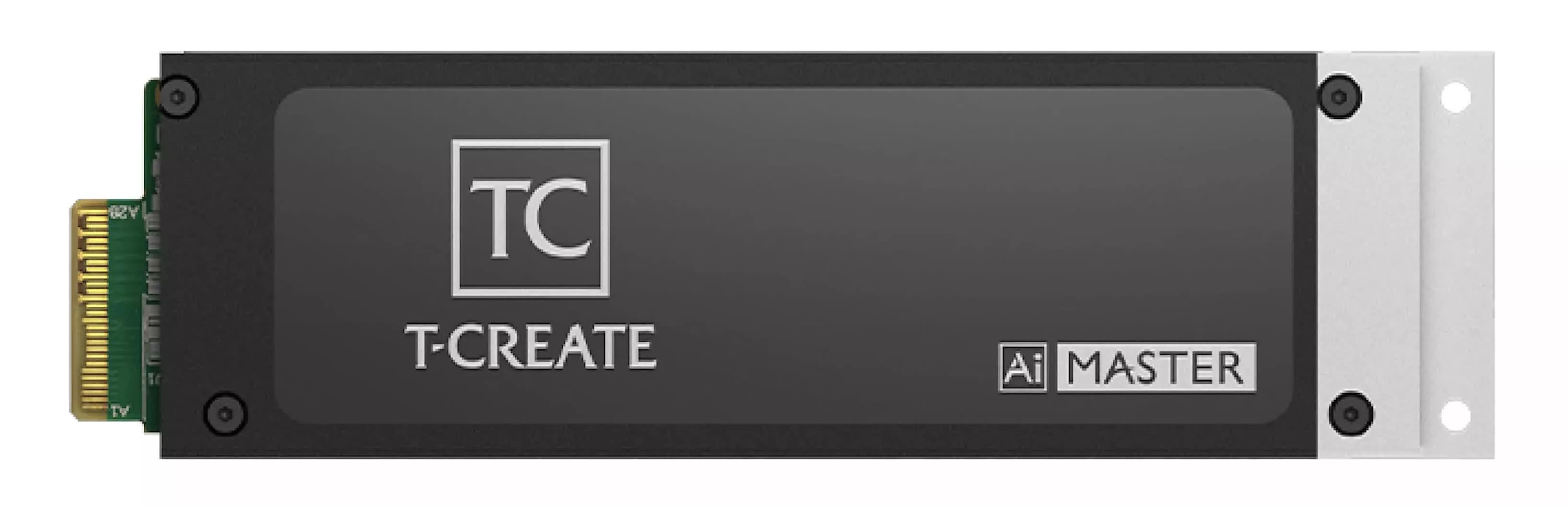
T-Create Expert P35SG is an external SSD that supports remote "self-destruction". Users can issue commands to the device through the 4G LTE cellular network without being connected to a computer or Wi-Fi, and only need to send a text message to trigger the self-destruction process. Unlike previous concept products that relied on physical trigger mechanisms, this generation is completely based on wireless communication, making it more suitable for complex situations such as equipment being lost, stolen, or temporarily inaccessible.
Once the self-destruct process is activated, the hard drive does not simply delete files, but uses a two-step sequence to minimize the possibility of data recovery. First, the device will perform a deep logical erase to completely clear the data stored on the media; then it will physically damage the hardware itself through high voltage, cutting off the recovery path from both the logical and physical levels. The goal is to make any information stored on the disk irrecoverable.
This plan can be seen as an extension of Team Group’s previous product ideas. Earlier versions required users to press physical buttons on the device to trigger a similar self-destruction process. This time, control is "moved out of the device" through the 4G network, allowing it to shift from "last-minute extreme operations" to "remote risk management tools that can intervene at any time." For usage scenarios where you need to travel with sensitive data and it is difficult to recycle the device in time, this design is more focused on preventive control rather than post-remediation.
For users who still prefer physical controls, Team Group also launched the T-Create Expert P35S model. This product uses the same destruction mechanism, but the triggering method still relies on buttons on the body rather than remote commands. It is closer to the use logic of traditional secure storage devices, while continuing to attach importance to data protection.
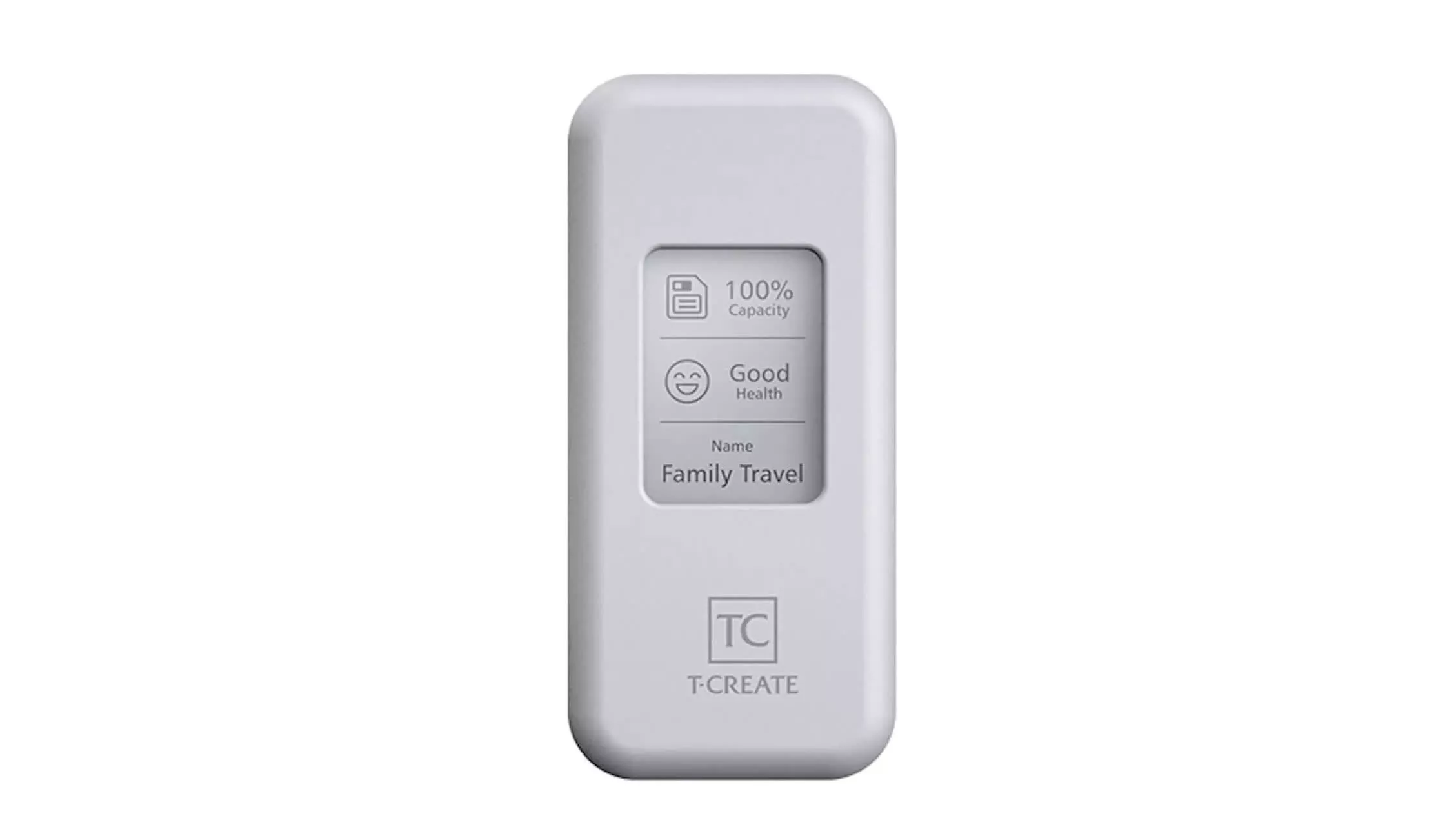
Not all new products are designed around the “worst-case scenario.” The T-Create Expert P33 external SSD unveiled at the exhibition emphasizes daily ease of use. Its body is equipped with an e-ink screen, allowing users to view capacity, health status and identification information without connecting to a computer. For users who often manage multiple mobile hard drives at the same time, this design is expected to reduce the time and errors in plugging and unplugging verification.
In addition to storage, Team Group also focused part of its display on memory products, especially for application needs of local AI workloads. The T-Create Expert AI 4R CUDIMM on display adopts a four-rank design and integrates 128GB capacity into a single DDR5 module. In a live demonstration, this memory was paired with another module plugged into an MSI MEG Z890 Unify-X motherboard equipped with only two DIMM slots, bringing the total system memory to 256GB, pointing to the urgent need for high-capacity memory in local large-model inference and development.
In terms of consumer products, one of the more "interesting" new products on the stand is the T-Force Liquid II SSD radiator, which introduces liquid cooling solutions commonly used for CPUs and GPUs into SSD cooling scenarios. This product combines a heat sink, a small fan and a liquid cooling medium to deal with the heating problem of high-speed SSDs under continuous load. The coolant is rated to last for about five years and supports replenishment. It is obviously not a pure display concept, but a solution for long-term use.
In response to the demand for compact consoles, Team Group also released T-Force DARK RGB low-profile version of DDR5 memory. This type of module not only takes into account high frequency and RGB lighting effects, but also controls the module height. It is more suitable for small chassis or platform configurations with limited space, and responds to the current market trend of increasing small high-performance hosts.
To commemorate the tenth anniversary of the founding of the T-Force brand, TEAMGROUP has also launched a series of carbon fiber themed components, including DDR5 memory and PCIe 5.0 SSD products, which more reflect the unity and recognition of appearance and style rather than simply pursuing new breakthroughs in performance parameters.
Overall, Team Group's display reflects the hardware industry's repositioning of the role of storage: storage devices are gradually evolving from passive data-bearing media to security tools with active protection capabilities. They must not only "save" and "run fast" but also be able to "self-erase" in extreme circumstances, becoming the last line of defense to protect data.