According to the Beijing Municipal Administration for Market Regulation, on the 11th, the Beijing Municipal Administration for Market Regulation interviewed five e-commerce platforms, including Taobao (Tmall), JD.com, Pinduoduo, Douyin, and Xiaohongshu, and reported the second batch of typical problems discovered in the platform’s “involution” comprehensive competition rectification, which mainly included false publicity of promotional activities, irregular formulation and disclosure of promotion rules, and failure to disclose product operator information, and proposed rectification requirements.
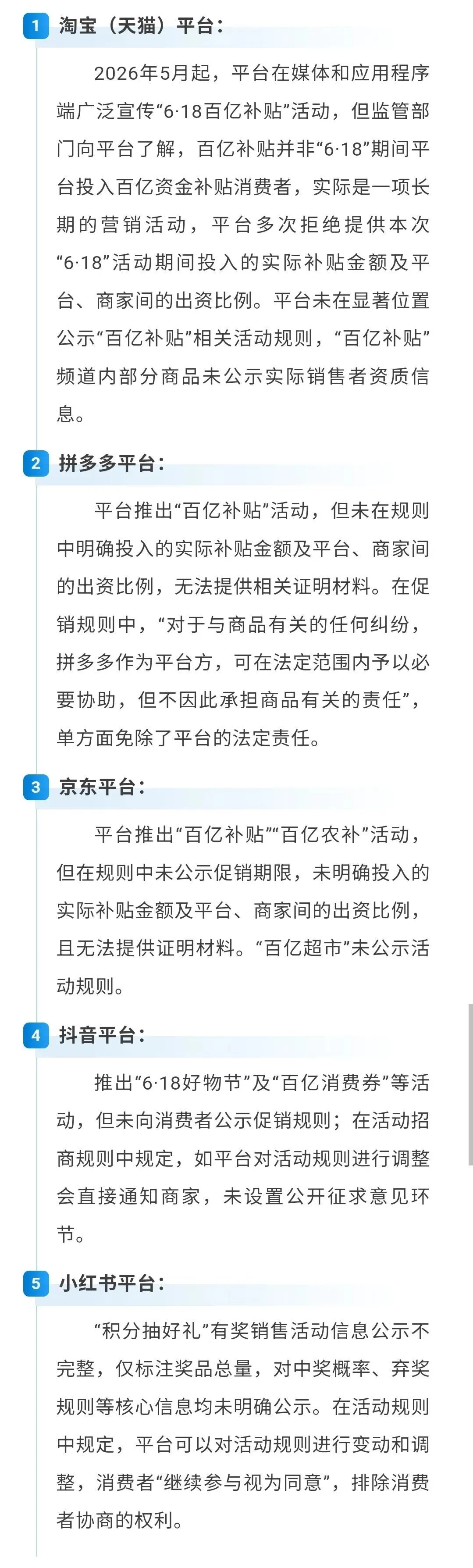
Liu Xiaochun, director of the Internet Rule of Law Research Center at the University of Chinese Academy of Social Sciences, pointed out: Platforms competing to carry out "tens of billions of subsidies" may trigger the risk of "involution" competition, which is not conducive to the healthy development of the industry. In particular, irrational large-scale subsidies not only distort the market price mechanism, but some platforms even stipulate that all subsidies are borne by merchants. Merchants are caught in the dilemma of losing traffic if they don’t lower prices, and losing money if they lower prices. Profit margins are severely squeezed, making it difficult for merchants to survive, hindering industry innovation and upgrading. Many platforms unilaterally exempt platform responsibilities in non-force majeure situations in their rules, increasing consumer risks.