The way humans make alloys has remained essentially unchanged since the Bronze Age: different metals are heated, melted, mixed, and then cooled to form them. Foundation Alloy, an early-stage startup from the United States, is trying to upend this age-old craft with a completely different approach - instead of "melting metal," it "smashes metal."
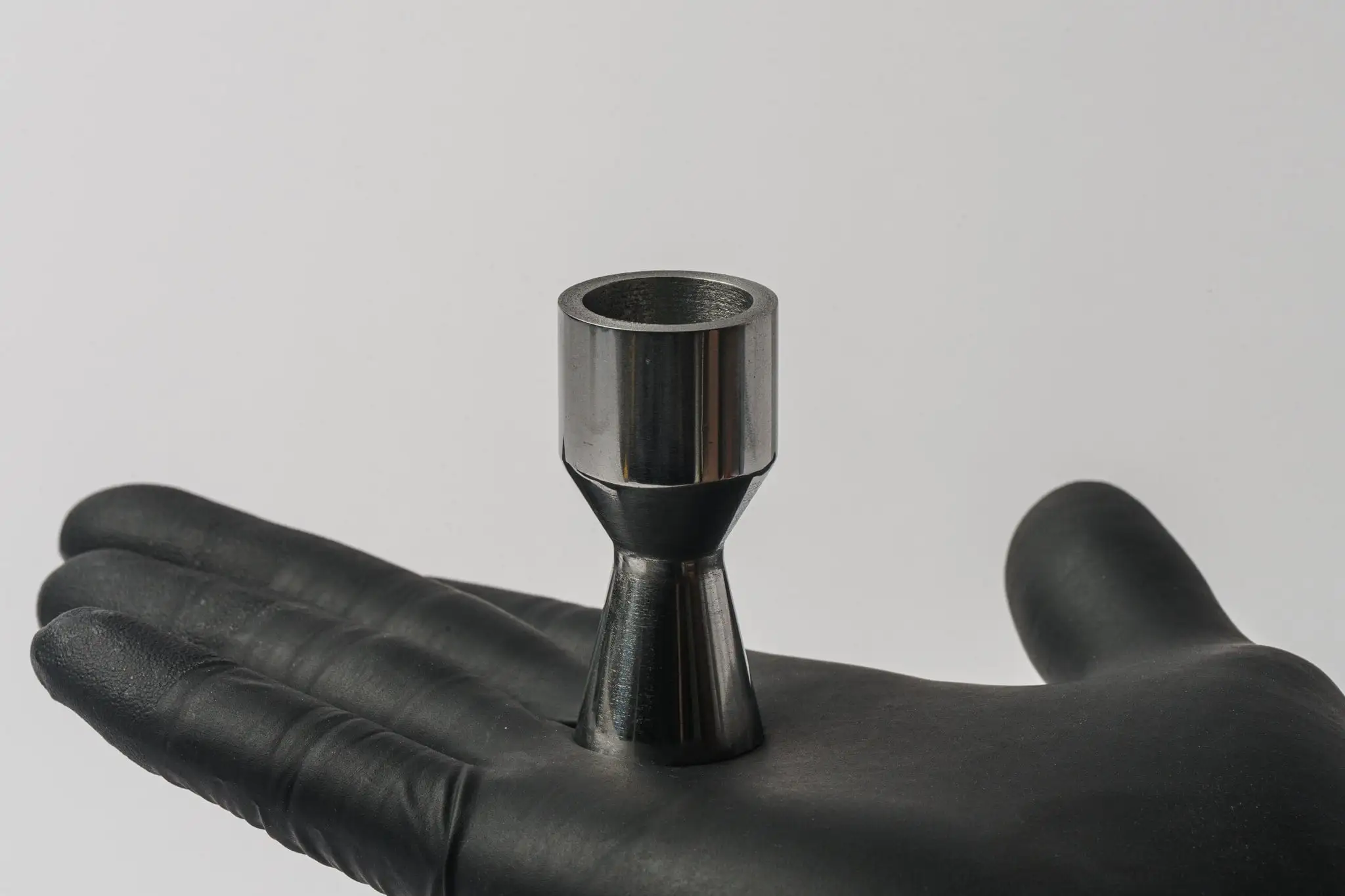
Jake Guglin, co-founder and CEO of Foundation Alloy, said the company uses a solid-state alloy process where "we're actually slamming metal powder particles into each other instead of melting them." He claimed that this method can produce new material properties that are difficult to achieve through traditional smelting routes, and "can make things that others cannot make." Currently, the company mainly supplies custom metals to customers in small batches, but Guglin admits that the current limit is its own production capacity, not market demand - "We are not constrained by buyers, but by how much we can make."
Judging from the industries that have cooperated, almost everyone wants metals that are stronger, more heat-resistant or have new properties. Guglin revealed that Foundation Alloy has launched pilot projects with companies in the automotive, aerospace, semiconductor, defense and other industries, and is also working with high-end chef knife and luxury watch manufacturers to develop new materials. In his view, the new process is expected to help these customers significantly save costs and reduce material waste, "which can not only save a lot of money, but also reduce a lot of waste and carbon footprint."
In order to increase production capacity to several tons per week by 2027, Foundation Alloy recently completed a US$22 million Series A financing, led by Voyager Ventures. Participating investors include Trust Ventures, Yamaha Motors, America’s Frontier Fund, Overlap Holdings, Material Impact, Engine Ventures, El Cap, and Japan’s Kanematsu Corporation in both strategic and channel roles. This cooperation also means that Foundation Alloy’s alloy products will be distributed in the Japanese and Southeast Asian markets through Kanematsu in the future.
Foundation Alloy's technology foundation comes from the accumulation of materials science research over the past 20 years. Relevant research led by academics Tim Rupert and Chris Schuh delved into the structure and behavior of metals at the nanoscale, and these results formed the scientific foundation of the company's process route. Schuh previously co-founded Desktop Metal and Xtalic and has extensive experience in metal processing and materials startups.
Unlike almost all commercial alloy manufacturing methods that rely on high-temperature smelting, Foundation Alloy uses a special grinding device to repeatedly "bump and forge" dissimilar metal powders together until they form a new alloy structure in the solid state. Guglin said that since the high-temperature smelting link is completely bypassed, the energy consumption of the company's solid-state alloy process is only about one-tenth of that of traditional processes, which is expected to significantly reduce energy consumption and production costs.
The goal of any alloy process is to form a stable, uniform crystal structure at the molecular level, organically fusing two or more metal elements. Ideally, the interior of an alloy should be as homogeneous as possible—the crystal structure is highly consistent throughout the material. Traditional smelting methods perform well at this point, but it is difficult to completely eliminate tiny voids and discontinuous structures. These defects can weaken the material's properties and make it more susceptible to brittleness or degradation at high temperatures. In addition, traditional processes are often unable to deal with metal combinations with huge differences in melting points, causing some alloy systems with theoretically excellent properties to remain at the conceptual level for a long time.
With the help of solid alloy technology, Foundation Alloy is trying to solve several "old problems" in the field of metal materials. In traditional applications, engineers usually need to make a trade-off between heat resistance and mechanical strength: metals used in high-temperature environments are often brittle; high-strength materials used in high-load conditions such as stamping and cutting are prone to failure at high temperatures. Guglin said that the company has been able to prepare new alloys that have both high strength and high temperature resistance, "which are both heat-resistant and can be beaten," thus breaking the previous "either-or" design framework.
At the specific implementation level, Foundation Alloy's first products are mainly used in mold and tool parts for automobile manufacturers, aerospace companies and defense contractors, aiming to extend the life of critical components and reduce downtime and maintenance costs. In the field of national defense, one early application direction is drone parts. Guglin pointed out that many existing supply chains were originally designed for fighter platforms such as the F-35 with the idea of "making 100 extremely perfect parts per year," while the drone industry requires a production pace closer to "10,000 per month," which imposes completely different requirements on materials, processes and cost structures.
Guglin compares the alloy process to cooking: "Two chefs can use the exact same ingredients, but if the steps are different and the heat is different, the taste of the dish will be completely different." In his view, Foundation Alloy's innovation is not only reflected in the formula itself, but more importantly, "how to do it" - "The quality of a dish does not only depend on the raw materials, but on the cooking method. What we invented is a new 'way of cooking'."