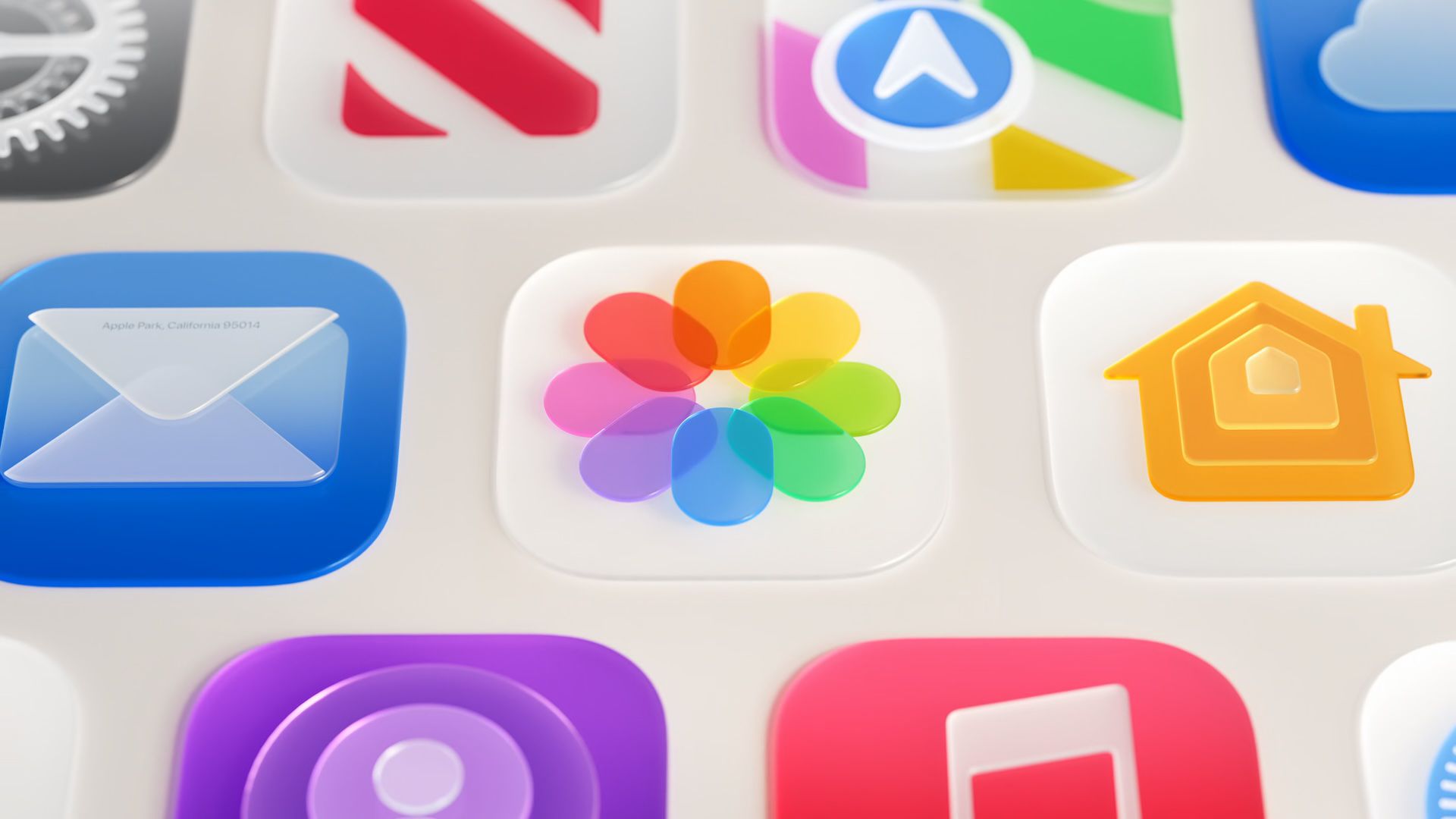
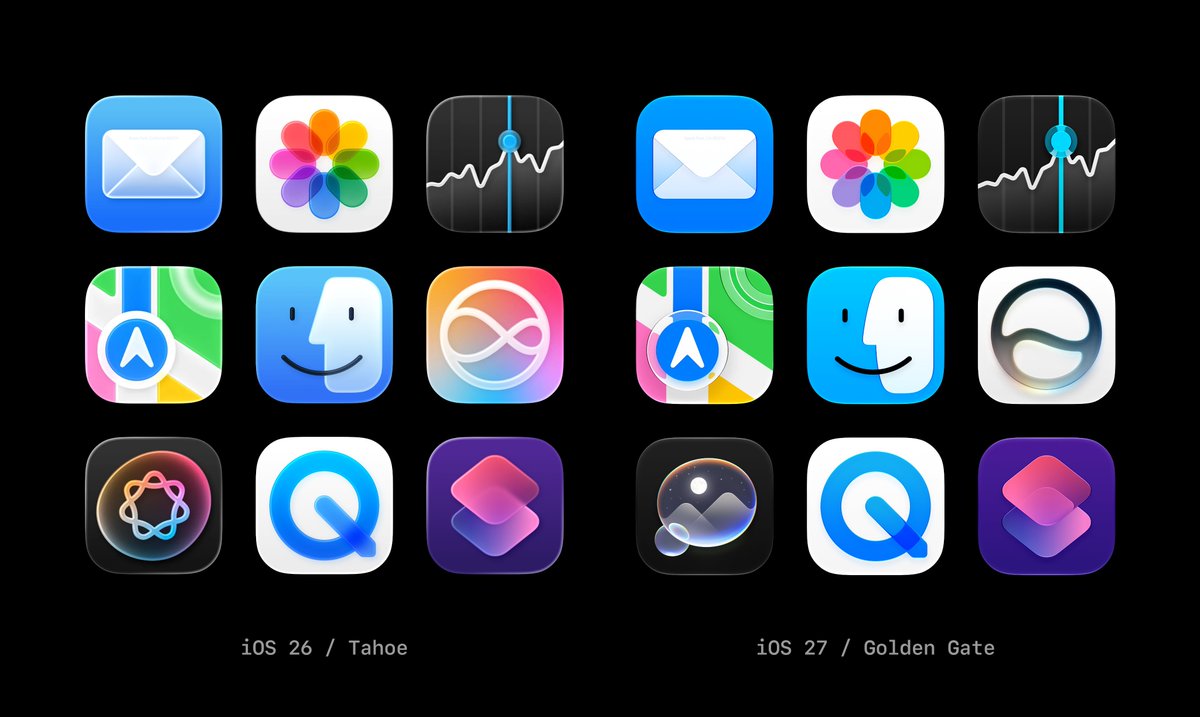
Apple has once again made comprehensive adjustments to its set of system application icons in iOS 27. This is the second major revision after the introduction of "Liquid Glass" in iOS 26 last year.Compared with the previous icon appearance that was criticized for being "weak" and "mushy", this time Apple has superimposed more independent liquid glass layers on the material structure of the icon itself, instead of uniformly covering the icon with a thick glass effect like iOS 26. Officials say that the new rendering pipeline brings clearer separation between layers, sharper edges, and clearer refraction effects.
Liquid glass is a visual design language that debuted in iOS 26, when Apple redrawn almost all first-party app icons to create a slight sense of depth through multi-layered glass textures. However, this design immediately attracted criticism from many users, who believed that the actual presentation was "blurry" and the local highlights were too heavy, so that the glass highlights overwhelmed the content details of the icon body, and the overall presentation was "whitened" and "distorted". The flickering animation produced by the icon as the device is tilted has also triggered widespread discussion in daily use: due to the asymmetric highlight distribution, some users will mistakenly believe that the icon is slightly "skewed", forming a visual illusion. In the face of these feedbacks, Apple did not withdraw from the liquid glass route in iOS 27, but chose to continue to add weight and refine adjustments on the original basis.
In the new design of iOS 27, the core change is that the liquid glass is split into multiple layers and embedded directly into the icon drawing. Each layer has a relatively independent material and refraction performance, instead of a uniformly covered "thick glass cover". Through this method, the main shape and details of the icon are more clearly separated, the overall contrast and clarity are significantly improved, and the glass texture is weakened into a more refined "surface treatment" instead of being overwhelming. At the same time, the refraction effect between different layers has become more "on-demand" and is only presented in suitable areas, thereby reducing visual interference.
The dynamic flashing effect that users have previously controversial has also undergone a significant redesign. The interaction in iOS 26 that relies on gyroscopes to realize highlight movement with the angle of the device was found to form asymmetric highlight areas at the corners of the icon, causing the illusion that the icon is tilted. In the first developer beta version of iOS 27, this "moving highlight" mechanism has been completely removed and replaced by highlight strips fixed to the upper and lower edges of the icon. Although these highlights still exist, their brightness and range have been greatly reduced. They no longer change as the device shakes, and they no longer create obvious tilt illusions.
In conjunction with system-level adjustments, Icon Composer, the icon design tool provided by Apple for developers, has also been updated to support building icons based on multi-layer liquid glass structures. The new version of the tool adds annotation and annotation functions, making it easier for designers to add refraction effects to different layers or fine-tune the presentation of icon content. The tool also provides an interactive preview interface, which allows you to view the final presentation of the icon under the new rendering pipeline in real time.
This round of icon updates is not an isolated change, but part of a series of Liquid Glass optimizations announced by Apple at WWDC 2026. At the system level, iOS 27 adds a global transparency slider and improves the material diffusion effect, aiming to enhance interface readability while retaining visual texture. For users who want to fully understand the details of the changes in Liquid Glass in iOS 27, Apple Ecological Media has also launched a special in-depth analysis, focusing on the changes in icons, interface materials, and system interactions.