As part of a deal with the United States, Iran will receive a wide range of economic incentives, including the right to immediately sell oil, access a $300 billion development fund and ultimately access to its frozen assets, according to a draft agreement that is nearing finalization.
The outlines of the memorandum of understanding have been circulating for several days. But the version seen by Bloomberg News provides the most complete picture yet of the economic boost Iran stands to gain from ending control of the Strait of Hormuz and reaffirming its pledge never to seek nuclear weapons.
The two sides are scheduled to formally sign the agreement in Switzerland on June 19, paving the way for 60 days of subsequent talks to finally end the war and impose strict new restrictions on Iran's nuclear program. One person familiar with the matter said technical details were still being finalized, meaning the specific wording could still be revised.
Under the terms of the agreement, the U.S. Treasury Department will "issue exemptions for the export of Iranian crude oil, petrochemical products and their derivatives" immediately after the signing of the memorandum. The United States will lift the naval blockade, and the two countries will work together to ensure that shipping in the Strait of Hormuz returns to pre-war levels within 30 days.
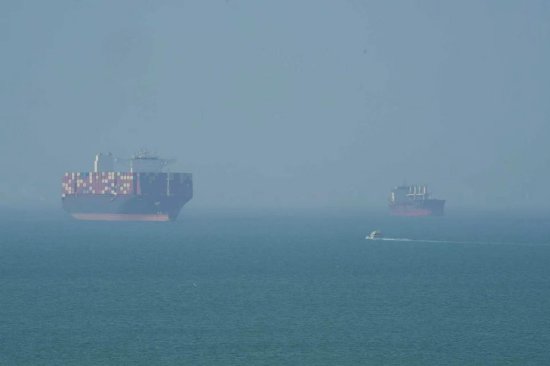
On April 28, a cargo ship sailed in the Strait of Hormuz
According to the draft document, the United States and its regional partners will develop a plan to help Iran rebuild and promote its economic development, providing at least $300 billion in funding. The draft is vague on the release of Iran's frozen assets, saying only that the United States promises that the funds "will be released and fully available" but does not set a specific timetable.
Neither side has released the full text of the agreement, and U.S. officials have disagreed on when it would be released. Trump said the deal would be released sometime after Friday's signing ceremony, while another senior U.S. official said on Monday the text would be released within a day or two.
A U.S. official asked for comment declined to discuss specific details of the draft but said Iran would only gain the benefits of the deal if it fulfilled its commitments. Those pledges include never developing nuclear weapons, destroying their enriched uranium and allowing ships to sail freely through the Strait of Hormuz.
Trump previously denied that the United States would pay Iran $300 billion. The draft only states that the United States and its partners will secure this amount of financing.
This latest deal poses political risks for Trump. He has claimed for years that the Obama administration's 2015 deal with Iran over its nuclear program amounted to a massive transfer of money to Tehran. Trump scrapped the deal in 2018 and promised to launch a better version.
Now, as Trump seeks to end the conflict that the United States and Israel started on February 28, his Republican allies in Congress and Iran hawks outside the government worry that he is prepared to give Iran too many economic benefits without getting enough in return.
There are other challenges: the draft says the war will end "on all fronts, including in Lebanon." This would require the consent of Israeli Prime Minister Benjamin Netanyahu, who has so far refused to end the war with Hezbollah.
Under the terms of the deal, the United States will also commit to lifting sanctions on Iran, but only as part of a final deal negotiated within the next two months. Within 30 days after the signing of the final agreement, the United States will also withdraw its military forces from "peripheral areas."
People familiar with the matter said the U.S. understanding is that the resumption of oil sales only applies to Iranian crude oil that has been loaded onto ships and does not mean that Iran is allowed to resume crude oil exports more broadly.
The deal provides Iran with a series of immediate and long-term economic incentives, along with Tehran's commitment never to seek to develop nuclear weapons. Iran has long insisted it does not want an atomic bomb and pledged in the Obama-era Joint Comprehensive Plan of Action not to seek to develop nuclear weapons.
The draft, seen by Bloomberg, does not directly mention the status of Iran's enriched uranium stockpile. The draft only states that the fate of Iran's uranium enrichment and all other nuclear issues "will be properly resolved in the final agreement."
It's unclear whether Trump's Republican allies will be satisfied with the latest terms. The agreement does not require the United States to lift sanctions or establish related funds within a strict deadline. Senior U.S. officials have repeatedly stated that Iran can only gradually obtain relevant economic returns if it fulfills U.S. requirements.
The following contents of the draft memorandum of understanding:
1. By signing this Memorandum of Understanding, Iran and the United States, along with their respective allies in the current war, declare an immediate and permanent cessation of this war on all fronts, including Lebanon, and commit from now on not to initiate any hostile acts against each other and to refrain from the threat or use of force against each other. The final agreement will confirm the provisions of this clause and the remaining clauses.
2. Iran and the United States are committed to respecting each other's sovereignty and territorial integrity and refraining from interfering in each other's internal affairs.
3. Iran and the United States have committed to hold negotiations and reach a final agreement within up to 60 days, a period that can be extended by mutual agreement.
4. After signing this memorandum of understanding, the United States will immediately lift its naval blockade to avoid any interference or obstruction of Iran, and will restore shipping to full capacity within up to 30 days; ship traffic should match Iran’s pre-war navigation levels. The United States has also pledged to withdraw its troops from the surrounding area within 30 days of a final agreement.
5. After signing this memorandum of understanding, Iran will immediately take steps to ensure that the passage of commercial ships from the Persian Gulf to the Gulf of Oman and vice versa is restarted and restored to pre-war numbers within 30 days, taking into account the need to clear technical obstacles and mines.
6. The United States and its regional partners are committed to establishing a mutually agreeable comprehensive plan for Iran's reconstruction and economic development, ensuring funding of no less than $300 billion. As part of the final agreement, implementation mechanisms for the project will be developed within 60 days.
7. The United States commits that all types of sanctions facing Iran, including United Nations Security Council resolutions and International Atomic Energy Agency Board of Governors resolutions, as well as all U.S. unilateral primary and secondary sanctions, will be terminated as part of a final agreement in accordance with a mutually agreed timetable.
8. Iran has reiterated that it will never build nuclear weapons. Iran and the United States have agreed that uranium enrichment and all other mutually agreed upon nuclear-related issues, including Iran's nuclear requirements, will be appropriately addressed in a final agreement that will confirm the provisions of this Article.
9. Iran and the United States agreed to maintain the status quo until a final deal is reached: Iran will maintain its current nuclear program and the United States will not impose new sanctions on Iran or increase its military forces in the region.
10. The United States committed that the Treasury Department would issue waivers for the export of Iranian crude oil, petrochemicals, and derivatives, as well as all related services, including banking transactions, insurance, and transportation, immediately upon signing the memorandum of understanding and until sanctions are lifted.
11. The United States is committed to releasing and making Iran's frozen or restricted funds and assets available for full use based on progress in negotiations toward a final agreement. The funds will be available for payments to any ultimate beneficiary designated by the Central Bank of Iran. The United States is committed to issuing all necessary approvals and licenses to this end.
12. Iran and the United States will establish an implementation mechanism to monitor the successful implementation and future compliance of the final agreement.
13. After signing this memorandum of understanding, and after ensuring that Articles 4, 5, 10 and 11 are implemented and relevant measures continue to be implemented, Iran and the United States will begin negotiations on a final agreement, covering only the remaining articles.
14. The final agreement will be ratified by a binding United Nations Security Council resolution.