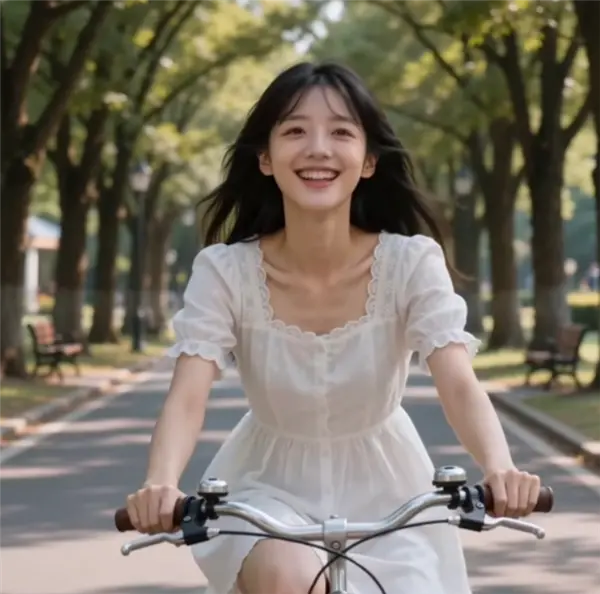
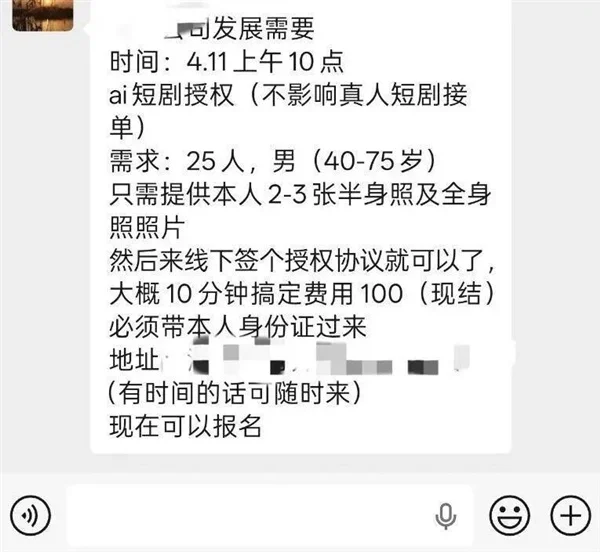
At present, many short drama crews and agencies publish information about the acquisition of portraits on social platforms and actor notification groups, provide a few full-body and half-length photos, and complete the authorization by signing a brief offline contract; the one-year authorization price is generally 500 yuan, and the long-term buyout price is up to 1,500 yuan.Most of the people signing contracts are school students, extras, and ordinary bloggers. Many people value short-term small profits and think that they are just realizing idle images, but ignore the potential hidden dangers.
Prior to this, the face-stealing chaos in the industry was also prominent. Many short dramas captured photos of bloggers and models without permission and used AI to change their faces to create villains. Many dramas were forced to be removed from the shelves due to infringement. Many stars also sued the producers of the stolen portraits and won.
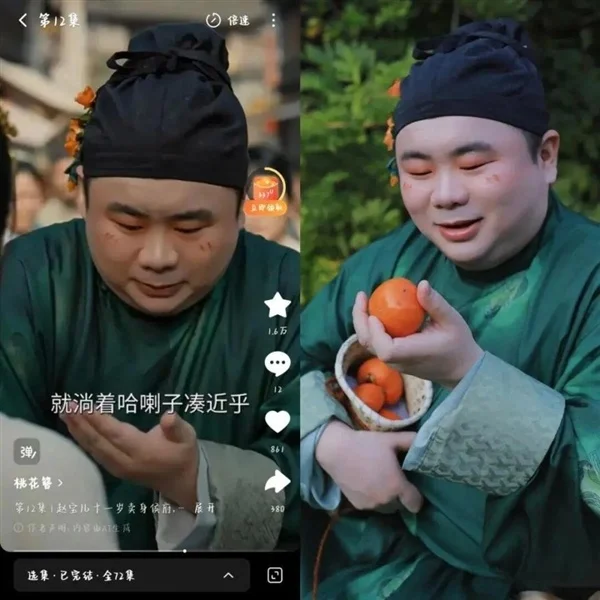
Industry practitioners admit that the virtual faces generated in batches by AI are severely templated and have low recognition. TV series require a large number of differentiated supporting characters, so they turn to the acquisition of real-life portrait modeling.
When some brokerage companies sign new talent, they will bundle the terms of use of portrait AI. The cooperation period can be as short as one year or as long as ten years, and they will only give a meager basic salary or a few hundred yuan in compensation for a single drama.
Even if some actors hope to gain exposure in the short drama industry, many practitioners firmly refuse to authorize it, believing that their facial image is their core equity asset.
Lawyers have issued key warnings against such transactions, and vague terms in contracts are the biggest trap.
Many agreements contain content such as permanent authorization, exclusive use, and permission for secondary sublicensing. There are no restrictions on usage scenarios and drama types. Companies can freely use portraits in various plots, or even transfer them to third parties for use in illegal content.
Contractors are often unable to review character designs and plot trends, and their own image may be vilified and abused.
The Cyberspace Administration of China’s previously announced draft for public comment on the management of digital virtual persons clearly states that it is not allowed to use the image of an identifiable natural person to create a virtual person without the person’s permission, and it is prohibited to vilify or tarnish the image of others.
Lawyers suggest that ordinary people who intend to authorize must specify the terms of the contract, clarify the authorization time limit, applicable drama range, secondary creation rights and revenue sharing, reject permanent and borderless authorization, and be cautious in sharing sensitive biometric information such as human faces.