Former Google CEO Eric Schmidt stood in front of a podium at the University of Arizona and told thousands of students that artificial intelligence would touch every profession, every classroom, every hospital, and every laboratory. The moment the words fell, the audience booed. This is already the third graduation speech on an American campus that has been booed for talking about AI since May 2026.
Written by | Liu Ying
Editor | Huang Dalu
Design | Zhen Youmei
What science and technology leaders see is a new continent, efficiency, and input-output ratio. The first thing the young man saw was that before he boarded the ship, the ship was already sailing to the New World. The June sun fell on the lawn as usual, the mortarboards were ironed as usual, and the applause sounded on time as usual, like a program that has been running for many years and has never gone wrong. Only this year, the ground beneath the program is moving.
This is not the first time technology has turned jobs upside down. Steam engines have eliminated coachmen, assembly lines have crushed the dignity of craftsmen, and the Internet has destroyed newspapers and created new professions. History always sprouts new sprouts from the ruins, and many years later tell people that everything is how it was.
The difference this time is that machines in the past replaced human muscles, feet and memory. This time, it touches on human expression, judgment and organization, which were originally regarded as the moats for human beings.
The auto industry is standing on the same fault line. Software-defined cars, electrification, autonomous driving, robotics, Physical AI, the list goes on. The old order is still shaking, but the new order has arrived ahead of schedule. Yesterday's technology is lagging behind today, and today's popular positions will be quietly crossed out from the recruitment notices tomorrow.
Therefore, the people standing on the podium at the graduation ceremony this year no longer said the old saying: "As long as you work hard, everything will be fine." That sentence belongs to an era that is slower, more stable, and more confident in linear growth.
They have changed their tune, perhaps because they try hard not to automatically exchange for a sense of security, because talent is not naturally resistant to substitution, and academic qualifications are no longer the only ticket to certainty. They say another thing: Solve the hardest problems, allow for confusion, accept failure, and keep it real.

Jensen Huang: Failure is not the opposite of success
Jensen Huang, founder and CEO of Nvidia, delivered a speech at the graduation ceremony of Carnegie Mellon University in 2026.
When he was 9 years old, he was sent to the United States by his parents and ended up attending a Baptist boarding school in the coal mining area of Oneida, Kentucky, where there were only a few hundred people. Two years later, his parents gave up everything to reunite with him. His father was a chemical engineer and his mother worked as a janitor at a Catholic school. She woke him up at four in the morning to deliver newspapers. His brother found a job for him as a dishwasher at Dennis's restaurant. He thought it was a huge career advancement.
At the age of 17, he defeated 250 boys in a sophomore laboratory class at Oregon State University and won Lori, who would later be his wife of 40 years. Their two children now work at Nvidia.
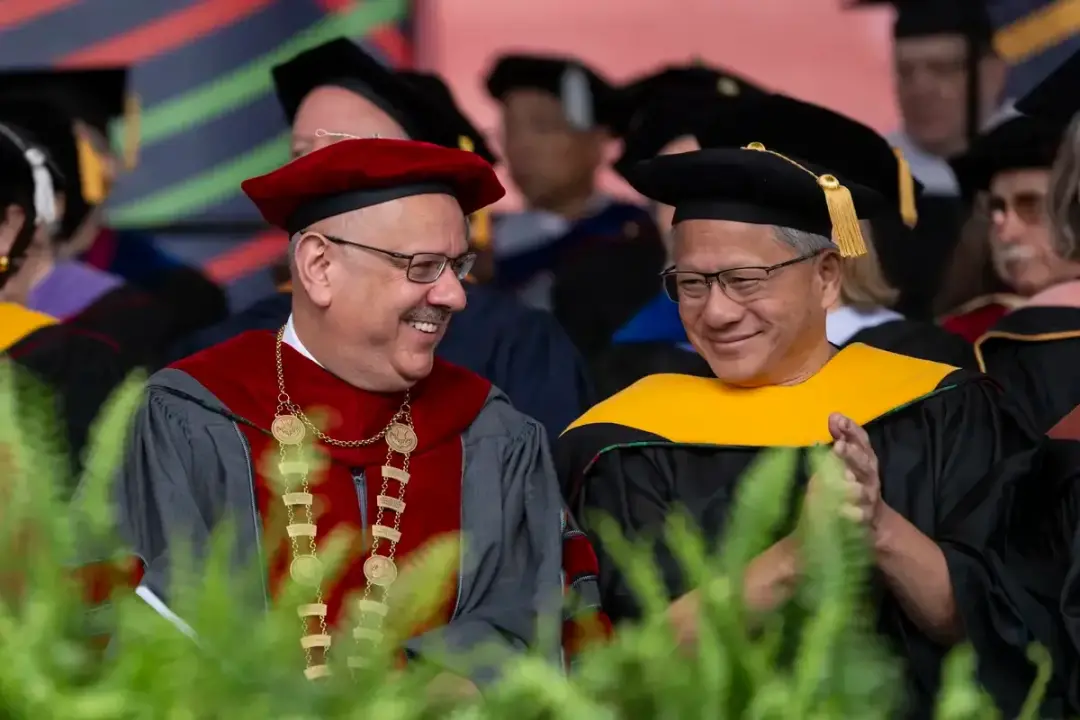
At the age of 30, he co-founded NVIDIA with two computer scientists, hoping to create a new type of computer that could solve problems that ordinary computers could not solve. The first technology was not successful and the company almost burned all the money. He flew to Japan and explained to Sega CEO Shoichiro Hiroshi that the contract could not be continued, and at the same time asked the other party to pay as usual. He later said it was one of the hardest and most humiliating things he had ever done. Shoichiro agreed. That money reorganized the company, and in desperation invented the chip design method that is still used today.
In the past 33 years, NVIDIA has reinvented itself time and time again, each time asking first "how hard can it be?" and each time learning that it is harder than imagined.
He summarized this into a principle, that is, never regard failure as the opposite of success. Resilience forged by setbacks is the power to start again. Today, NVIDIA is a company with nearly 50,000 colleagues and one of the most valuable companies in the world.
In his speech, he listed every computing platform change he has experienced, from mainframes, personal computers, the Internet, mobile devices to cloud computing. What happens next is bigger than anything before. The paradigm of humans writing software and computers executing instructions has ended, replaced by machines understanding, reasoning, planning, and using tools.
His judgment is straightforward: "It is unlikely that artificial intelligence will replace you, but someone who is better at using artificial intelligence than you will replace you."
Tasks will be automated, missions will not. Coding tasks for software engineers are automating, but this allows engineers to expand their search to larger problems. The radiologist's image analysis is being automated, but the physician's diagnostic capabilities are being augmented.
In order to support AI infrastructure, the United States will build chip factories, computer factories, and data centers across the country. He also attributed this technological revolution to specific types of work, including electricians, plumbers, steel workers, technicians, and construction practitioners. He said: "It belongs to your era."
Carnegie Mellon has a school motto he likes: "My heart is in the business." He returned this sentence to the graduates of 2026 as it is: "To help shape everything that comes next, please run, don't walk slowly."

Su Zifeng: Rushing towards the most difficult problem
Lisa Su, AMD Chairman and CEO, delivers a speech at the MIT graduation ceremony in 2026.
In 1986, at the age of 17, she entered MIT from Queens, New York, and her confidence lasted only two weeks. When she walked into the 6.01 and 6.02 classes, she found that many people here were much better at math than she was. Staring at the first exercise set, she thought, "These questions are really too difficult."
The Undergraduate Research Opportunity Program changed her. The first project was to make X-ray lithography masks for graduate students in the laboratory in Building 39, and to make devices on 2-inch wafers. Most of the experimental results were not as expected, so she kept adjusting and trying again.
Later, she studied for a Ph.D. with Professor Dmitri Antonis. She often spent several weeks in the clean room making devices, then brought them to the testing laboratory only to find that the performance was not as good as expected. She then returned to her supervisor's office to discuss the next step. “This was the period where I grew the most at MIT and where I really learned how to solve problems,” she said.
She regards the MIT motto "Mens et Manus" (use both hands and brain) as the foundation of her career. Think deeply, but also start building; test ideas, and continue to persevere even after the fifth experiment fails.
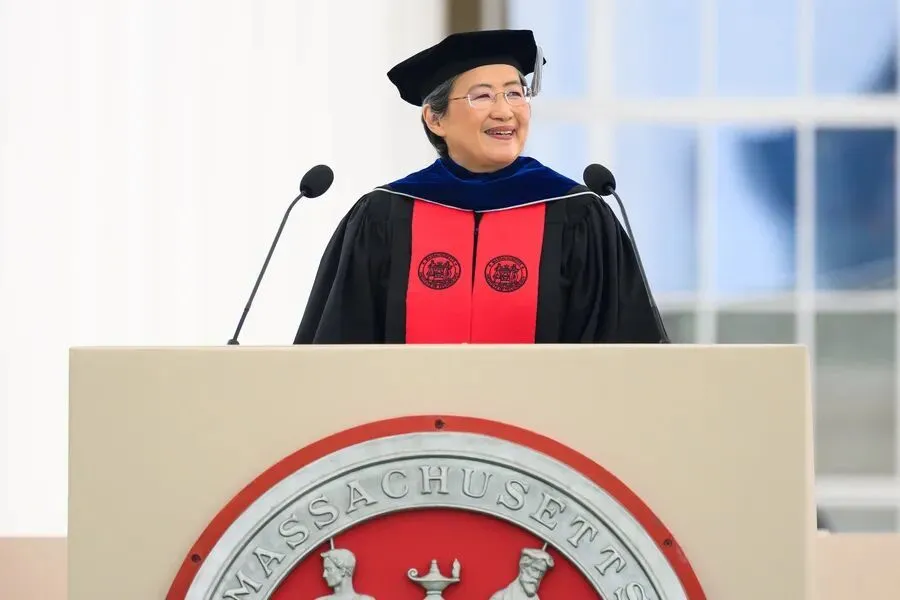
At the age of 25, she joined IBM, which has hundreds of thousands of employees. She realized that engineering does not care about age, only about ideas. Her mentor told her something she’s never forgotten: “Go for the hardest questions.”
Twelve years ago, she took over the CEO position of AMD. The company had just experienced a few years of troughs, and some mentors thought the risks were too great. But this is exactly the kind of work she talks about, standing at the forefront of technology, solving really important problems, and developing "engineer's intuition" into a shared ability of a team.
She distinguished AI from all previous technological waves. The Internet changes communication methods, mobile computing changes lifestyles, and cloud computing changes work methods. AI is not just a tool to do things faster, it can accelerate discovery itself. When this optimistic judgment was uttered, there were sporadic boos in the audience, the same as what Schmidt encountered in Arizona 13 days ago.
What she values most is the changes that AI can bring to the medical field. Bring the best professional knowledge in the world to every patient, so that everyone has the best chance of cure. But she also drew a clear line: AI cannot decide which problems are worth solving, it cannot make difficult judgments when data is missing, and it cannot be responsible for the results. These responsibilities still fall on humans.
What she left to the graduates at the end was not a blessing, but a piece of specific advice: "Luck is not about appearing at the right time and place, it is about taking risks to study really difficult things, it is about choosing questions you don't know the answers to yet, and surrounding yourself with people who can make you better."

Malachowski: Momentum is more important than perfect first step
Chris Malachowsky, co-founder and chief technical researcher of NVIDIA, co-founded NVIDIA with Jen-Hsun Huang and Curtis Prime in 1993. In 2026, he was invited to deliver a graduation speech at the University of Florida.
He met Melody, his wife of nearly 45 years, at the University of Florida, and began his career at Hewlett-Packard, taking his first job over the phone from the kitchen of his parents' home in New Jersey. He later admitted that he could barely remember the position he accepted, but that job taught him a pattern of behavior that would stick with him throughout his career: not just completing tasks, but being excellent at every task.
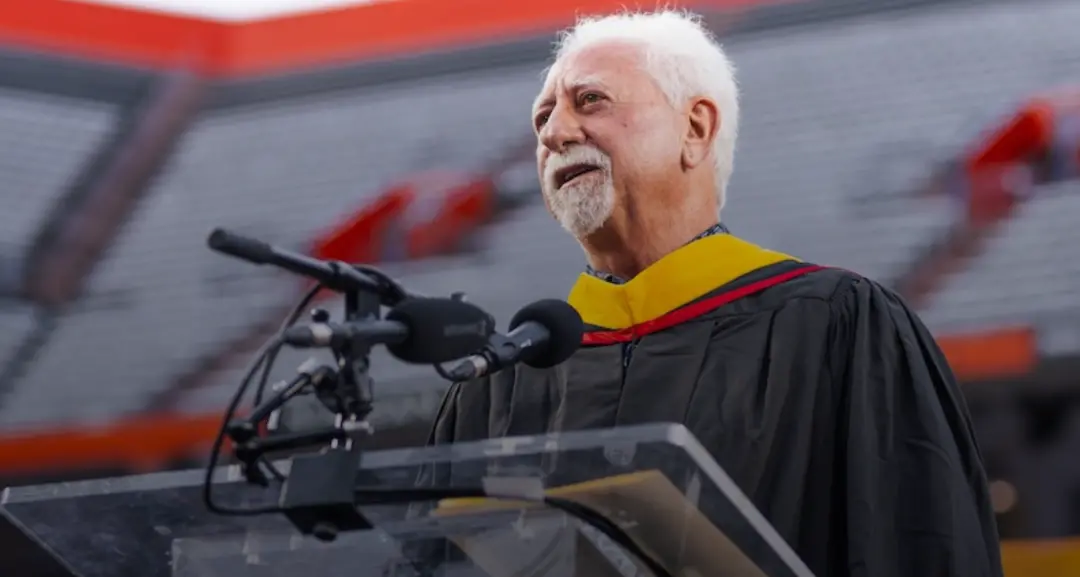
From Hewlett-Packard to Sun Microsystems, from manufacturing industrial computers to designing the most complex semiconductor devices of the time, the path was neither planned nor linear. That's exactly the point, he said.
He summed up his approach in two words, care and momentum. "Care" is the willingness to do things well, continue to learn, and once a promise is made, it will be fulfilled at any cost; "momentum" is the power accumulated after starting to act, even if the future is not clear, take the first step.
Some of Nvidia's earliest ideas were sketched out by him, Jen-Hsun Huang, and Prim while eating pancakes at Denny's restaurant. The first product failed completely, and they did not admit defeat.
When Nvidia's market value exceeded one trillion U.S. dollars, a reporter asked him if he was ecstatic. His answer was: "I feel like the person who succeeded overnight in only 30 years."
He said that people see milestones but not the decades. I see successful companies, but I don’t see the long preparations. See the results, but ignore the care of persistence, setbacks, learning and long-term investment.
His judgment on AI is similar to that of Su Zifeng, but the approach is different. Artificial intelligence cannot replace your judgment, values and tastes. It is an amplifier, a digital colleague. The right question is not "how do I compete with it", but "how do I cooperate with it".
He specifically mentioned the approach of the University of Florida. Instead of waiting for the arrival of the AI era, it took the initiative to build infrastructure, improve the AI literacy of all employees, and let AI touch every discipline. His additional requirement for graduates is to teach this quality to others. "Care" in the next era is not just about your own success, but also about helping others keep up.
His last words to the class of 2026 were: “Care deeply, and then take action.”

Wagner: Only when you sit in that position will you understand
Rick Wagoner, former General Motors CEO, became the youngest president and CEO in GM's history at the age of 47. He has experienced the financial crisis and GM's bankruptcy and reorganization. He was born in Richmond, Virginia, and has been a long-time member of the Virginia Commonwealth University (VCU) Board of Trustees. He was interviewed before giving the VCU commencement speech in 2026.
From J.R. Tucker High School to Duke University and then to Harvard Business School, he said what really attracted him was not the label "auto industry" but a specific job: finance director of General Motors in New York. That department valued ability and gave more difficult tasks to those who completed the tasks well. Without careful planning, he relied on luck and hard work to get from New York to Sao Paulo, and then to the position of treasurer in Sao Paulo.
He said that many things developed step by step like this when he was young. He summarized the most important gains from his early position as: completing work with high quality, interacting effectively with people, and seizing every learning opportunity.
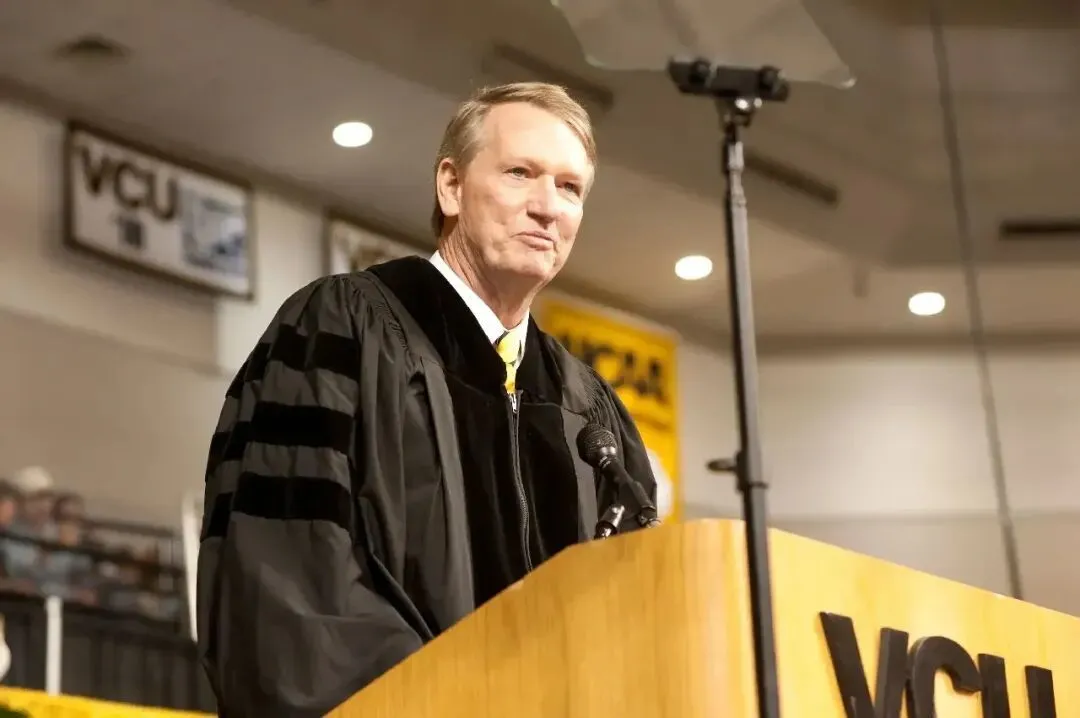
The first time I got a real sense of what it was like to "sit in that seat" was when I returned to Brazil as president of General Motors Brazil. He is no stranger to Brazil. He understands the language and business. His two eldest sons were born there, but after sitting in that position, he felt completely different.
Later, this feeling repeated itself in the United States. He became the head of the North American business and eventually the CEO. He already roughly knew what he would face. He doesn't resist the spotlight, but if he had the choice, he said he'd rather let someone else introduce a new Cadillac. One of the things that makes him happiest after leaving GM is that he is no longer in the public eye like he used to be.
After leaving GM, he served on multiple boards, did venture capital, and worked with start-ups. Several companies he is involved in are exploring how to use AI to improve specific businesses. He is also a member of the board of directors of Duke University Health System, and thus sees the potential impact of AI on the medical industry. "It's very fascinating and extremely complex," he said.
The digital revolution started when he was CEO of GM. He said that the speed of change is accelerating now, and if you can't keep up, you will fall behind quickly. Participating in different business projects is his way to keep up with the changes.
Regarding the automotive industry, he was more specific: "The era of autonomous driving and software-defined cars is coming. For a very old and very mature industry, these changes are of great significance. It will be interesting to see how the industry and consumers react next."
On the day of the speech, he turned the preview he said in the interview into the truth. Wagner told the class of 2026 that the world is moving forward at a dizzying speed, and AI and technological revolutions are accelerating this speed. Don’t be afraid of change, but embrace it.
He encouraged graduates to embrace surprises: "Future careers will be much faster than those of our parents' generation. Many people will move between different institutions and complete multiple jobs, rather than working in one company for decades like the traditional path."
He used his experience after leaving GM as a case study. Retirement is not the end, it is a new way of continuing to follow changes. Rapid technological and economic changes bring a large number of exciting new opportunities, not just threats.
Finally, he ended with humor: "I have attended many graduation ceremonies, and the only definite conclusion I have come to is that the most important thing about speeches is to be short."

Farley: Hard questions are the greatest gifts
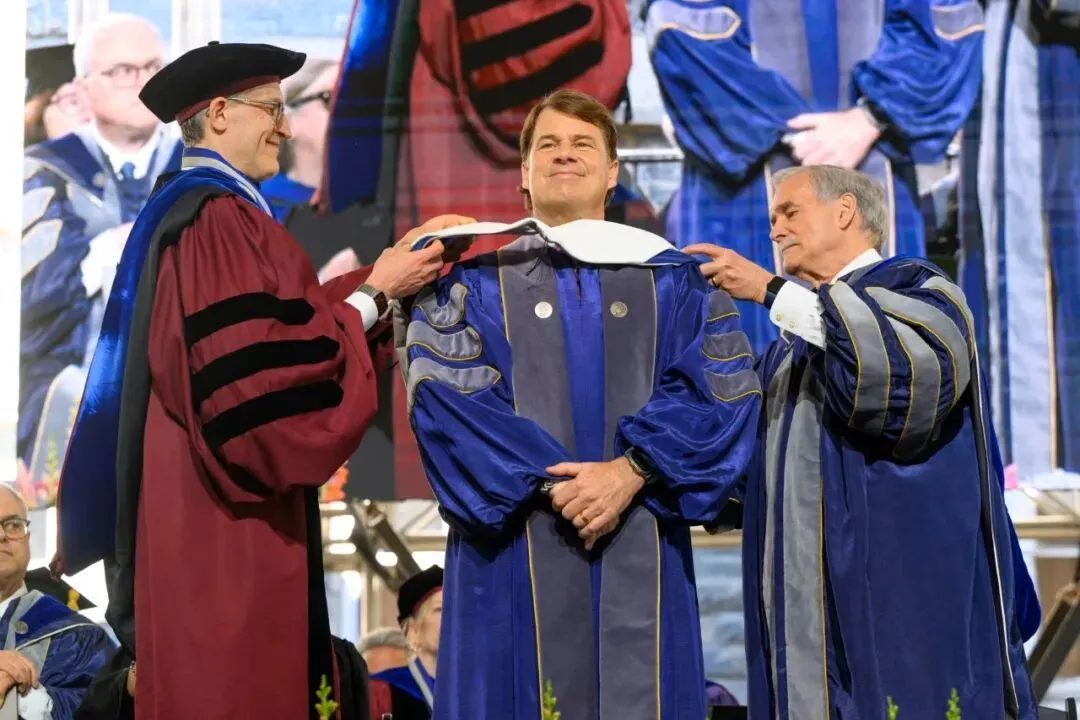
Jim Farley, CEO of Ford Motor Company, delivered a speech at the graduation ceremony of Georgetown University College of Arts and Sciences in 2026 and received an honorary doctorate in humanities. The weather was sunny on the day of the ceremony, and about 800 graduates gathered in front of Healy Hall.
His maternal grandfather, Emmett Tracy, entered the Ford factory as a worker in 1913, No. 389, and his badge and photo are still on Farley’s desk. In college, he drove a 1965 Ford Mustang, the same car he drove across the country as a teenager.
Next, Farley clarified a "misunderstanding" from the outside world. Many people think that he makes cars because he loves cars. In fact, what really attracts him to stay in this industry is that this matter is difficult to understand. He describes his interest in solving problems as addictive.
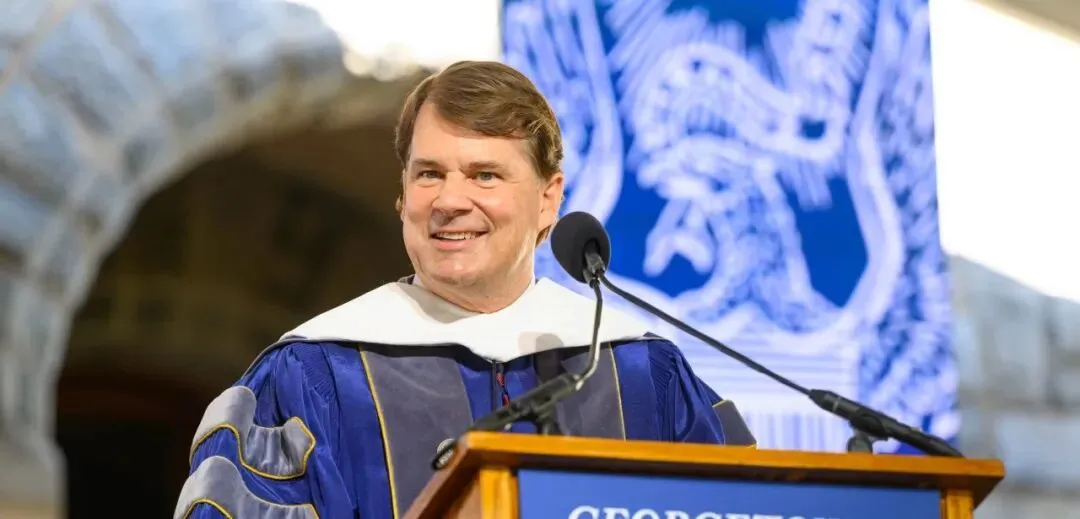
During the four years of his undergraduate studies at Georgetown, except for his freshman year, he had to work 20 to 40 hours a week, one of which was on Capitol Hill. Later, he changed his major from government to economics. It was also at that time that he met his future wife Cornelia.
What the Jesuit professor taught him was not answers, but discernment. Good judgment comes not only from the optimism brought by faith, but also from mistakes made and miscalculations. He summarized this method into a problem-solving framework with identification and decision-making as the core. Forty years after graduation, he still keeps in touch with the group of friends he calls “my team,” and just celebrated their 40th anniversary reunion last year.
At Georgetown, the person who influenced him most was Polish World War II hero Jan Karski, who had taught international relations for more than 40 years. Karski served in the underground resistance organization and provided early reports of Nazi atrocities to the Western Allies. He died in 2000 and was posthumously awarded the Presidential Medal of Freedom in 2012.
Farley said he never claimed to have faced the problems Karski experienced, but learned from him how to face life: "Understand the problem fundamentally, reflect on it, enjoy the process of understanding, pray for guidance, consider solutions, and then make up your mind to make decisions."
This framework he later used throughout his career. After almost 20 years at Toyota, he served as vice president and general manager of the Lexus Group, promoting the launch of the Scion brand, and was later assigned to be responsible for Toyota's product planning in Europe.
He said that every time someone reminds him that there is a high probability that he will not be able to do a certain position, he will run there instead. What attracts him is always the most difficult and realistic problem. He joined Ford in 2007 and has served as president of new business and technology strategy, president of global markets, and chief operating officer. He has led the company since 2020. In Detroit, he led fundraising efforts to raise $30 million for the Pope Francis Center, a homeless transitional center.
Farley’s final words to the approximately 800 graduates were not comforting words like “you will succeed if you work hard”, but framed hardship and difficulty as gifts in themselves: “It is a privilege to be able to serve others humbly.”
A year ago, he said something similar at his high school alma mater. In other words, this is not the first time that he has stood on his former campus and repeated the same judgment to people who are decades younger than him.

No one promises security anymore
Five people, with career spans ranging from thirty to fifty years, talking about the same thing.
Jen-Hsun Huang said that people who are better at using AI than you will replace you, Zifeng Su said that luck comes from taking risks to research hard problems, Malachowski said that momentum comes from action rather than a perfect starting point, Wagner said that the probability of still being in the same job ten years later is very low, and Farley said that difficult problems are the greatest gift.
"Automotive Business Review" believes that among the five people, Wagner's attitude is the most uncertain - he said that AI is very fascinating and extremely complex.