As communities around the world are increasingly opposed to the high energy and water consumption of data centers, Nvidia recently announced that its new generation liquid-cooled data center reference design for Rubin architecture can significantly reduce water consumption and improve overall energy efficiency while operating at higher temperatures. The company hopes to respond to public pressure surrounding the environmental costs of AI data centers, but it has also been pointed out that this plan does not touch upon broader controversies such as site selection, construction scale, and huge power requirements.
NVIDIA stated in its official blog that this liquid-cooled data center reference design "almost eliminates the dependence on water in the cooling process while maintaining high computing power output" and described it as a model solution worth adopting when future cloud service providers build Rubin generation AI facilities. However, technology media pointed out that Nvidia did not mention the difference in construction costs between liquid cooling solutions and traditional air-cooled data centers in the blog post, nor did it elaborate on the economic feasibility of this design in actual deployment.
Different from traditional air cooling solutions that need to maintain a lower computer room temperature, NVIDIA's idea is to allow servers to run at higher temperatures, and then cooperate with a high-efficiency liquid cooling circulation system to concentrate the heat out. According to the company, this design allows the AI server to operate stably at temperatures up to 45 degrees Celsius (about 113 degrees Fahrenheit), similar to Amazon’s recent announcement that it is optimizing air-cooled data centers with higher heat dissipation limits. By increasing the tolerable temperature range, operators are expected to reduce their reliance on external cold sources under different seasons and climate conditions.
Nvidia said that in this solution, the heat generated by the server is directly captured by the liquid cooling component and transferred to the heat sink through a higher-temperature closed loop. Because the cooling loop operates at higher temperatures, a cooling tower or dry cooler can remove heat to the environment more of the time throughout the year without having to rely on large amounts of evaporative water, making the system less sensitive to ambient air temperature. The company emphasizes that this architecture provides greater engineering flexibility for data centers located in different climate zones.
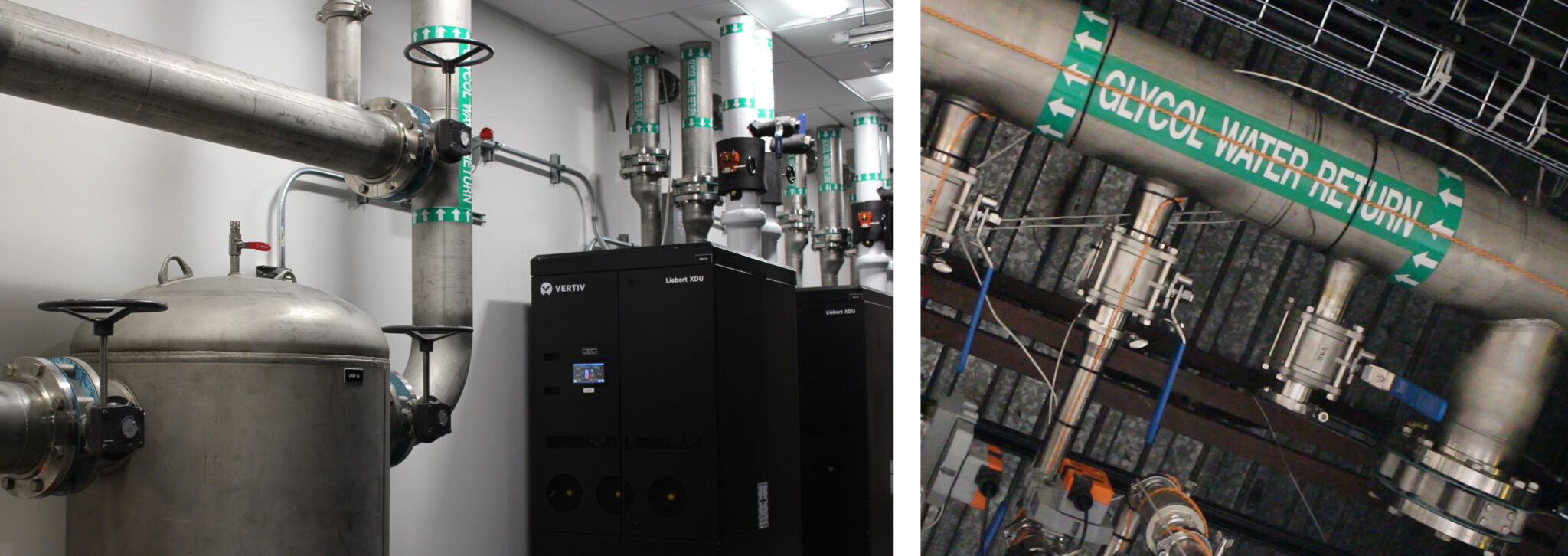
In terms of specific water consumption data, Josh Parker, head of sustainability at Nvidia, said that the reference design can reduce the water consumption of about 0.6 gallons per kilowatt hour of computing load in traditional cooling tower systems to close to zero, achieving a water reduction of up to about 95%. In other words, while maintaining the same computing power, the demand for fresh water consumed by data centers for cooling will be significantly reduced, providing relief space for facilities in water-stressed areas.
Despite this, industry and environmental observers pointed out that Nvidia’s statement focused more on improvements in cooling technology and did not provide substantive responses to some of the core issues that the outside world is most concerned about—such as the carbon footprint of ultra-large-scale AI data centers during the construction process, the huge power consumption required for long-term operations, and the pressure on local power grids and land use. They emphasized that even if the water used in the cooling process is close to zero, as long as the demand for computing power continues to rise rapidly, the overall energy and resource usage will remain at an extremely high level.
The report also mentioned that the Nvidia blog did not explain the investment gap in construction and modification costs of a data center using a liquid-cooled reference design compared to a facility using a less efficient air cooling system. This means that for many cloud service providers and hosting operators, whether to switch to the liquid cooling architecture advocated by NVIDIA on a large scale is not only a technology choice, but also a game between funds and return cycles. Some analysts believe that only under the joint pressure of energy prices, emission regulations and water resources constraints can such high-input and efficient solutions be more widely implemented.
As the scale of AI models and the demand for inference and training continue to soar, chip and system suppliers such as NVIDIA are trying to influence the evolution of future data center forms through reference designs and integrated solutions. This data center architecture with high-temperature liquid cooling as the core is described by the company as a "migration path" for cloud service providers towards Rubin generation GPU clusters, aiming to allow them to handle more intensive computing tasks while using less water to support infrastructure operations. However, in the broader social and policy discussions, the requirements surrounding transparency, community participation, electricity consumption caps and environmental impact assessment around AI data center location selection are still far from being substantially alleviated by the proposal of a single technical solution.