OpenAI is leaning toward delaying its initial public offering until next year, three people familiar with the matter said. This shift highlights the uncertainty ahead for today’s rapidly rising AI giants. People familiar with the matter said that the company had previously hired investment banks and law firms and planned to complete the listing as early as the third or fourth quarter of this year. Insiders say CEO Sam Altman has asked his team of advisers to come up with a plan to take the startup to an IPO valuation of $1 trillion — its latest private placement valued it at just $73 billion.

OpenAI CEO Sam Altman
However, a series of recent chain events have forced OpenAI management to shelve its aggressive listing goal. The core concern comes from the performance of Elon Musk's SpaceX after it went public this month: The largest IPO in history raised more than US$850 billion, and the valuation once reached US$1.77 trillion on the first day of listing; but the stock price has continued to fall since then, reaching as high as US$202 during the session last week, and has fallen to US$153 as of Thursday's close.
Global markets have been volatile in recent weeks as investors began to question whether AI companies can deliver on lofty growth expectations, with technology stocks dragging major indexes lower.
Two people familiar with the matter said that OpenAI’s advisory team warned the company in communications over the past week that retail investors would most likely not be too enthusiastic about its shares.
OpenAI’s slowdown in its IPO plans may disappoint Wall Street and Silicon Valley. OpenAI and its competitor Anthropic have both started preparations for listing, and the two companies' landing in the capital market is expected to generate a wave of huge wealth creation. OpenAI confirmed this month that it had submitted confidential listing documents to securities regulators and officially launched the listing process, but it has not finalized a clear timetable.
If it reaches a valuation of US$1 trillion after listing, its market value will exceed that of Walmart. That's a challenging goal for OpenAI: The company is widely believed to be unprofitable and still spending heavily on new data centers.
A spokesman for OpenAI said it had no further information to comment beyond the company's previous statement.

The OpenAI advisory team provided two options to the management: one is to wait until 2027 to go public and hit a trillion-dollar valuation; the other is to lower the target valuation and speed up the listing process. A person who has communicated with Altman on this matter revealed that Altman made it clear that any plan to lower the trillion-dollar valuation is completely unacceptable.
OpenAI also faces other operational challenges. At the end of last year, the company's chief financial officer Sarah Fryer stated that there were no plans to go public at the time, and the focus was on consolidating its financial position. Since then, the company has continued to invest heavily in the construction of data centers and computing power, with no signs of slowing down.
The company also invests heavily in marketing and recruits top engineering talents from giants such as Meta and Google. The company is actively exploring multiple revenue channels, including trying to embed advertising in ChatGPT, and has reached cooperation with e-commerce companies such as Shopify and Stripe to support users to complete online shopping directly within ChatGPT.
Two OpenAI employees revealed that the above-mentioned commercialization initiatives are currently in the early experimental stage. People familiar with the matter said that OpenAI's total revenue in 2025 will be approximately US$13 billion, and the company aims to triple its revenue this year; the company disclosed this year that its average monthly revenue can reach US$2 billion.
However, just a few months after Fryer stated that it would suspend listing, some management changed their attitude towards listing. As previously reported, the company plans to complete its IPO by the end of 2026.
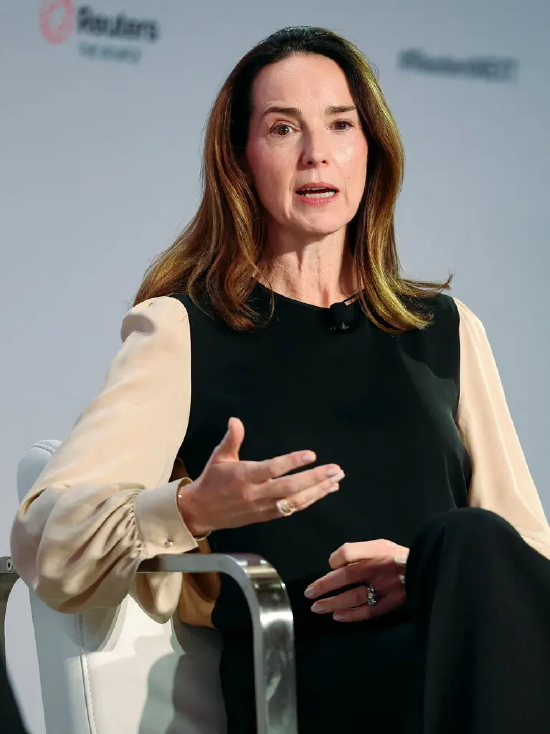
Sarah Fryer, CFO, OpenAI
The announcement came as a surprise to two employees familiar with the company's plans, who believed the company's financial foundation was not yet solid.
OpenAI is under severe industry competition pressure. The code development tool Claude Code launched by competing product Anthropic has performed well in enterprise sales; at the same time, Google's flagship consumer AI product Gemini has gained a large number of users.
After years of rapid growth in downloads of the ChatGPT consumer app, the growth rate has slowed down and the number of users has stabilized at around 900 million. Previously, investors were generally optimistic that it could easily exceed 1 billion users, but the current data is lower than market expectations.
In the past six months, OpenAI has completed nearly all-round strategic adjustments. Under the leadership of Fergie Simo, head of the general artificial intelligence implementation business, the company began to cut off various "side projects" (a term taken from role-playing games to refer to non-core businesses), including the video generation tool Sora, which continued to lose money. In order to compete with Anthropic, OpenAI established a dedicated sales team to promote the coding tool Codex to large enterprise customers.
Two employees said that despite the postponement of the listing plan, management believes that the company's current strategic direction is correct. The company posted a blog this month saying that Codex has more than 5 million active weekly users.
The company also recently announced that its total number of enterprise paying customers exceeded 2 million. Last week, OpenAI successfully poached Noam Shazer from Google. This talent competition is regarded as a major gain in the closed AI R&D circle. Chazer proposed AI in 2017Transformer architecture(The origin of the "T" in the name ChatGPT) One of the core authors of the paper.