A new study from Lancaster University in the UK points out that weird virtual spaces such as "Backrooms" that have emerged on the Internet in recent years are evolving into a new type of "dark tourism" destinations, with millions of users voluntarily immersing themselves in empty corridors and digital scenes similar to abandoned basements that do not exist in the real world. The research team believes that this phenomenon reflects a profound shift in the way people experience fear, curiosity and belonging in the digital age.
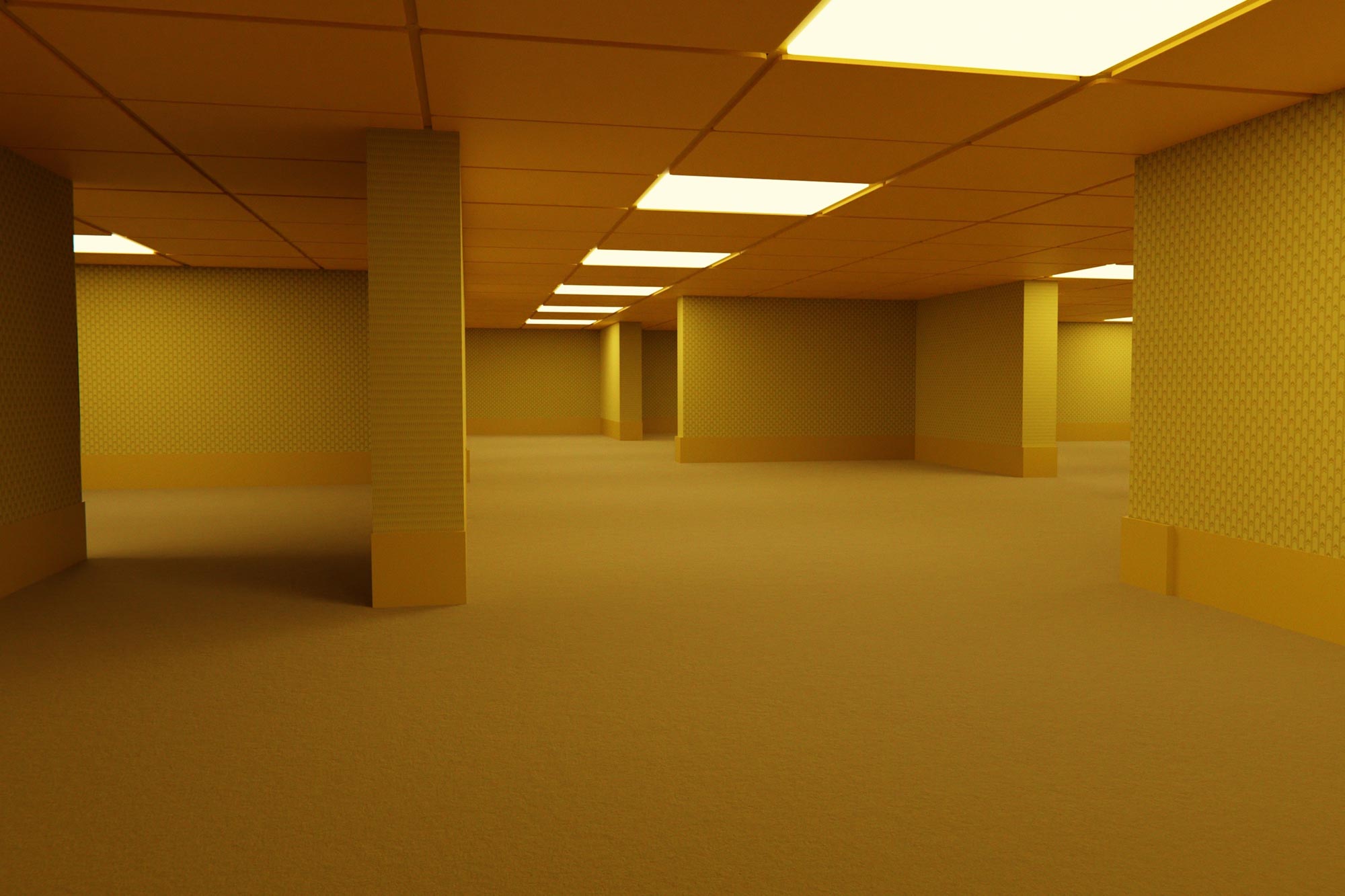
The so-called "backroom", usually presented as an endless office corridor, an empty room or a space similar to an underground warehouse, has become popular on the Internet for its disturbing sense of emptiness and repetition, and has gradually formed an online cultural phenomenon between fiction and immersive experience. Researchers from Lancaster University pointed out that, unlike traditional "dark tourism" that goes to real disaster sites or historical sites, these emerging destinations exist entirely in the virtual world and were born in relatively hidden and less regulated corners of the Internet. Collaborative narratives and experimental online communities jointly create imaginary spaces that "cannot be visited in reality."
The research, co-authored by Dr Sophie James and Professor James Cronin from Lancaster University School of Management, looked at why people are attracted to and willing to "wander" in these spaces that exist only in digital culture. In their analysis, the so-called online "legend-trippers" community is very active, constantly enriching virtual scenes such as "back rooms" by sharing videos, stories, diary-style texts and various creative contents, allowing more people to participate in them, experience uncertainty and uneasiness, and give these spaces emotional meaning despite the lack of physical locations.
Dr. James said that research shows that people are increasingly inclined to pursue strong emotional experiences in spaces that do not "really exist", but these spaces are still vivid and meaningful in subjective feelings. The team summarizes this phenomenon as "para-terrestrial dark tourism": people explore environments that seem to have a "sense of place" but are beyond traditional geographical concepts. These environments are inaccessible by conventional means, and their specific forms and meanings are always vague and fluid.
The study pointed out that the "back room" case shows how digital culture reshapes the connotation of "exploration" and "sense of presence", and also raises a broader question: In a world deeply mediated by digital technology, how people interact with risk, ambiguity and the unknown in these virtual spaces. Dr. James mentioned that with the upcoming release of the "Back Room" movie produced by A24, these originally relatively niche online imaginations are moving further into mainstream culture, making related research more realistic and urgent.
The research results, published in the Annals of Tourism Research, further extend the boundaries of the destination concept. The study believes that when "dark tourism" unfolds in the online space, the Internet itself can be regarded as a destination: the platform hosting "Legendary Explorers" is not only a supplement or copy of the real place, but a self-consistent environment formed through participatory culture. In this perspective, destinations are no longer just fixed geographical locations, but can also be virtual places that are flexible, creative, and co-constructed by digital participation.
The author of the paper emphasizes that understanding this type of "terrestrial dark tourism" phenomenon is of great significance to future tourism research and cultural research, because it reveals how in the digital age, people still create new spaces that can be shared, perceived and even "tourized" in the invisible and intangible "void".