SoftBank Group founder Masayoshi Son recently publicly questioned Elon Musk’s idea of building an AI data center in space, on the grounds that saving power cannot solve the most expensive and urgent problem in building AI computing power. According to the "Wall Street Journal" report, Masayoshi Son recently asked Musk's orbital AI data center plan in a meeting with Japanese investors: "What's the point?" His judgment is that electricity accounts for about 7% of the cost of the data center, and the real bulk is still chips and other hardware components.
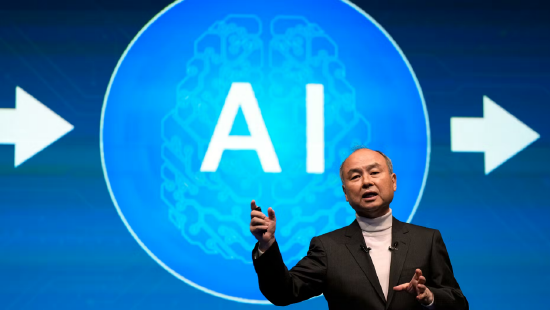
Saving electricity bills does not mean saving AI computing power costs
The core appeal of Musk's space data center vision is solar energy in an orbital environment and the possibility of bypassing terrestrial power, land and permitting constraints.
What Sun Zhengyi objects to is not that "space is ultimately impossible", but that this account is not cost-effective at the current stage. He believes that electricity costs only account for a small part of the data center operating costs. If in order to save this part of the cost, it has to face additional problems such as launch, maintenance, material transportation and communication delays, it will be difficult for the space solution to win in the short-term AI competition.
Son is betting on the ground, Musk is betting on the track
The Wall Street Journal compares Masayoshi Son and Musk because both of them are accustomed to betting on technology that is so large that it is almost risky. Masayoshi Son has long talked about technological singularities and has also formulated a "300-year business plan" for SoftBank; Musk has used recyclable rockets, electric vehicles and satellite Internet to prove the commercial feasibility of high-risk engineering routes.
But when it comes to AI infrastructure, the two have completely different timelines. Son Zhengyi attaches more importance to the preemptive window of terrestrial AI infrastructure in the next few years. SoftBank has already participated in the "Stargate" project led by OpenAI, including AI models, chips, robots and ground infrastructure.
Musk's line is more like a long-term engineering bet: If energy and cooling conditions are better in space, orbiting data centers will make commercial sense sooner or later. But Son’s counterargument is that the AI competition is advancing on a monthly basis, and companies and investors cannot afford to wait for a solution that may not enter a mature stage until ten years later.
This is not about who is more conservative, but who bears the cost first
Son is not a cautious person. He himself is one of the most radical people in the global technology investment field, and he has been betting SoftBank's future on AI. Because of this, his doubts about Musk’s space AI data center are more like the differences between the same type of gamblers: one believes that the computing power will be spread on the ground first, and the other believes that space will open a new upper limit for AI infrastructure.
Behind this disagreement are the real problems that the AI industry is facing: ground data centers are increasingly consuming electricity, water, and land, and are increasingly prone to local community opposition and regulatory pressure. Musk’s space program responds to these long-term bottlenecks, while Son reminds us of short-term costs and time windows.
If the victory or defeat of AI infrastructure is indeed decided in the next few years, Son will continue to throw money into the ground; if the orbital data center finally proves that the cost is controllable, Musk is betting on the next round of infrastructure migration. What is certain now is that the AI competition is no longer just a competition for model capabilities, but also a competition for who can get electricity, chips, land and capital faster.