Earlier this year, Mono Technologies assembled and shipped nearly 1,000 units of its flagship product, a $600 router development kit. The company's co-founder Tomaž Zaman founded Mono in 2024. Its products have gained initial market recognition among networking enthusiasts by virtue of their ability to increase network speeds.
Then came the memory crisis, which caused the cost of producing nearly every electronic device in the world to skyrocket. Now, Zaman doesn't know what to do, especially with the 1,300 potential customers who have already put down $100 deposits for the next batch of products.
The cost of the 8GB DRAM memory Mono purchased from Micron has skyrocketed from $35 when he first developed the product to $300 today. At the company with just three employees, Zaman said he has not yet decided whether to continue with a second batch of products and raise prices by at least a third, or launch a new model with 75% less memory.
Zaman said in an interview: "Even a router of our level, if it sells for $900 or $1,000, the price/performance ratio is too low. But we have no choice, either to increase the price or reduce the configuration to the minimum."
Zaman's experience is becoming commonplace throughout the consumer electronics market. From iconic devices like the iPad and Xbox game consoles to fringe products just out of beta, no one is immune. As the artificial intelligence (AI) boom triggers a global supply crunch, processors and advanced systems from chipmakers such as Nvidia gobble up more and more memory, causing costs to rise sharply.
Yet while tech giants like Apple and Microsoft, which announced price hikes this week, have deep financial buffers, strong supply chain bargaining power and millions, if not billions, of customers, broader businesses face what could be extremely dire straits. Profit margins for most consumer electronics companies are razor-thin, and they cannot confidently raise prices in an economic environment where inflationary pressures are already high.
Apple’s response and Micron’s profits
The other side of the story also emerged this week.
Micron said in its quarterly financial report released on Wednesday that its latest quarter revenue more than quadrupled and its gross profit margin more than doubled from 39% a year ago to nearly 85%. Buoyed by this financial report, Micron's stock price soared 16%, with a cumulative increase of approximately 800% in the past year, rising together with competitors SK Hynix and Samsung.
Micron said its dynamic random access memory (DRAM) average selling price rose more than 260% year-on-year in the third quarter. Micron Chief Commercial Officer Sumit Sadana said in an interview that the company has signed long-term supply agreements with consumer-oriented smartphone and PC companies.
"We spend a lot of time thinking about how we manage our business, our supply and the allocation of scarce capacity to ensure we are prudent, responsible and fair with our customers, segments, markets and geographies," Sadana said.
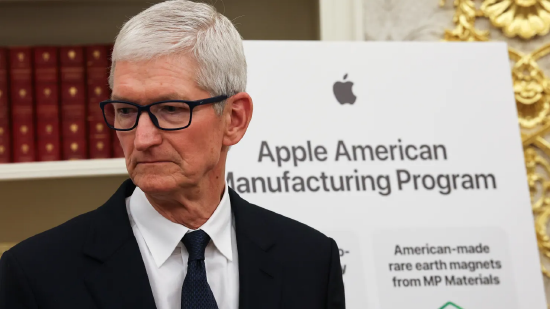
The day after Micron released its financial report, Apple announced price increases for a number of iPad and Mac products, saying in a statement that the company had "never seen the price of a certain component increase so much in a short period of time." Apple CEO Tim Cook also predicted a price increase in an interview last week and called the current memory situation a "once-in-a-century flood."
Within hours of Apple's announcement, Microsoft also announced it would raise the price of the Xbox Series S by $100 to about $500. Microsoft explained in a blog post that game consoles typically sell for less than their manufacturing costs.
Microsoft said: "The price of console storage and memory has increased more than 2.5 times, and we expect it to double again by the fall of 2027. The entire consumer electronics industry is grappling with the current component crisis, but the impact is particularly heavy on game consoles."
Wall Street has expressed concern, with shares in both companies falling this week and lagging broader indexes so far this year. But among companies that lack close ties to component suppliers and are subject to frequent cost changes and supply shortages, the panic is far more severe.
Several industries, including telecommunications and medical equipment, as well as retail, have expressed concerns about the price increase, according to a letter sent to the Commerce Department by the lobbying group earlier this month.
In a warning to investors, action camera maker GoPro said it learned in April from memory suppliers that "production plans for the memory used in its products are being scaled back," which would lead to a decline in its expected sales. The company did not respond to a request for comment.
Elaine Ferguson, co-founder of W5 Technologies, which makes communications equipment for defense contractors, is struggling with how to deal with high RAM costs and lead times.
Earlier this year, W5 ordered a server from a major manufacturer and plans to use it in a satellite communications simulator that will be delivered in May. Ferguson said that the price when ordering was $8,839, but in 2020, the price of this server is only $5,373.
Since that purchase, the price has nearly doubled.
"We just ordered another one for another sale," Ferguson said. "The price is now close to $15,000, and the delivery date is completely uncertain. We'll be lucky to get it."
She said the server was originally supposed to arrive in May, but is now expected to wait until August. To this end, W5 provided a second-hand server that was being tested to a defense contractor customer and paid for a team to fly to the site to install it.
Meanwhile, at Mono Technologies, Zaman is developing and qualifying the next generation of models, but he's not sure when the products will be available. He is also actively raising funds, hoping to find investors to support a new, larger round of production.
Zaman lamented: "The cost of manufacturing the product is too high."