Less than 48 hours after Volkswagen CEO Oliver Blum celebrated the group's lucrative 10 billion euro sale of its marine engine business, the deal was overshadowed by news that it plans to cut as many as 100,000 jobs. The plan to sell a majority stake in Evelens and the massive cost-cutting plan disclosed last week highlight Volkswagen's current urgent situation: it must not only face fierce competition from emerging car companies, but also adapt to the industry's shift to electrification.
Affected by the multiple pressures mentioned above that determine the direction of the industry, the group's share price has almost halved since Bloom took charge of Volkswagen in September 2022. As a result, Germany's largest car company had to take radical measures.
The layoff plan exposed on Friday will be submitted to Volkswagen's supervisory board for review next month. The plan may become one of the largest layoffs in corporate history, surpassing the large-scale layoffs of General Motors and IBM in the 1990s.
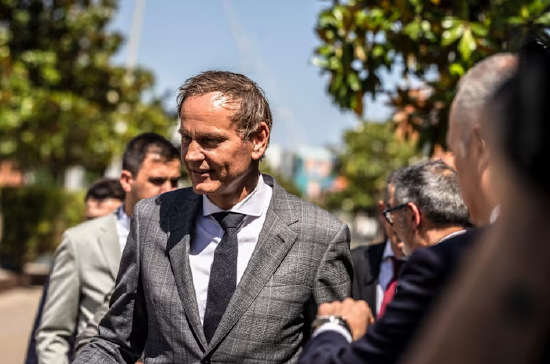
Now Bloom is facing multiple difficulties: on the one hand, he needs to promote a major layoff plan; on the other hand, he needs to decide whether to sell off the remaining assets of the group to cover restructuring expenses and reduce debt; at the same time, he must ensure that the group has sufficient funds to invest in the research and development of new generation models.
Volkswagen, which has a total of 625,000 employees worldwide, plans to eliminate nearly one-sixth of its positions and close four factories. Less than two days ago, the company just completed the fiercely competitive auction of its Everense business, with many leading private equity institutions participating in the competition.
UBS analyst Patrick Hummel said that all proceeds from the sale of the business may be offset by expenses incurred in implementing a new round of restructuring plans, and Volkswagen will most likely not increase shareholder dividends.
"It is very likely that billions of euros of additional restructuring costs will be incurred in the second half of this year," Hummel said. "From a shareholder's perspective, the market's previous optimism about the Evelens deal has basically dissipated."
According to people familiar with the matter, this highly confidential auction ultimately valued Evelens at nearly 10 billion euros including liabilities, which was much higher than the market estimate of 6 billion euros when the sale process was launched last year.
Volkswagen did not disclose the total amount of the transaction with U.S. private equity giant Bain Capital. It only stated that it would receive 7.4 billion euros in funds after deducting liabilities from the sale of a majority stake. Two people familiar with the details of the transaction explained that although Volkswagen only sold 51% of the equity in the business segment valued at 10 billion euros, it received the funds because the transaction supporting financing plan increased the scale of the business's own liabilities.
The successful sale at an ultra-high valuation and the huge costs required for restructuring have caused investors and industry consultants to question whether Volkswagen will continue to sell off its assets and how the company will dispose of the proceeds.
Just as investors are seeking safe-haven assets to avoid the sell-off triggered by the artificial intelligence sector (software and other industries), and are regaining interest in industrial assets, Volkswagen is in a dilemma of whether to continue selling assets.
Volkswagen has signaled that it may divest more non-core assets, including stakes in power battery subsidiary PowerCo and autonomous driving business ADMT. The group has previously reduced its stake in Traton, a truck business subsidiary.
A person close to the group said that there are two completely different views in the market: the optimistic view is that Volkswagen will invest the proceeds from asset sales into business research and development; while the skeptics believe that the funds will only be used to cover up the company's long-term inefficient operations.
VW's investors are hoping subsequent asset sales will replicate the huge gains from the Evelens sale. The nearly ten-month sale project was codenamed "Project Nicholas", named after Nicholas Otto, a 19th-century gasoline internal combustion engine pioneer and German engineer. In the end, Bain Capital defeated private equity peers CVC and EQT to win the business.
According to insiders from the three bidders, this auction will bring high profits to Volkswagen and will also become a very representative transaction in the history of German M&A transactions in recent years. The three bidders used codenames Denmark, Spain, and the United Kingdom respectively. One of the bidders commented that the entire auction process was "perfect" and said: "I have never seen such wonderful bidding."
Late on Wednesday night, as the dust settled on the auction, Volkswagen Group's management and supervisory board were reviewing bids from all parties. At 7 o'clock in the morning that day, all interested acquirers had submitted sealed final best offers in the lobby of the Frankfurt branch of Volkswagen's cooperative law firm, Freshfields Bruckhaus Deringer.