The U.S. Supreme Court recently made an important ruling, clearly including user location data stored by technology companies such as Google and Apple within the scope of protection of the Fourth Amendment of the U.S. Constitution. It determined that the use of so-called "geofence warrants" by the police constitutes a "search" and must have reasonable criminal suspicion and corresponding reasons before retrieving relevant data from technology companies.
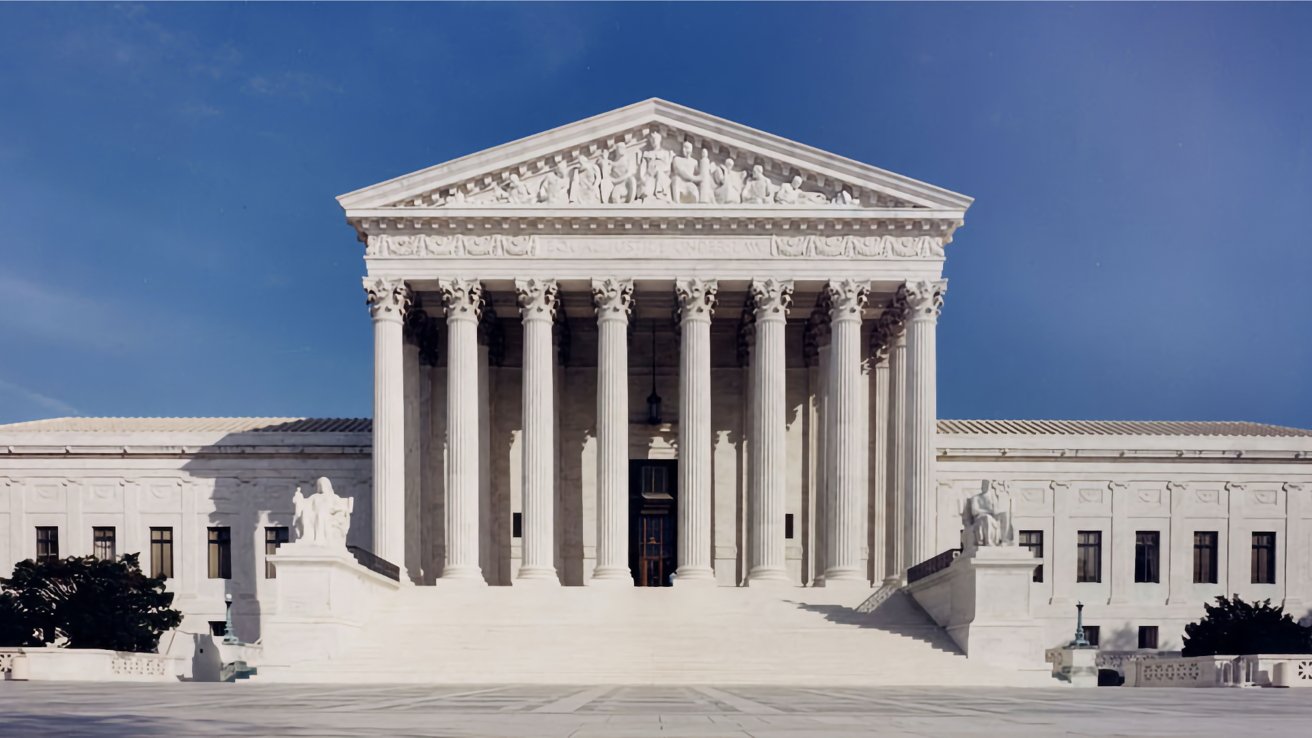
For a long time, the police have issued geofence warrants to companies such as Apple and Google, requiring the location records of all devices in a specific time period and area, hoping to identify suspects through large-scale data screening. This approach is often criticized as a "big trawl" search, which involves tracking down a single suspect while involving a large number of unrelated ordinary people in the investigation.
According to the interpretation of the decision by the legal professional website SCOTUSblog, the Supreme Court held that this kind of geofencing warrant meets the definition of "search" under the Fourth Amendment. Therefore, each person involved in the warrant must have a clear reason to be included in the scope of the police's data retrieval, not just because his or her device has been present in a certain location.
The ruling pointed out that in the future, the police will not be allowed to rely solely on large-scale location data screening to find clues without a specific suspect, except in rare and very special circumstances. This means that the past investigation model based on "first collecting the location data of everyone nearby and then slowly filtering it" will be severely restricted.
This ruling does not mean that law enforcement agencies will no longer be able to obtain user location data. The Supreme Court emphasized that if the police have identified a specific suspect through other evidence, it is still a legal and feasible investigation method to apply to Apple or Google to obtain the location records of the individual.
The court also pointed out that for cases where the existence of a criminal gang has been confirmed, or when tracking down associates of known criminal suspects, the police can still apply for the use of geofence warrants under certain conditions, but they must be submitted and reviewed on a case-by-case basis, and they can no longer replace targeted investigations with general, wide-area trawl searches.
In some past cases, the police often directly requested the location records of all devices within a certain time period and a certain geographical range from Google, even if there were no identified suspects at the time. Someone whose phone happens to be passing near that location could be included in the investigation, or even implicated, simply because they were "in the wrong place at the wrong time" with a smartphone.
The Supreme Court ruled 6-3 this time that the practice violated the Fourth Amendment's protection against unreasonable searches and seizures. Judge Elena Kagan, who co-wrote the decision, noted that individuals have a reasonable expectation of privacy for data that records the location of their cell phones, and that this constitutionally protected interest has been violated when the police request this data from third-party technology companies, even if the time frame of the request is limited and the data is held by the third party.
Kagan emphasized that in the future, police must first identify suspects through other means and can no longer rely mainly on large-scale location data screening to "reversely" find criminal suspects. In other words, the factor of "misplaced appearance" alone is no longer a valid reason for the police to obtain someone's location records.
According to statistics from the Harvard Law Review, in 2020 alone, Google received more than 11,500 warrants for geofence searches, requiring it to provide large-scale location data. With this new ruling from the Supreme Court taking effect, such writs that lack specific reasons for each person involved should be regarded as "without just cause" in a legal sense, and the relevant number is expected to return to zero in the future.
The ruling stemmed from a bank robbery that occurred in 2019. A man successfully escaped after stealing nearly $200,000 in cash. The police initially had no clues about a suspect. This starting point of "zero suspects" was critical to the case's eventual evolution to the Supreme Court.
At that time, the police issued a geofencing warrant to Google, requesting the location records of all devices within 150 meters of the bank within about an hour before and after the incident. Google subsequently provided data on 19 accounts, and the police reduced the number to 9 accounts and continued to request more detailed location tracks within two hours before and after the incident.
After further analysis, the scope of the investigation was narrowed to three individuals, one of whom was Okello Chatrie. Using his location records, police eventually located the home and found nearly $100,000 in cash, a gun and a ransom note used in the robbery. Chatri was immediately arrested and confessed.
However, Chatri later argued that his Fourth Amendment rights were violated in this case. During the appeal process of the case, diametrically opposed opinions emerged regarding the legality of the geofence order, and it eventually appealed all the way to the Federal Supreme Court and led to this landmark ruling.
According to the results announced by the Supreme Court on Monday, Chatri's case did not end there, but was sent back to the Federal Circuit Court of Appeals, asking it to further examine whether the police had sufficient grounds to obtain the relevant location data in the first place. The specific direction of the case remains to be determined by subsequent judicial proceedings.
Regardless of the outcome of individual cases, the Supreme Court has made it clear that the location data of U.S. citizens’ mobile phones is subject to constitutional privacy protection. In the future, if police want to obtain this kind of data, they will have to provide an evidence base that goes beyond the vague excuse of "you happened to be there nearby." For ordinary users, this means that even if you are holding a smartphone in public space, you should no longer easily become an innocent target in a large-scale "data trawl".