SanDisk officially announced today that it has begun delivering test samples of its 10th generation 3D NAND flash memory technology product - BiCS10 1Tb (Terabit, 128GB) TLC flash memory chip to customers. This new chip has achieved a qualitative leap in storage density, transmission speed and power consumption efficiency, aiming to fully meet the urgent needs of modern computing for large-scale, high-efficiency storage.
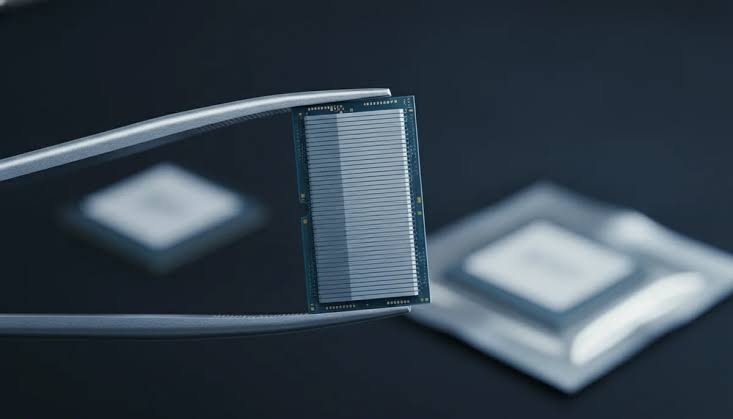
According to the technical details officially disclosed by SanDisk, the BiCS10 chip has successfully achieved an industry-leading TLC storage density of more than 29Gb/mm² by significantly increasing the number of flash memory stacking layers to 332 layers and combining it with advanced lateral scaling technology. Compared with the 8th generation (BiCS8) 3D flash memory currently in mass production as the main force on the market, the bit density of the new BiCS10 has been increased by 59%. In terms of performance, thanks to the comprehensive introduction of Toggle DDR 6.0 interface bus, SCA protocol and PI-LTT technology, the interface transmission rate of BiCS10 has soared to an astonishing 4.8 Gb/s, achieving a 33% performance leap compared to the previous generation.
In addition to the dual breakthroughs in performance and density, BiCS10's performance in energy efficiency is also outstanding. The chip continues to use SanDisk’s market-proven CBA (CMOS directly bonded to Array, CMOS directly bonded to wafer array) architecture technology. This cutting-edge process maximizes electrical performance by manufacturing CMOS logic circuits and flash memory arrays on separate wafers, and then bonding them together using high-precision wafer alignment technology. With the support of this technology, the data input and output energy efficiency of the BiCS10 TLC chip has been significantly optimized. Compared with the BiCS8 generation, its input power consumption has been reduced by 10%, and its output power consumption has dropped significantly by 34%. This is crucial for modern data centers and enterprise-level infrastructure that are eager to reduce operating costs and heat dissipation pressure.
Alper Ilkbahar, Chief Technology Officer of SanDisk, told industry media at the press conference that as today’s world becomes increasingly connected, highly data-intensive and increasingly intelligent, NAND flash memory technology is playing an increasingly critical cornerstone role in supporting the scale of modern computing power. He emphasized that the earlier BiCS8 has set a new benchmark for the industry by combining wafer bonding capabilities with actual gains in density and energy efficiency; and today's BiCS10 TLC builds on this solid foundation to further bring customers faster interface rates, higher bit density, and better power consumption performance, which clearly demonstrates SanDisk's innovative strength on the long-term technology roadmap for 3D flash memory.