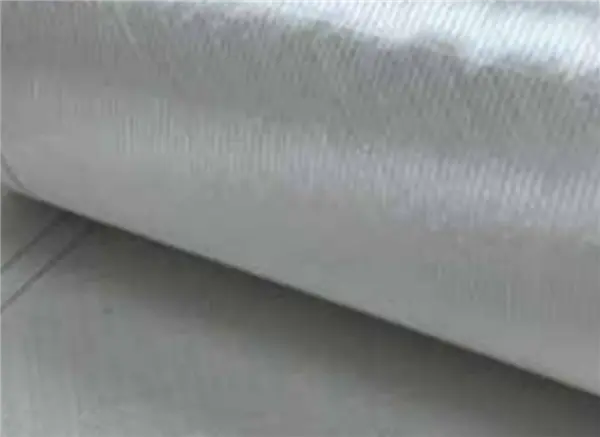
Driven by the explosive growth in demand for computing power, the price of electronic cloth (electronic grade fiberglass cloth) has rebounded sharply since the bottom last year.As of early June,The mainstream electronic fabrics in the market have completed five rounds of price increases this year, with the average price reaching 7.4 yuan/meter, an increase of 100% from the low in the third quarter of last year.However, the tension between supply and demand is difficult to alleviate in the short term, and key bottlenecks are spreading from the price side to the equipment side.
An upstream practitioner of electronic fabrics revealed that the current demand for air-jet looms dedicated to high-end electronic fabrics is extremely hot.Among them, Japan's Toyota Loom accounts for more than 90% of the global market share. "Orders are placed now and delivery is not expected until 2029."
It is reported that the normal delivery cycle of Toyota looms has been extended to 18 to 24 months, which means that the release of new production capacity of electronic cloth companies will be significantly delayed, further exacerbating supply rigidity.
In terms of domestic substitution, Liu Changlei, secretary-general of the China Fiberglass Industry Association, previously stated that it will take at least two years to achieve domestic substitution of high-end looms.
Among A-share companies, Titan Co., Ltd.’s electronic cloth loom project is still in the research and development stage. Titan shares admitted that the product has a long research and development cycle, and the core components are difficult to tackle. There are risks of R&D failure, inability to industrialize and make profits, and there are significant uncertainties in related progress and results.
It is worth noting that this round of price adjustments shows structural differentiation - the increase in ordinary electronic cloth products is higher than that of high-end products used in AI servers and other fields. The main reason is that the current supply and demand gap for ordinary electronic fabrics is larger and the price elasticity is more obvious, while non-high-end demand is not strong enough.
As a key insulation reinforcement material for printed circuit copper-clad laminates, the production of electronic cloth requires extremely high special equipment and process control, and the pace of production capacity is already limited.The current delays in loom delivery and the window period for domestic substitution have made it difficult to fundamentally alleviate the industry's supply bottleneck in the short term.
According to industry data, the cost proportion of glass fiber in PCB boards is about 10%, which varies depending on the type of chip. At present, the high-end fiberglass cloth market is still monopolized by Nittobo, whose global share also exceeds 90%.