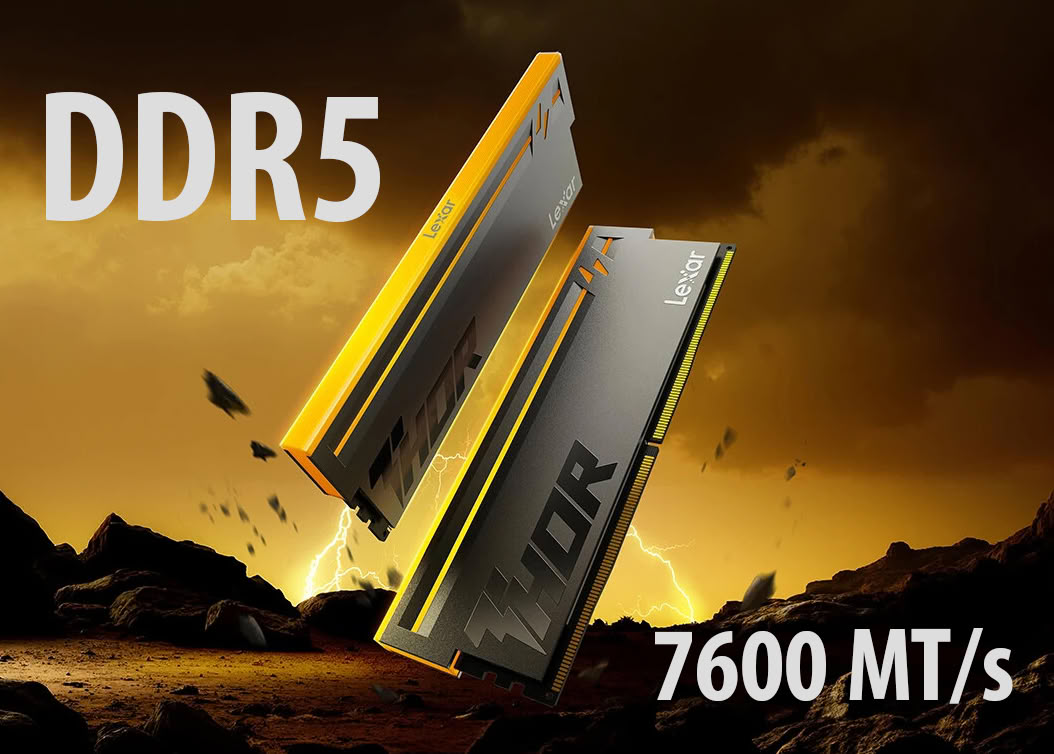
Lexar is preparing a new DDR5 desktop memory set based on CXMT (ChangXin Memory Technologies) particles. Compared with previous products using CXMT particles, the frequency increase is very significant. Previously commercially available CXMT DDR5 sets for the mainstream market only reached a maximum of 6000 MT/s, but this time Lexar's new set directly increases the frequency to 7200 MT/s and 7600 MT/s. Both specifications are CL38 timing and the operating voltage is 1.4 V.
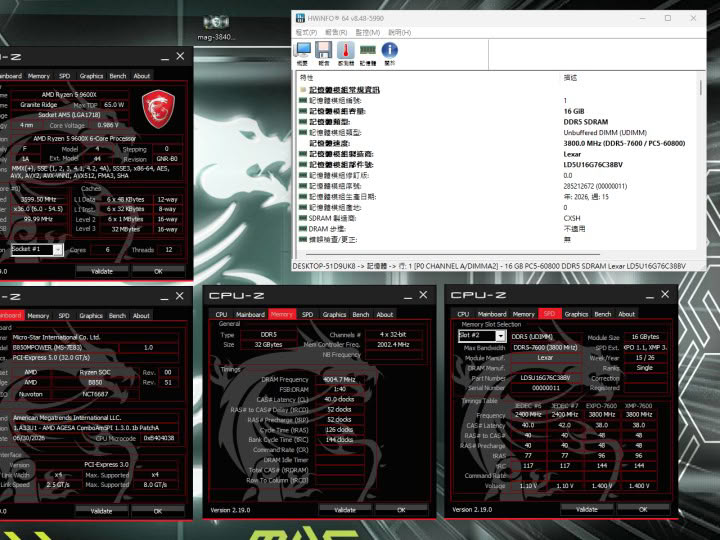
The new product will be named "THOR II" and will be included under the existing THOR RGB DDR5 series. The first batch of specifications is a 32 GB dual-channel set, consisting of two 16 GB memories. To support the performance claim of 7600 MT/s, relevant CPU‑Z screenshots have appeared online, in which the module model of the higher frequency version is LD5U16G76C38BV.
In previous demonstrations, MSI has successfully overclocked the DDR5 memory of Changxin particles to 8000 MT/s on the AMD platform. This performance shows that the overclocking potential of Changxin DDR5 particles is much higher than its existing positioning in the mainstream entry-level product line. However, judging from the current information released by Lexar, the new THOR II set does not directly benchmark the 8000 MT/s demonstration result, but with the combination of 7600 MT/s and CL38, it can already compete strongly with competing products of the same level. In terms of positioning, these new Lexar products are still targeting the RGB gaming and enthusiast market, seeking a balance between frequency, timing and lighting effect design.
Lexar has not announced the specific launch time and official pricing of the THOR II RGB DDR5 memory set. Considering the current fierce competition in the high-frequency DDR5 market and the potential advantages of Changxin particles in cost and supply, the final selling price of this new product will become one of the key factors in observing its market competitiveness.
From a longer-term industrial perspective, Changxin has made significant technological progress in the field of DDR5 in recent years. Some believe that this Chinese manufacturer is gradually narrowing the gap with international giants such as Samsung, SK Hynix and Micron. At the same time, recent reports also mentioned that international brands including Apple have begun communicating with the US government, hoping to obtain permission to use sanctioned Changxin memory chips in their products, which further highlights Changxin’s strategic value in the global storage supply chain.