According to the latest estimates from Bank of America Global Research, as the cost of DRAM and related hardware continues to rise, the price of Nvidia's next-generation server rack will reach a new historical high, and its growth rate will far exceed that of the current Blackwell architecture products.
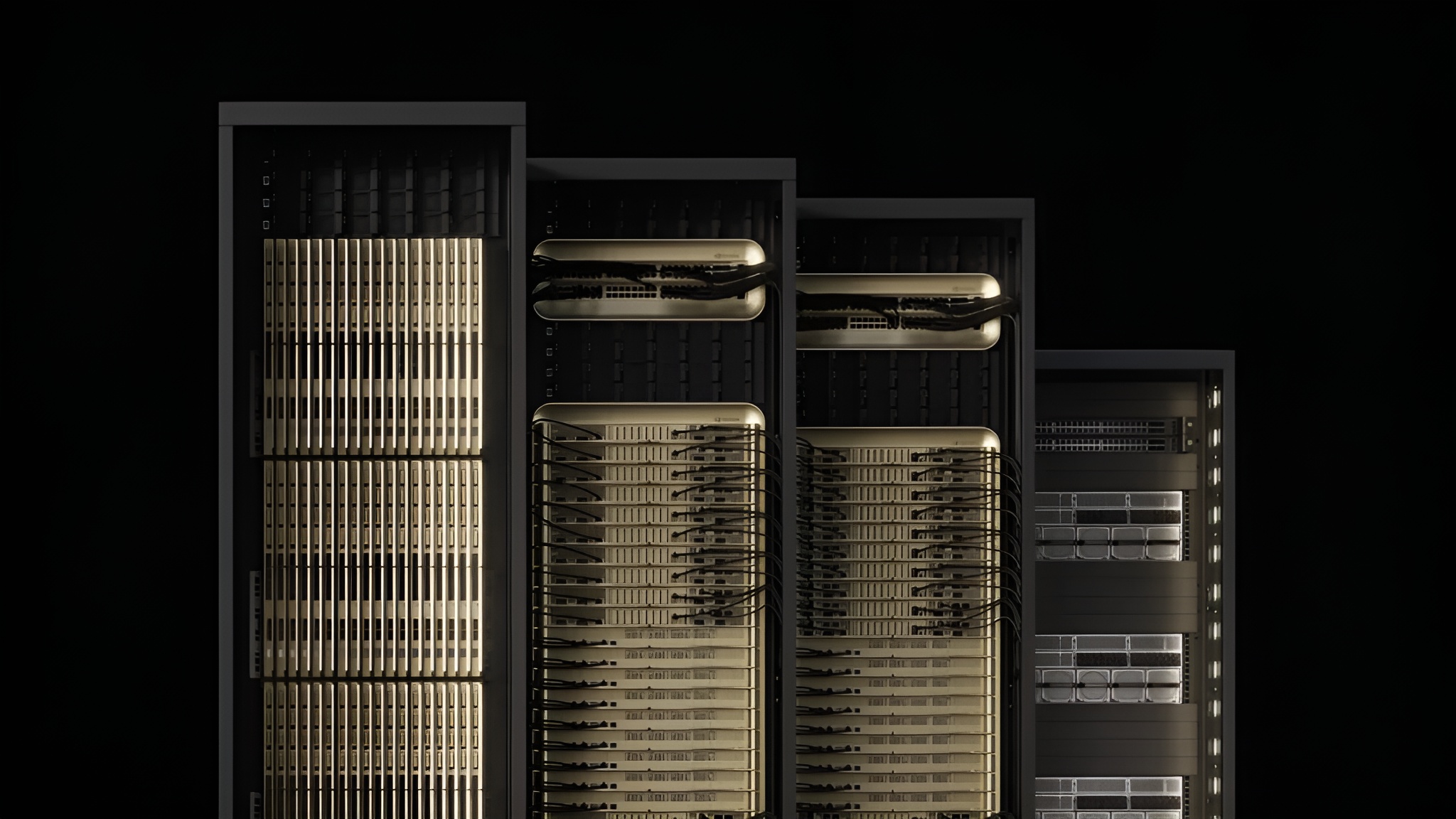
In NVIDIA's latest product planning, the "Oberon" series of server racks based on Rubin architecture will be equipped with 72 Rubin V200 GPUs and 36 Vera CPUs. Each Rubin GPU is equipped with 288 GB HBM4 memory, and each Vera CPU is equipped with 1.5 TB LPDDR5X memory. This means that the entire NVL72 rack will have up to 20.7 TB of HBM4 memory and 54 TB of LPDDR5X memory. Affected by this, the average selling price of a single Rubin server rack is expected to reach US$6 million, of which the cost of the HBM4 memory part alone is approximately US$380,000. Compared with the Blackwell architecture, the cost per GB of memory has increased from US$11.26 to US$18.40.
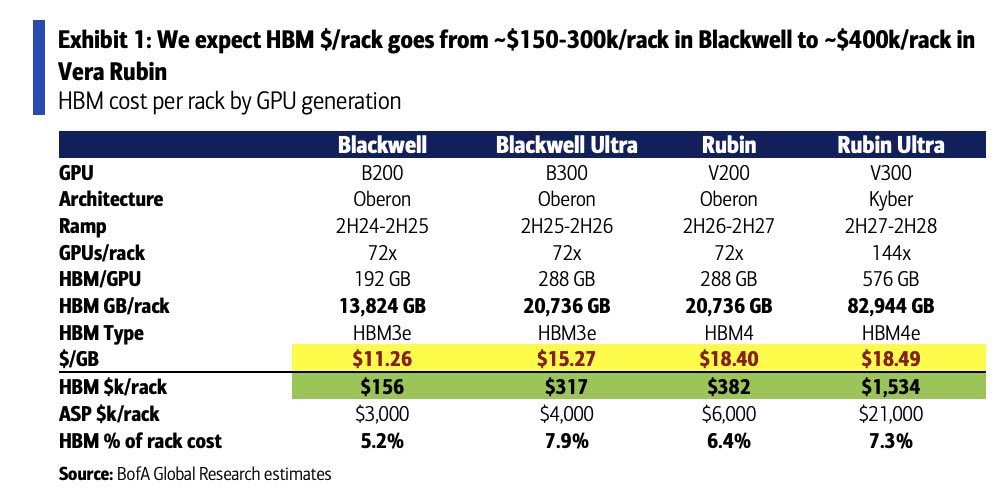
For the higher-end Rubin Ultra series, the price increase is even more significant. According to analysis, the Rubin Ultra V300 chip will integrate 576 GB of HBM4e memory, and the total memory of the NVL144 "Kyber" server rack will reach an astonishing 82,944 GB. Although the cost per GB of memory is expected to be the same as that of Rubin V200, about US$18.49, due to the increase in the overall size and configuration of the rack, the total cost of HBM4e memory in a single rack will reach US$1.534 million, which is approximately four times more than a standard Rubin rack and nearly five times more than a Blackwell Ultra rack. Based on this configuration, the estimated average selling price of each Rubin Ultra "Kyber" rack will climb to $21 million, while the Blackwell Ultra will sell for about $4 million.
According to previous assessments by Foxconn, the construction cost of Nvidia's Vera Rubin AI data center will exceed US$47 billion per gigawatt (GW), and the annual power operating cost will also be as high as US$1.3 billion. Although the initial investment cost of the Rubin series is extremely high, the industry is generally expected to provide a highly competitive total cost of ownership (TCO) and the lowest unit computing power cost in the industry. At present, many of the world's leading artificial intelligence companies have begun to deploy the first batch of Vera Rubin systems. As this series of products enters the mass production stage, the scale effect and performance of this generation of AI computing power infrastructure have attracted much attention in the industry.