On July 11, according to Bloomberg, on Friday, South Korean memory chip manufacturer SK Hynix completed the largest IPO of a foreign company in the history of the U.S. stock market, with its stock price soaring 13% on the first day. Behind this historic listing, the market is betting on a simple logic: AI has fundamentally reshaped the memory chip industry's deep-rooted boom and bust cycle for decades.

SK hynix goes public in the United States
Will AI chips continue to prosper?
SK Hynix raised US$26.5 billion through the issuance of American depositary receipts, a sizeable portion of which will be used to expand chip manufacturing capacity. It's a move that the industry as a whole has avoided for years as it has been hit hard by oversupply in the past.
"We have always been a cyclical industry, so we have always experienced booms and troughs in the past." SK Hynix CEO Kwak Noh-Jung said in an interview with Bloomberg. This was his first exclusive interview with the US media. "However, the situation has obviously changed."
The advent of the ChatGPT era has led to a continued shortage of memory chip supply, which is so severe that it has spread to the entire supply chain and pushed up the prices of various products from iPads to Xboxes.
Guo Luzheng said that now customers are actively approaching SK Hynix to sign long-term supply agreements. "They believe the shortage will last longer," he said in the interview, before predicting that the supply gap could extend beyond 2030.
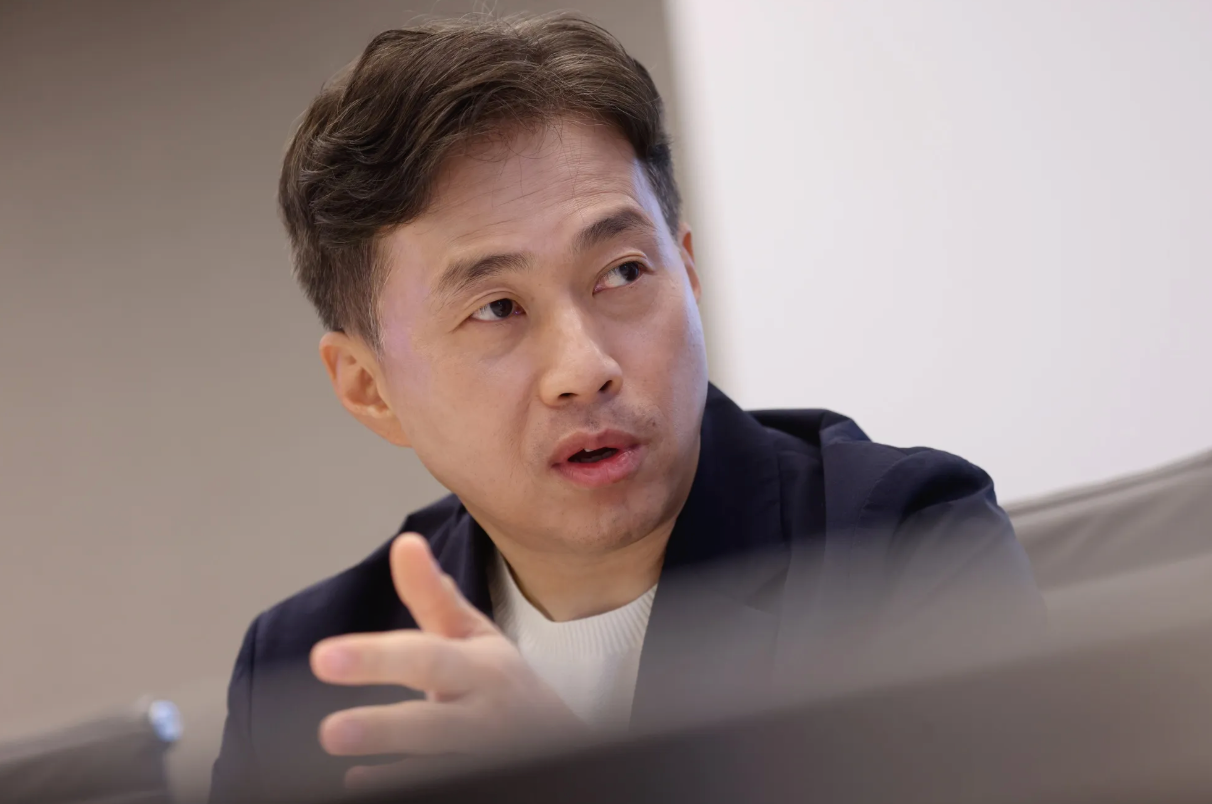
SK hynix CEO Guo Luzheng
From private credit to corporate bonds, virtually every corner of financial markets is funding trillion-dollar data center investment plans that are built on the same expectations. Five companies alone—Google parent company Alphabet, Amazon, Meta, Microsoft, and Oracle—have collectively taken on about $350 billion in new debt over the past five years to hoard hardware equipment to support their AI ambitions.
However, there are also many people who are betting that this is all just hype. Wall Street tycoons, including Michael Burry of "The Big Short" fame and Bridgewater Associates founder Ray Dalio, have warned that the AI bubble will eventually burst. Even the largest and most successful AI developers have yet to prove that their models and tools can be profitable.
However, for now, SK Hynix and its memory chip peers Samsung and Micron are becoming the biggest beneficiaries of this round of artificial intelligence investment boom. The craze has spurred demand for traditional memory chips as well as a new type of memory chip called high-bandwidth memory (HBM), which is used to work with AI systems.
“I’m somewhat confident that demand will grow and our supply capacity will never be able to keep up,” SK Group Chairman Chey Tae-won said in an interview with Bloomberg TV.
Cui Taiyuan said that in his opinion, the supply and demand relationship in the memory chip market may not return to normal until the world achieves general artificial intelligence (AGI). AGI is usually a relatively broad concept, which refers to the overall intelligence level of artificial intelligence systems that exceeds that of humans.
"Until then, we're going to need a lot of memory chips," he said.
Guo Luzheng believes that if the development trajectory of artificial intelligence infrastructure construction is similar to that of the Internet, then this investment cycle will last for decades.
"It took nearly 30 years to basically complete the construction of Internet infrastructure," Guo Luzheng said. "And the scale of the artificial intelligence industry, I think, will be far larger than the Internet industry."
Isn’t it a cyclical industry?
This week's U.S. stock offering caps a dramatic recovery story for SK Hynix. SK Hynix's predecessors, LG Semiconductor and Hyundai Electronics, completed restructuring and bailout under the leadership of Korean creditors, and eventually developed into today's SK Hynix. However, they have been suffering from the industry's boom and bust cycle for many years.
Cui Taiyuan said that SK Hynix is currently signing multi-year agreements with customers, which helps ensure more stable demand. "This is no longer a cyclical business." Cui Taiyuan said. He said long-term agreements help maintain shipments and memory chip prices even during an industry downturn, "so it actually gives us a different situation."
Cui Taiyuan revealed that SK Hynix is considering new technology licensing methods, including a concept called "memory as a service". He hinted that customers could lease usage rights rather than purchase semiconductors outright, but did not disclose specific plan details.
Guo Luzheng said that part of the consideration for listing in the United States is indeed to work more closely with AI customers, who are requesting different types of products and designs, which further boosts demand for its chips.
Producing chips in the United States?
When asked whether SK Hynix would consider bringing its memory chip manufacturing business to the United States, Guo Luzheng said he would not rule out the possibility. But he said any factory site must meet the company's requirements, including factors such as power supply, water conditions and talent pool.
Choi Taiyuan said on Friday that SK Group as a whole currently plans to invest more than US$35 billion in the United States. "My plan is much bigger," he said. "Far, far, far beyond $35 billion."
He is also open to issuing more SK Hynix shares in the United States. But Cui Taiyuan said that first the company needs to generate strong returns for new investors.
"Once we have better returns, there will be more demand," he said. "The first thing we have to do is keep the stock price stable, and then hopefully in the long term, we will have room for upside."