There has long been debate in the scientific community about whether our ancestors grew gradually larger over millions of years or whether they experienced a dramatic growth spurt at a specific critical juncture. However, a new study published in the Proceedings of the National Academy of Sciences (PNAS) breaks the traditional non-linear understanding of either/or and points out that the evolution of human body shape is actually the result of the combination of two modes: smooth gradualness and late mutation.
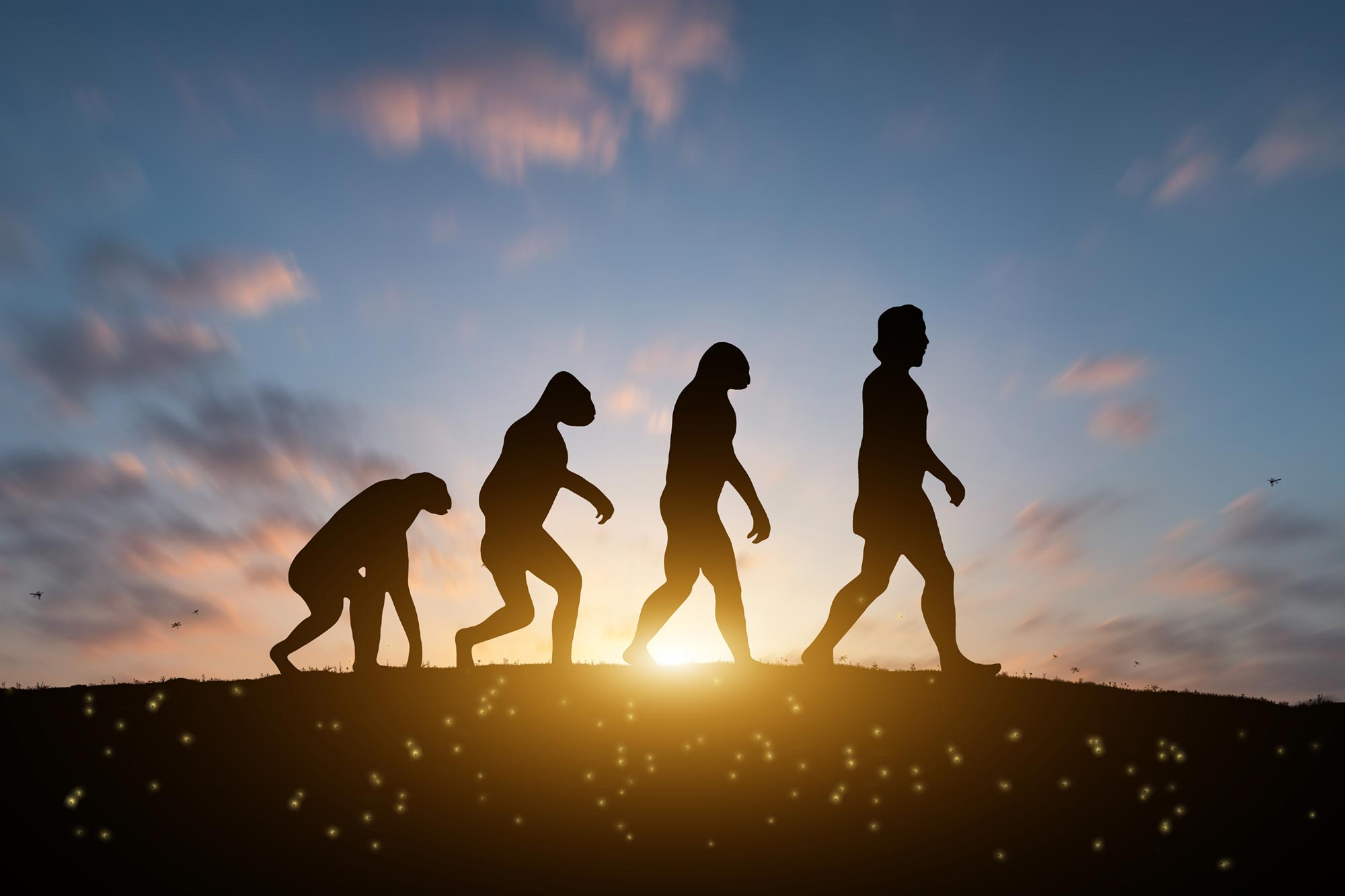
This study, jointly conducted by researchers from the University of Reading and the University of Oxford in the UK, shows that human ancestors grew relatively steadily during the early "Australopithecus" stage of evolution, with an average weight of about 40 kilograms and a height only equivalent to that of a modern child. However, human body size evolution reached a huge historical turning point about 2 million to 2.5 million years ago, with the emergence of Homo habilis, Homo rhodophilus, or Homo erectus/Erectus. During this period, some human lineages experienced explosive growth, with Homo erectus/Erectus becoming the first ancient humans to reach an average weight of 60 kilograms or more, a body size already comparable to that of many modern humans.
Interestingly, this increase in body size was not consistent across the lineage. While some branches became taller, other branches of ancient humans took a completely different evolutionary path. For example, Homo floresiensis and Homo naledi have always maintained a short body shape. The discovery strongly challenges the traditional view that human ancestors grew steadily larger along a single, linear path.
The researchers were able to piece together a more complete picture of the evolution of human body size thanks to a comprehensive statistical modeling analysis of 386 fossils representing 21 ancient human species. Previous studies often only focused on a certain part of the ancient human fossil record (for example, only focused on early Australopithecus or only later Homo habilis), and failed to fully consider the genetic relationships between species and the uncertainty in fossil identification, so they often reached conflicting conclusions. But when this study integrated all the fossil data and competing views into a single model, the "differences of opinion" in the past were easily resolved - they were actually just different fragments of a complex evolutionary pattern.
The study further pointed out that the timing of the rapid increase in body size of ancient humans in the middle and later stages is highly consistent with major ecological changes in their lifestyles. At that time, larger hominins began to walk more efficiently on two legs, eat more meat, and migrate across wider geographic areas in search of food and habitat. The scientific community believes that larger body size strongly supported this new lifestyle, helping early humans to cope with longer distance movements and survive on a more diverse diet. This shows that there is an extremely close evolutionary link between the increase in human body size and the major behavioral transformation of ancient humans in utilizing the natural environment.