In recent days, cases of serious medical emergencies caused by accidentally swallowing fish bones have attracted widespread attention. While in many people's minds, accidentally swallowing a fish bone may be just a brief suffocation scare, medical experts point out that this seemingly common accident can actually turn into a serious medical crisis.
Take the experience of TV host Shirley Ballas as an example. She accidentally got a fish bone stuck in her throat while eating, causing difficulty in breathing and almost causing serious consequences. In the end, she had to rely on someone else's Heimlich maneuver to escape. In fact, this kind of case is not uncommon in clinical practice, and even the Queen Mother of the United Kingdom has encountered similar dangers.
From an epidemiological perspective, fish bones are one of the most common reasons for people to seek emergency medical attention for foreign body obstruction, especially in Asian countries where fish consumption is huge. Although fish is rich in high-quality protein and unsaturated fatty acids, the flesh of many species contains "bones" that are small and difficult to completely remove during cooking. For example, cod has an average of 17 tiny spines, salmon has about 30, and some fish have more than 100 spines. In particular, the fish bones of fish such as flounder can easily penetrate into the throat due to their morphological characteristics.
These fish bones often become lodged in the tonsils at the back of the throat, the pharynx, the pyriform fossa, or the esophagus that connects the throat to the stomach. When accidental swallowing occurs, patients often experience cough, foreign body sensation in the throat, difficulty or pain in swallowing, and even coughing up blood.
However, what is more hidden and dangerous is that some fish bones may not cause obvious symptoms immediately, causing patients to leave them in the body for a long time without knowing it. It has been recorded in medical literature that a patient sought medical treatment after experiencing swelling in his neck, only to discover that a 32 mm long fish bone had been lodged in the body for nine months.
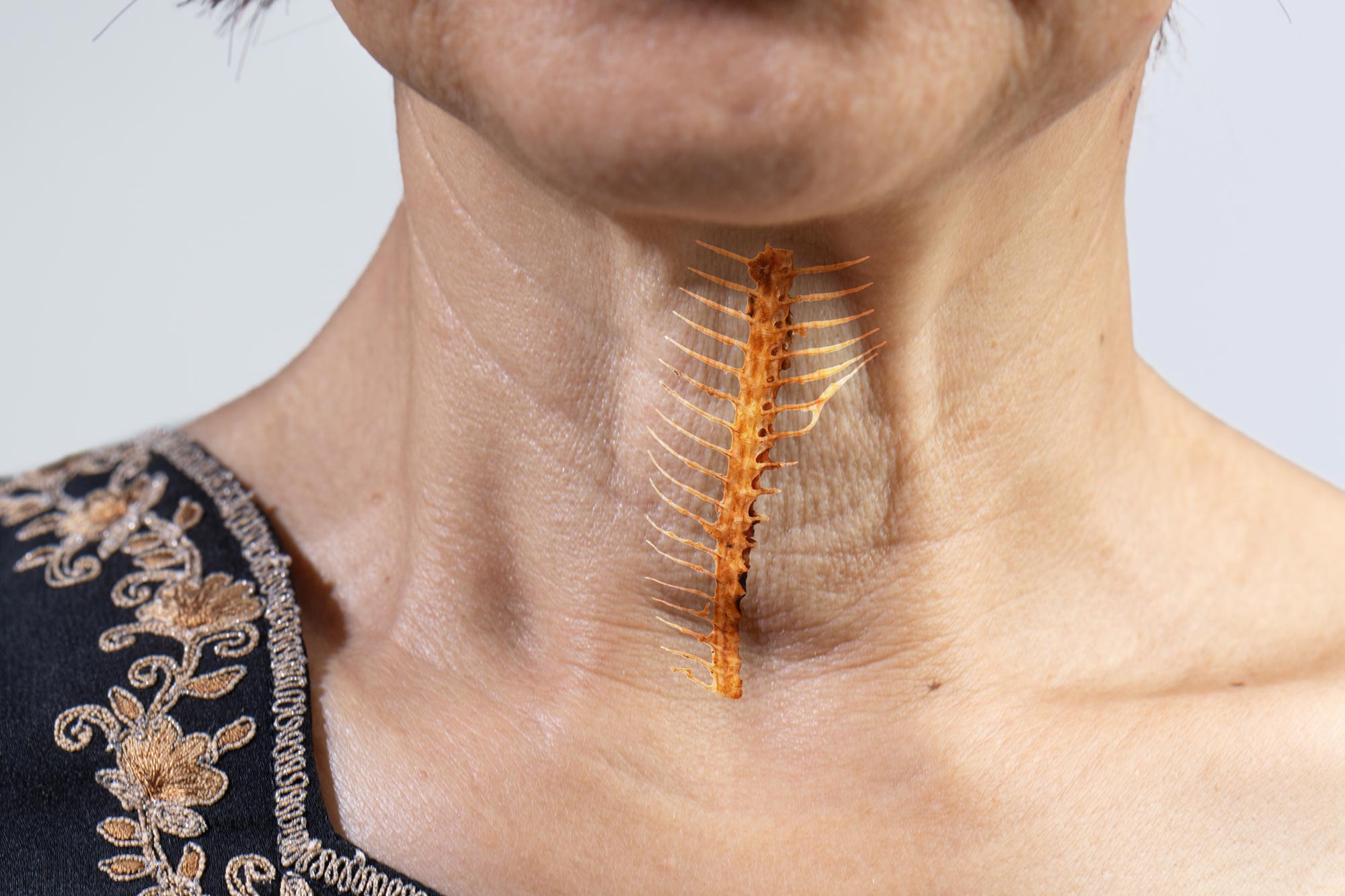
Once the fish bone is not detected and removed in time, it may migrate in the neck tissue with the swallowing action. The neck contains a large number of critical nerves and blood vessels, such as the carotid arteries that supply blood to the brain. If the fishbone penetrates the esophageal wall and enters these sensitive areas, it poses an extremely high risk. In addition, fish bones may penetrate the thyroid gland, causing abscesses and inflammation, and in severe cases, sepsis. In extreme cases, fish bones may even migrate to the neck muscles, skin surface, or deep into the area around the heart, or even touch the spinal cord, causing severe secondary infections including paralysis. Once fish bones migrate ectopically, it will become an extremely urgent medical event, often requiring surgical intervention.
Regarding the emergency treatment of accidentally swallowed fish bones, experts emphasize that if the fish bones are stuck in the airway, a strong cough can sometimes expel them. However, if the fish bone has entered the esophagus, blindly trying to swallow it by eating "home remedies" such as steamed buns, rice or bananas not only lacks scientific basis, but may cause the fish bone to penetrate into deeper tissues, aggravate the obstruction, even scratch the esophagus or cause more serious damage.
If swallowing occurs and symptoms persist despite simple attempts, the safest course of action is to seek professional medical help as soon as possible. If there is an emergency suffocation situation such as being unable to speak or having difficulty breathing, you should immediately perform the Heimlich maneuver and call the emergency hotline for emergency medical support.