On July 13, 2026 local time, General Fusion, a Canadian-based company, officially listed on the Nasdaq Stock Exchange with the stock trading code "GFUZ". This landmark move enabled it to surpass its rival, Trump-backed TAE Technologies, and become the world's first fusion energy company to successfully go public.
The capital market has shown strong interest in this emerging track. In Monday's intraday trading, the company's stock price performed eye-catchingly, showing an upward trend at the opening. As of 12:50 p.m. Eastern Time, the stock price had risen 40% from the issue price of $12.85.
General Fusion's listing was completed through a merger with Spring Valley Acquisition Corp. III, a special purpose acquisition company (SPAC). Although the deal is intended to inject capital into the company, most SPAC deals tend to face redemption pressures before the merger is completed. According to the "Globe and Mail" report, due to the impact of redemptions and related expenses, General Fusion expects that the actual cash flow from this merger may be less than US$30 million. However, in conjunction with this backdoor listing, General Fusion also raised US$108 million from private investors, and the company currently has approximately US$150 million in cash on its books.
This financing is crucial for General Fusion, which is in a period of financial constraints. Founded in 2002, the company is one of the oldest fusion companies in the world and has received more than $600 million in funding from private investors over the years. However, the company once encountered difficulties in seeking follow-up financing. By May 2025, the company had to lay off at least 25% of its employees because the financing plan failed. Subsequently, after core investors injected US$220,000 to keep R&D running, the company barely gained a breather and finally promoted the merger and listing.
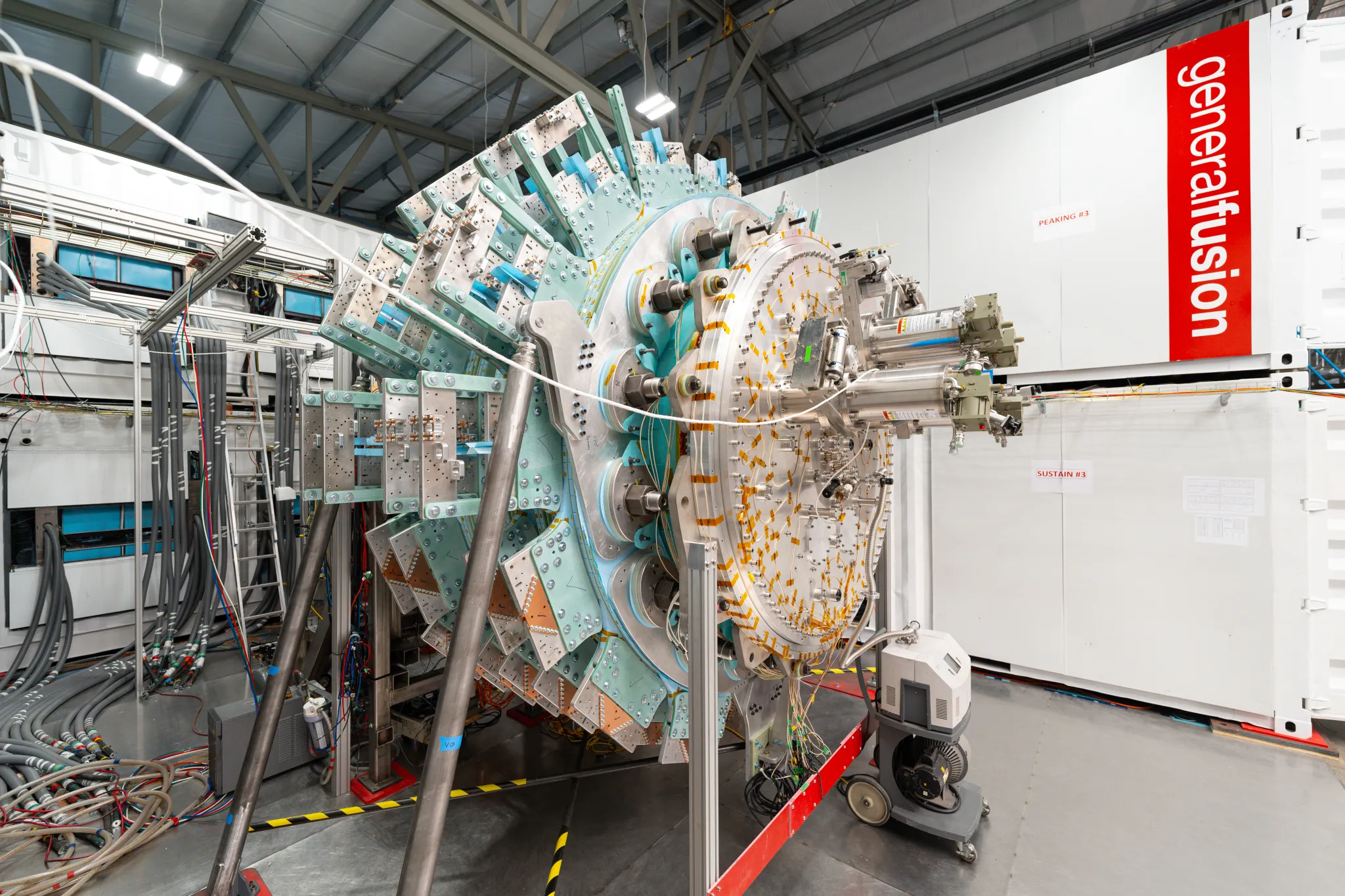
The "magnetized target fusion" technology used by General Fusion generates magnetized plasma through an electromagnetic field and injects it into a cavity surrounded by liquid lithium. When the plasma is formed, the system uses a synchronous mechanical drive to compress the liquid lithium envelope, thereby squeezing the fusion fuel to trigger a reaction and release energy.
Although the company had previously set a goal of achieving "energy breakeven" - that is, the energy released by the fusion reaction is greater than the energy required to initiate the reaction - this year, this timetable has been pushed back to 2028 or later due to previous funding bottlenecks. Currently, General Fusion plans to achieve grid-connected operation of the first commercial power plant around 2035.