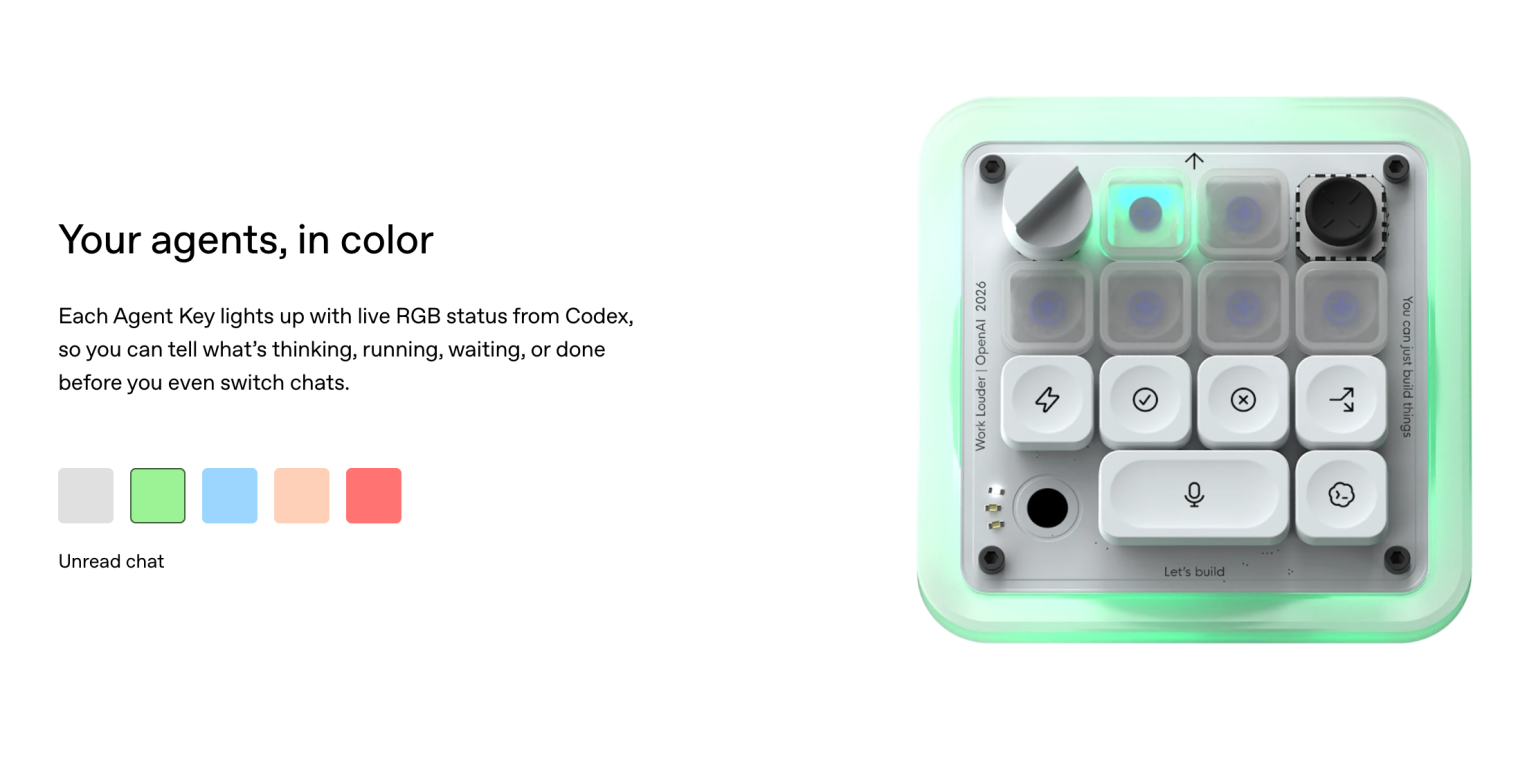
OpenAI is officially entering the hardware market. Recently, the company launched a $230 illuminated keyboard designed to be used with its artificial intelligence code assistant Codex. The device, called "Codex Micro," was designed by OpenAI and Work Louder, a professional keyboard design company. According to publicity, this is a new and high-end management method for users who use ChatGPT to manage their army of AI coding agents (that is, semi-autonomous robots that can write and execute code with very little human intervention).
The device features illuminated “Agent Keys” that display real-time agent status, custom command keys that serve as shortcuts to common Codex operations, and a joystick for launching common workflows. In addition, it comes with a physical dial that regulates the "level of inference" the agent uses on a specific task, which determines how much time and computing power the AI devotes.
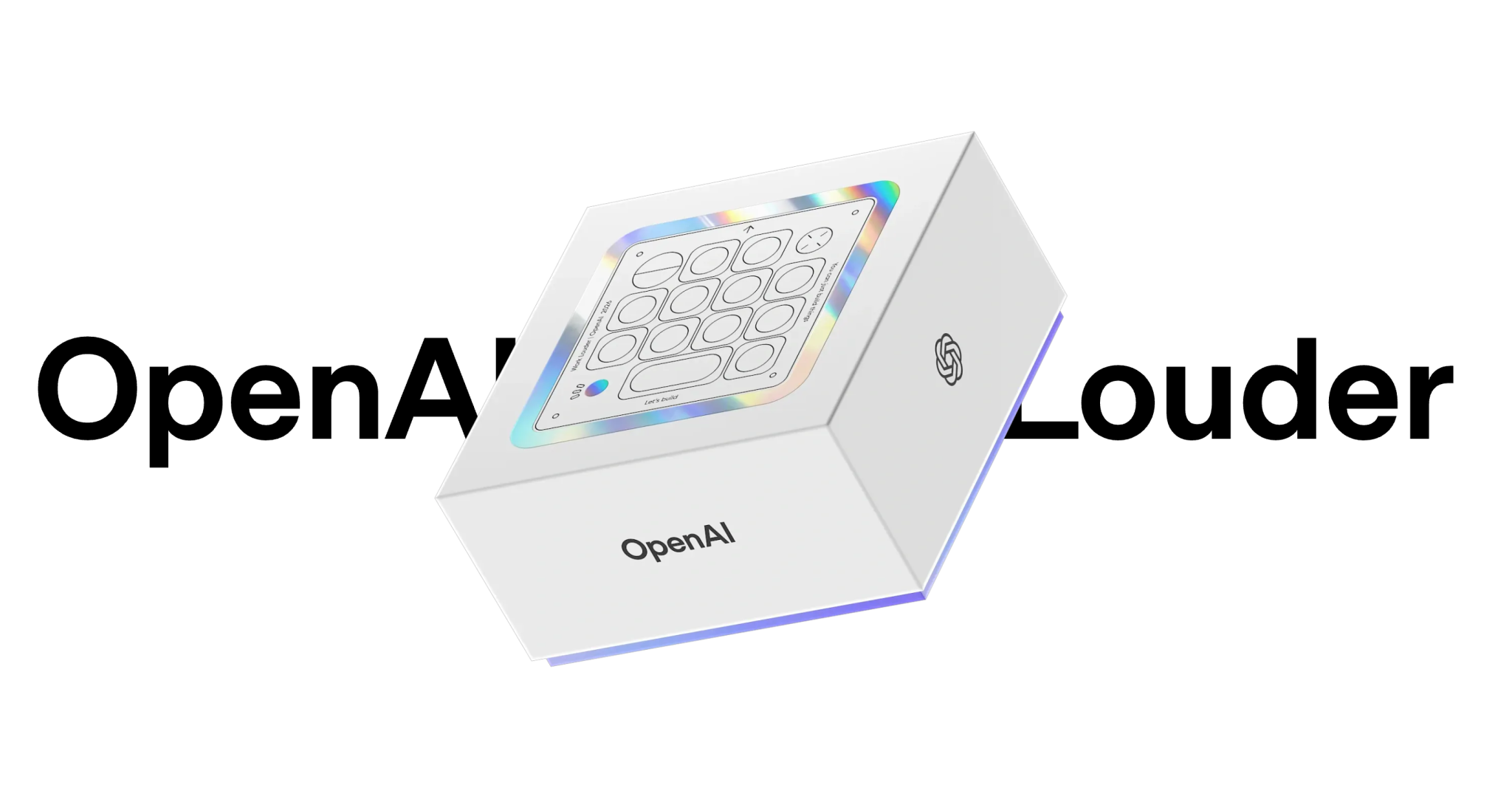
OpenAI said that users are no longer limited to managing AI agents through mobile or desktop applications, but can now use this Micro keyboard as a "command center for agent work." At the same time, this device also has a very technological feel when placed on the desk. Users can control and customize the device through the ChatGPT desktop application. OpenAI revealed to the media in an email that the Micro is a limited-edition collaboration product, indicating that it is more of a novelty iconic item rather than a popular product designed to appeal to the mass market. This seems to be a striking signal that the company is officially entering the hardware field.
In contrast, another piece of hardware news that came out on Tuesday was more far-reaching. According to Bloomberg, OpenAI is developing a new device that has not yet been released. The project seems to be a long-term plan. The device is described as a portable, screen-less smart speaker that not only integrates ChatGPT but also contains "mechanical parts that can move on their own." At this stage, it is difficult for the outside world to imagine how the disparate elements of screenlessness, portability and moving parts will be combined into a coherent product, and OpenAI has remained silent on this. But it certainly paints a fascinating picture. The Bloomberg report also emphasized that the device is still under development and its final form may change.
It is worth noting that it is reported that this new device was designed by former Apple engineers, and Apple is currently suing OpenAI for allegedly stealing trade secrets. This subtle connection obviously attracted the attention of all parties. Just last week, Apple formally filed a lawsuit against OpenAI, accusing the company's senior leaders of using deliberate tactics to steal its confidential information, and claiming that OpenAI used this information to develop its own hardware devices. In this regard, OpenAI has clearly denied any wrongdoing.