Although OpenAI's Sora may have been shut down, Google clearly believes that users still have a strong interest in "personally starring" in AI videos. On Thursday, the tech giant announced a major update to Google Vids: Users simply need to upload a selfie and a voice recording to create a digital avatar that closely matches their appearance and sound.
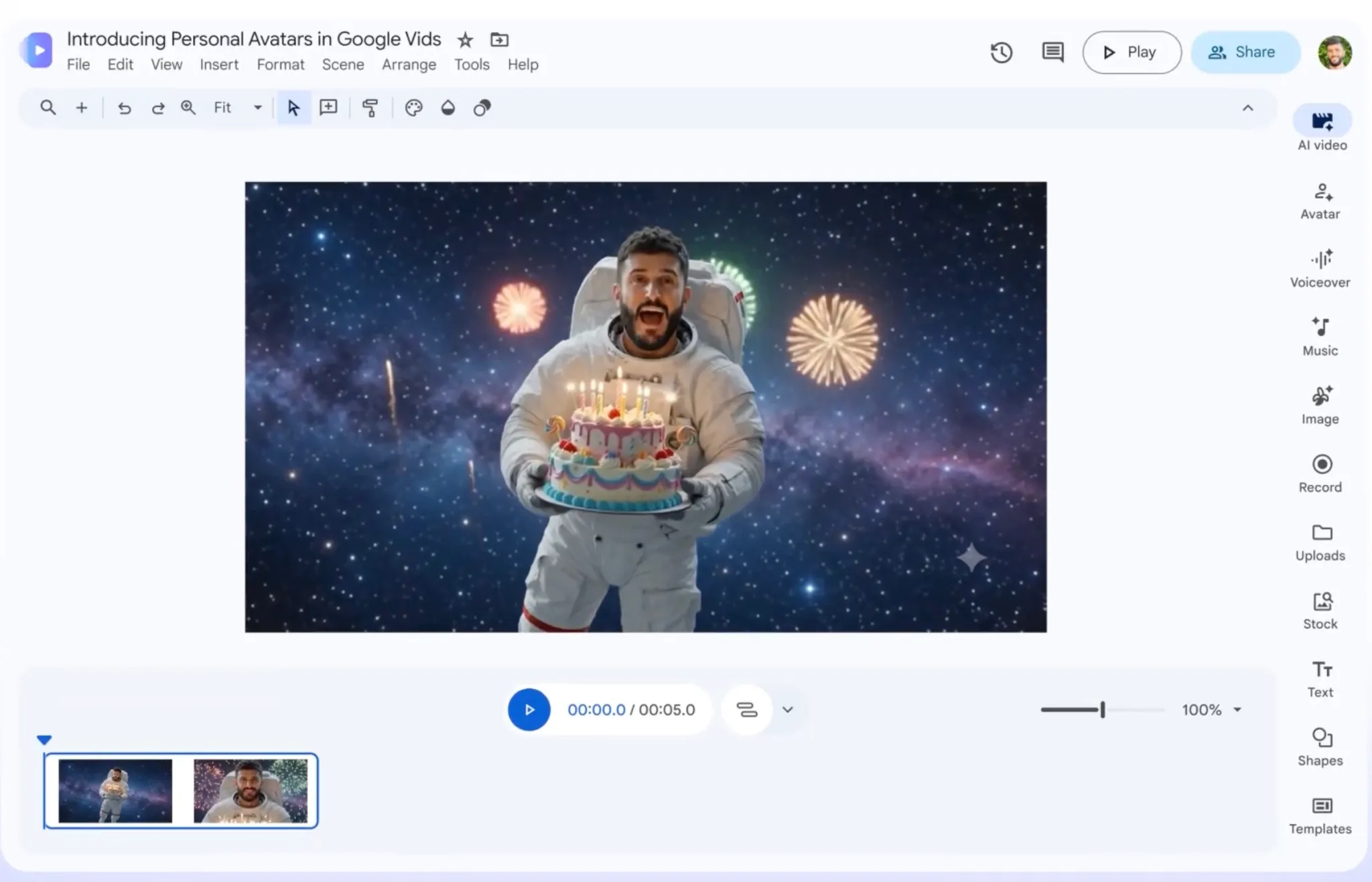
At the same time, Google announced that it will introduce its multi-modal AI model Gemini Omni to the Vids platform. This integration allows users to generate targeted videos by combining text prompts and uploaded reference images. In addition, the model also has many practical functions, such as it can be used to replace the background of videos recorded on the phone, fix lighting problems, or add special effects. Even more conveniently, Omni now supports progressive editing, which means users can make modifications step by step during the creative process without having to redo it from scratch if they are not satisfied.
These updates enable Google Vids to break through its original positioning as an AI-assisted office presentation tool and increasingly transform into an all-round video creation platform. By bringing Vids into Google Workspace, Google is sending a clear signal that it wants to use it as a business tool for scenarios like enterprise updates or training videos. However, the addition of personalized avatars and conversational editing capabilities also inevitably puts it in more direct competition with other AI video startups such as HeyGen, Synthesia, Captions and D-ID.
In terms of security and compliance, Google specifically pointed out that the new AI virtual person will be strictly bound to the account holder's real face and his Google account, and will add an invisible watermark through SynthID technology. This precaution means that users cannot use the tool to create spoof or fake videos of other people (such as the face-swapping video of Google CEO Sundar Pichai).
Currently, Google says that access to the Personal Avatar feature is only open to users in certain regions who are 18 years of age or older.