The Vikram-1 launch vehicle developed by Indian aerospace start-up Skyroot Aerospace is scheduled to carry out its first flight code-named "Aagaman" at 14:00 Beijing time on July 18.This is the first orbital-class launch vehicle in the history of Indian spaceflight that is completely built by a private enterprise. The launch site is located at Launch Station No. 1 of the Satish Dhawan Space Center in Sriharikota.
This rocket is named after Vikram Sarabhai, the father of Indian aerospace. The core members of the R&D team are all from the Indian Space Research Organization ISRO. Previously, the brand completed the launch of the Vikram-S suborbital rocket in 2022, taking the lead in enabling Indian private companies to reach space. This time, Vikram-1 has the ability to truly enter orbit, and the two have formed a technological iteration relationship.
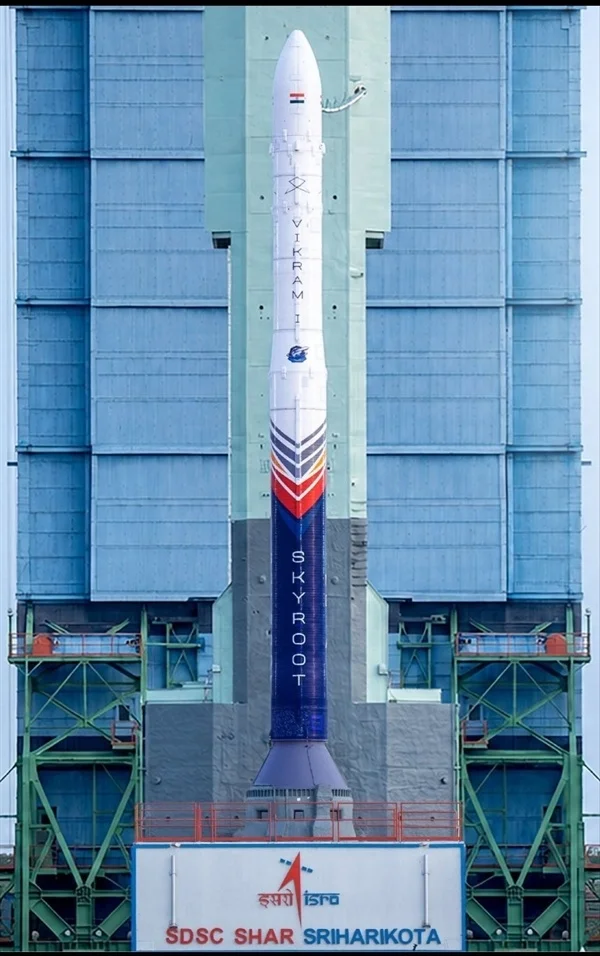
The overall height of the rocket is about 22 meters, and it adopts a four-stage propulsion layout. The first three stages are equipped with domestic solid booster engines, and the final stage is equipped with a 3D printed liquid orbit adjustment module.
The entire rocket body is made of carbon fiber composite materials, which greatly reduces its own weight while improving structural strength. More than 90% of the entire rocket's parts are produced locally.
In terms of transportation capacity, Vikram-1 can transport up to 350 kilograms of micro-satellites to a 450-kilometer low-Earth orbit, is synchronously compatible with sun-synchronous orbit launch requirements, and focuses on rapid response to order-to-order launch services.
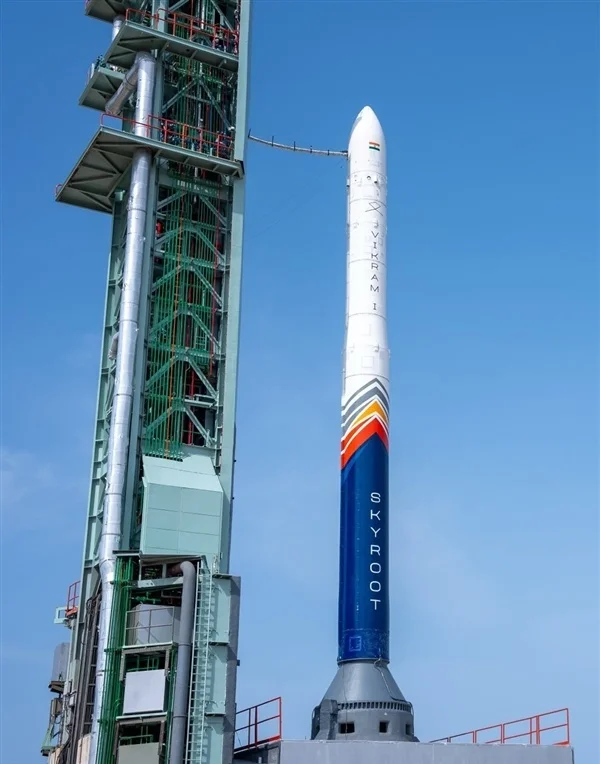
Officially, the launch cost per kilogram is approximately US$15,000, aiming at the rapidly expanding low-orbit satellite networking market around the world. The company has currently signed intention agreements to launch more than 400 satellites.
This first flight is a verification test mission. The core goal is to completely test the stability of the rocket propulsion, guidance and navigation, telemetry communication, and satellite-rocket separation systems under real flight conditions. The mission's preset target orbit inclination angle is 60 degrees and the orbit altitude is 450 kilometers. The rocket is equipped with multiple sets of technical verification payloads, and a miniature gold sculpture commemorating Indian scientists is placed as a carrying object.