Recently, the well-known technology website Phoronix conducted a systematic performance comparison test between Microsoft Windows 11 and two popular Linux distributions, Ubuntu and CachyOS, focusing on important loads in modern desktop environments such as local AI inference and multimedia processing. The test platform is the Razer Blade 18 RZ09‑0582 workstation-class notebook, which sells for about US$5,400. Its hardware configuration not only far exceeds the official minimum requirements of Windows 11, but also fully meets or even exceeds the current Ubuntu system hardware threshold.
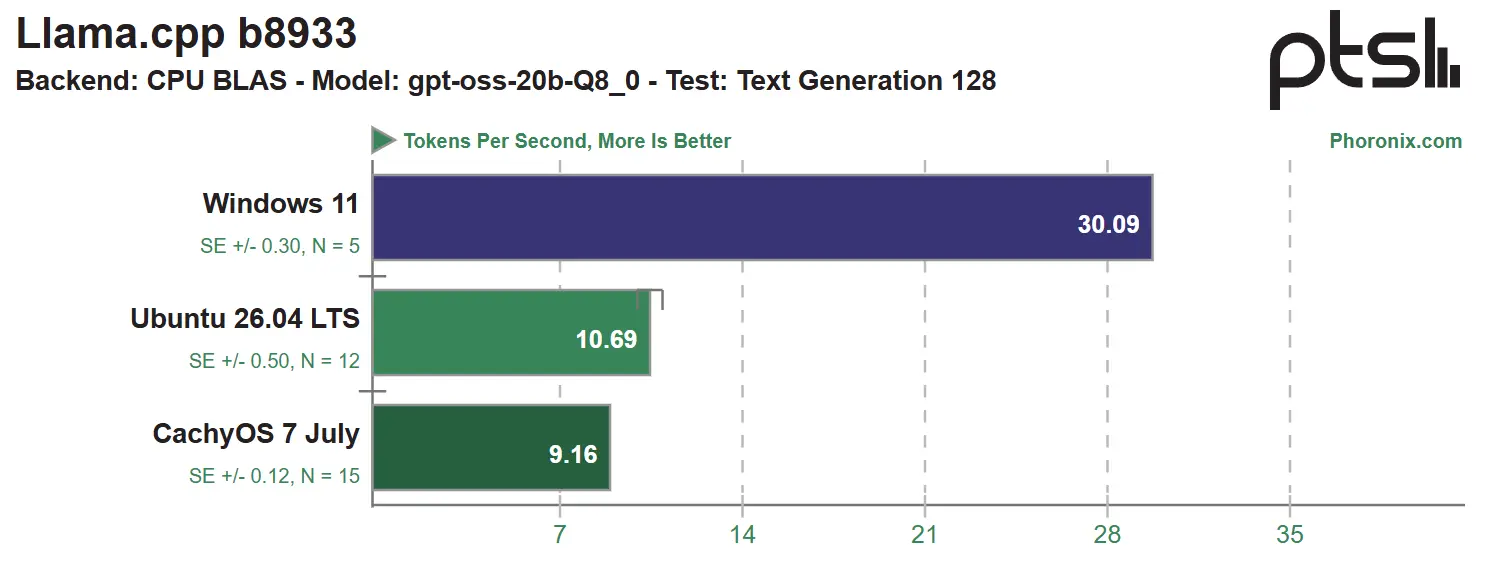
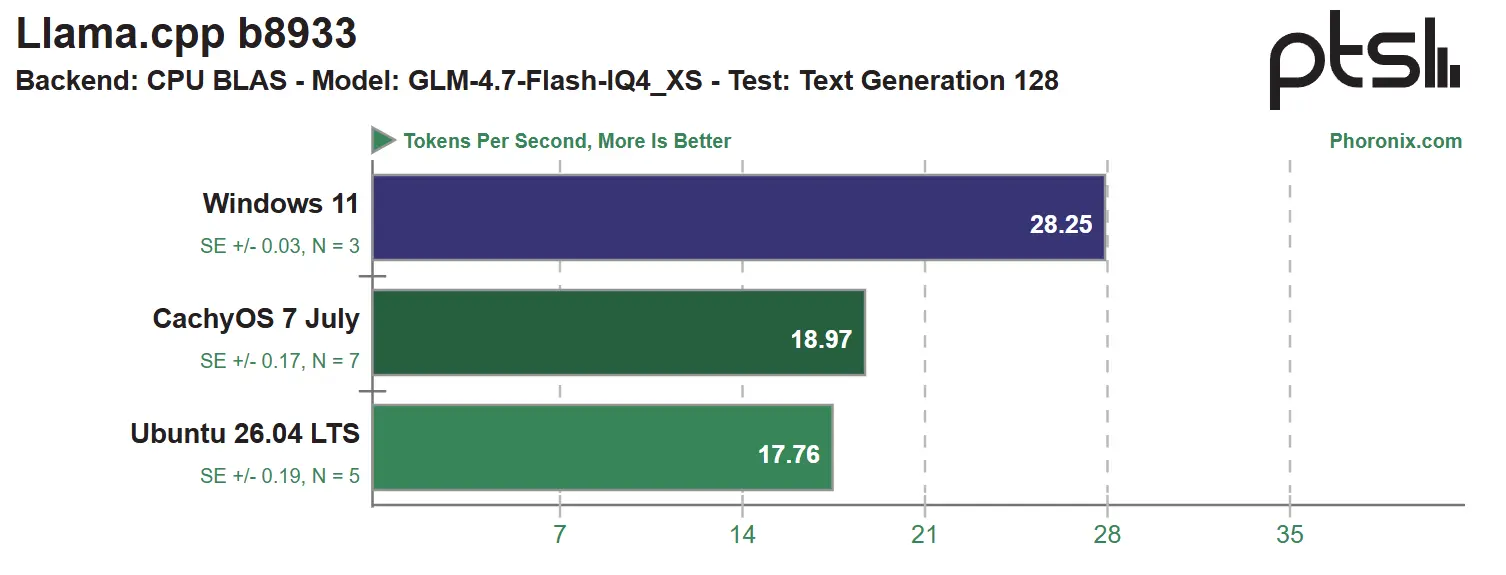
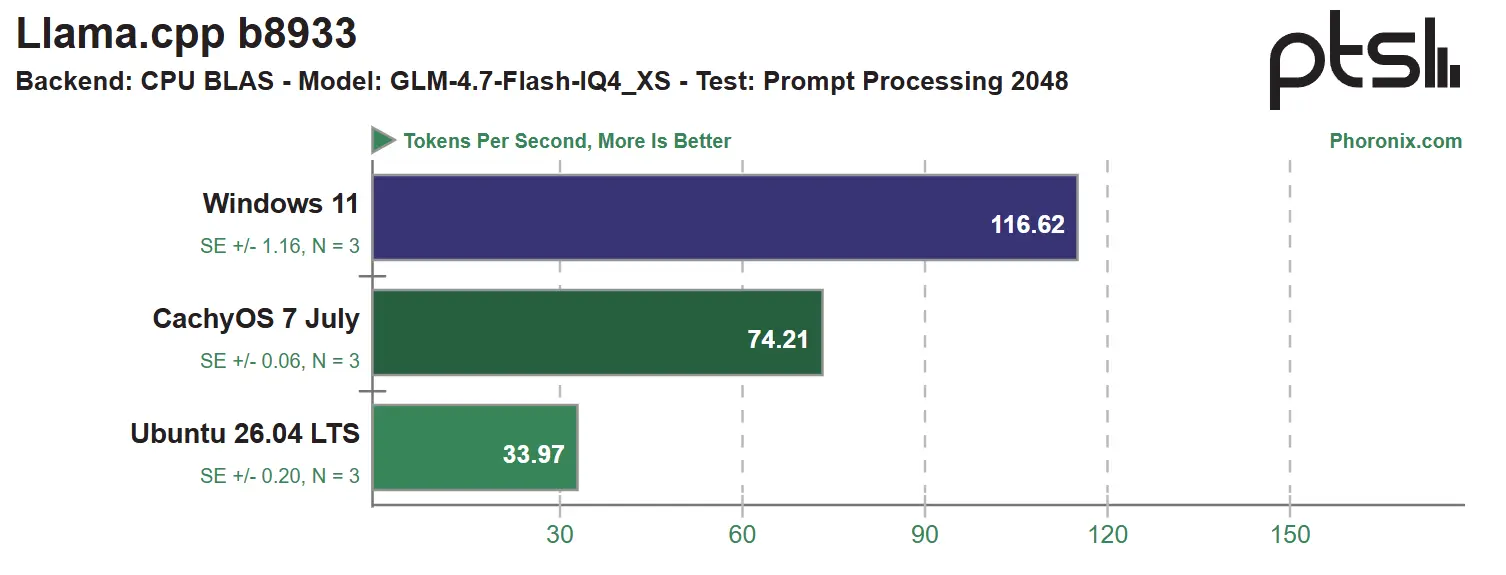
In AI-related workload tests, including local large language model (LLM) text generation and prompt word processing, Windows 11 has an all-round lead over Ubuntu and CachyOS in terms of token output rate. Judging from the results of multiple benchmark tests, the token generation speed of Windows 11 is significantly higher than that of the two Linux distributions in all projects. In some test scenarios, its processing speed is even about three times that of Ubuntu, which means that under the same hardware, Windows 11 is more suitable as the main operating platform for local AI inference and generation.
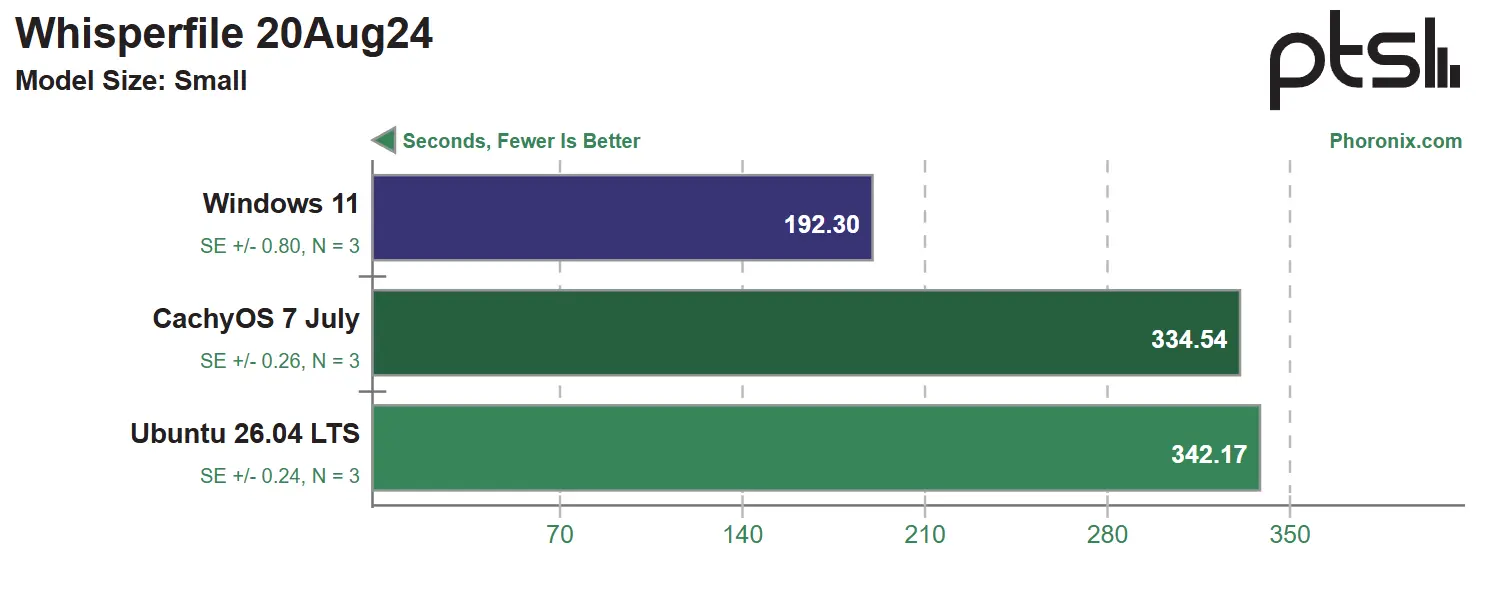
In the speech-to-text scenario, the Mozilla Whisperfile benchmark based on OpenAI Whisper also shows the advantages of Windows 11. In the context where this type of AI load has gradually become an important part of daily productivity tools, test results show that Windows 11’s leadership in AI and LLM processing is expected to translate into significant experience differences in practical applications, forcing the Linux camp to speed up catching up in local AI performance.
Linux leads the way in APV and AV1 encoding
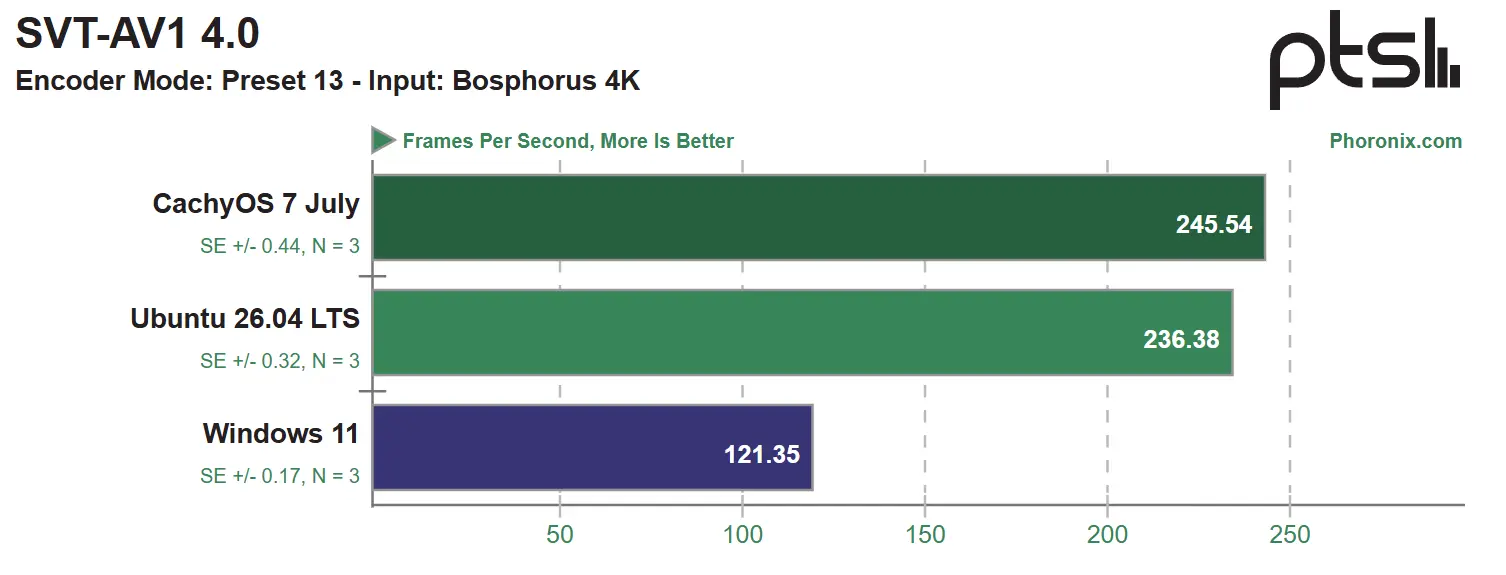
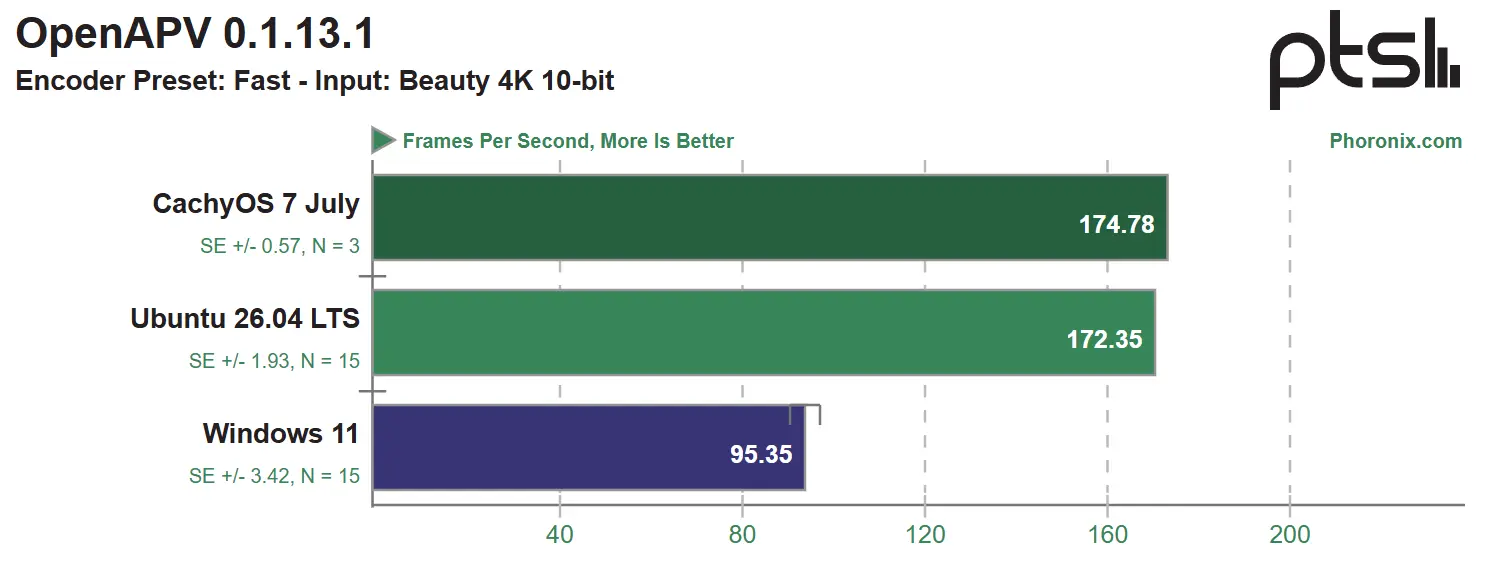
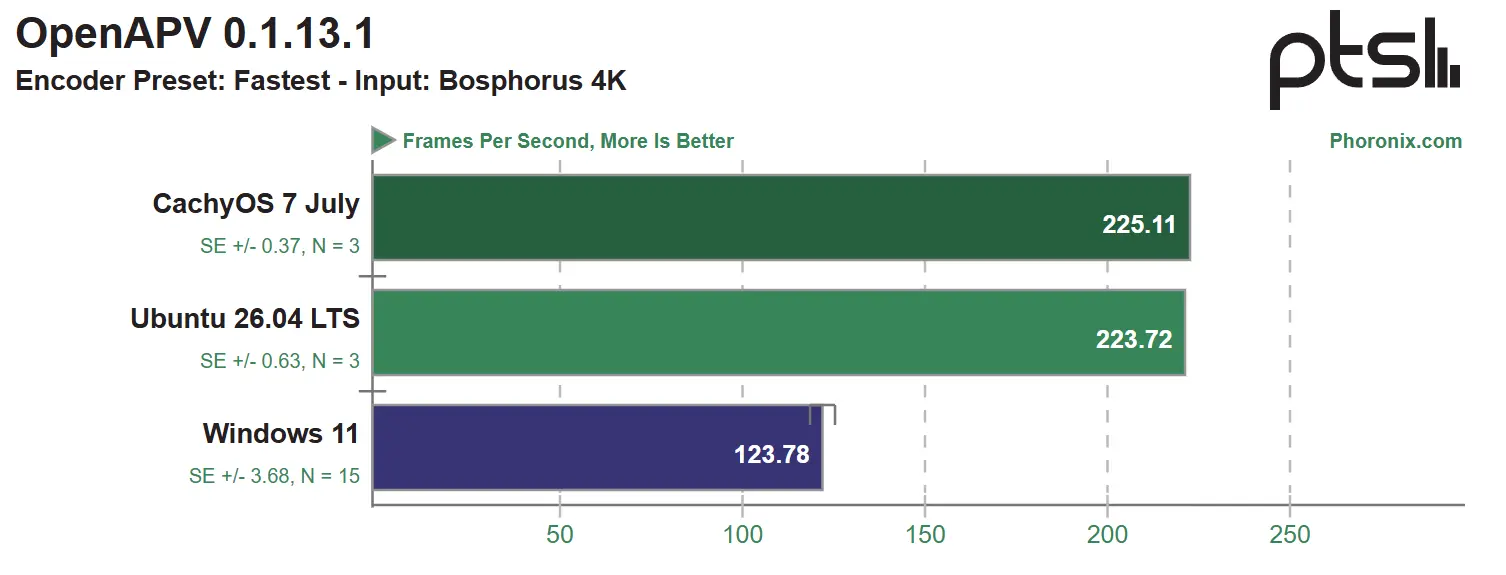
In the field of traditional video encoding, the APV (Advanced Professional Video) codec developed by Samsung was selected for comparison. The test results show that under the APV encoding task, no matter what encoding parameter settings are used, Ubuntu and CachyOS can significantly suppress Windows 11, and the encoding performance is stronger.
A similar situation occurs in the AV1 encoding test, where the Linux distribution is also ahead of Windows 11 in terms of encoding speed and efficiency. Considering that AV1 has been widely used on streaming media platforms such as YouTube, Netflix, and Amazon, and the next generation AV2 codec standard is already in preparation, the test also raised questions: whether Linux’s advantages in existing AV1 encoding will continue to the AV2 era in the future.
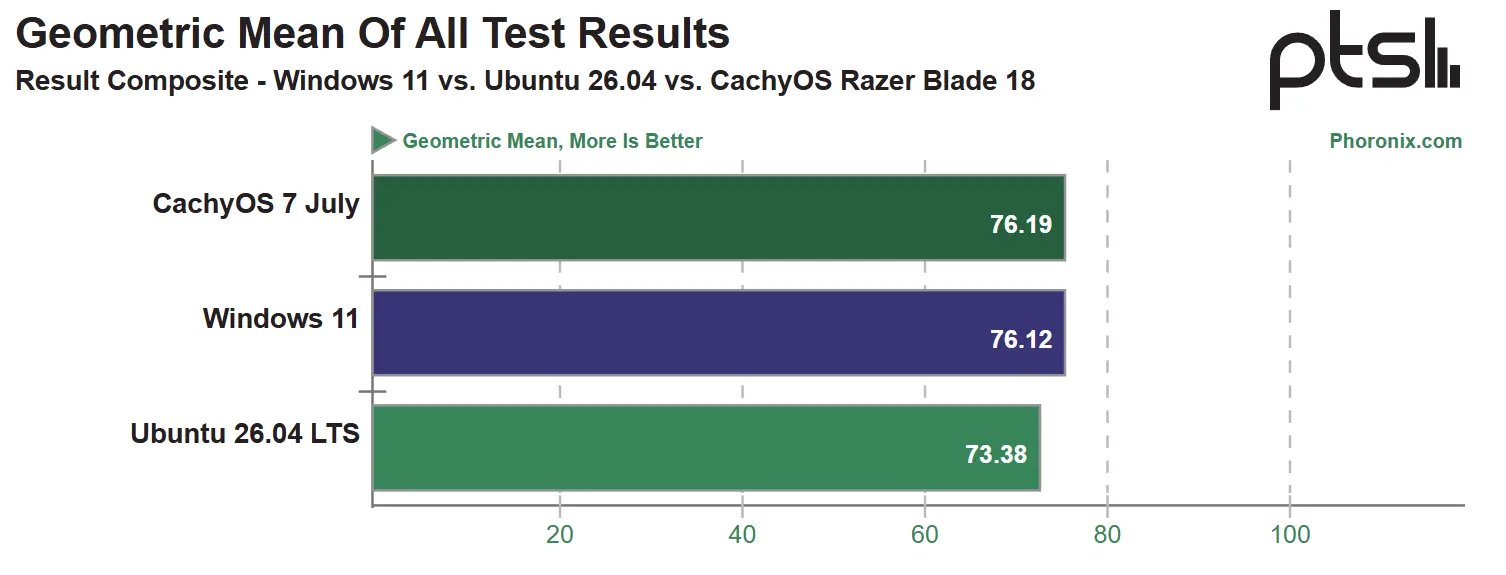
Geometric mean results: Windows 11 ties with CachyOS
Phoronix ran a total of 99 different test cases in this review and conducted a comprehensive evaluation of the overall performance based on the geometric mean. In the summary comparison, Windows 11 and CachyOS, which is known for its high performance, are basically equal in overall geometric mean score, which to a certain extent reflects the comprehensive optimization level of Windows 11 in modern high-performance desktop scenarios.
Although Ubuntu and CachyOS show clear advantages in traditional computing workloads such as video encoding, the report believes that Windows 11's lead in AI and LLM processing is more realistic because such workloads are quickly becoming core scenarios for users' daily work and content creation. As the demand for local AI acceleration continues to increase, Windows 11’s current advantages in AI performance may be transformed into continued leadership in practical applications and market competition.
More detailed test data and complete comparison results can be viewed in the original review article published by Phoronix.