Recently, Microsoft held an online exchange called "OEM Secure Boot Office Hours", convening engineers from many major PC manufacturers including Acer, Asus, Dell, HP, Lenovo and Xiaomi, aiming to answer the thorny problems encountered by IT administrators in the process of deploying Windows 11 "2023 Secure Boot Certificate". However, the meeting not only failed to calm the concerns of IT practitioners, but also revealed that there are industry-wide problems that are difficult to avoid in the actual implementation of this technology update.
According to feedback from participating administrators, although the official provided technical guidance such as modifying the registry, a large number of devices still reported errors during actual operation, and even various unexpected failures occurred. IT industry experts also observed in early tests that the performance of different brands of hardware varies greatly. For example, some ASUS motherboards must turn off Secure Boot when applying revision lists; MSI motherboards actually ignore updates even though the interface shows it is on; and ASRock devices frequently require manual rekeying. Although devices from HP, Dell and Lenovo performed relatively well, they were still unable to avoid issues such as slow updates and the need for multiple reboots.
At this exchange meeting, the discussion about HP equipment attracted particular attention. An administrator who manages more than 7,000 HP computers said that even when the latest BIOS is installed, force-installing certificate updates can trigger a BitLocker recovery loop, causing the device to repeatedly lock up. Even after referring to the operation suggestions in HP's official support documents, the problem still exists. What worries the industry even more is that some early devices cannot even accommodate new security certificates due to insufficient NVRAM (non-volatile random access memory) capacity. In response to these core pain points, Microsoft and relevant OEM manufacturers failed to provide effective solutions during the exchange meeting, and even some targeted inquiries were not responded to at all.
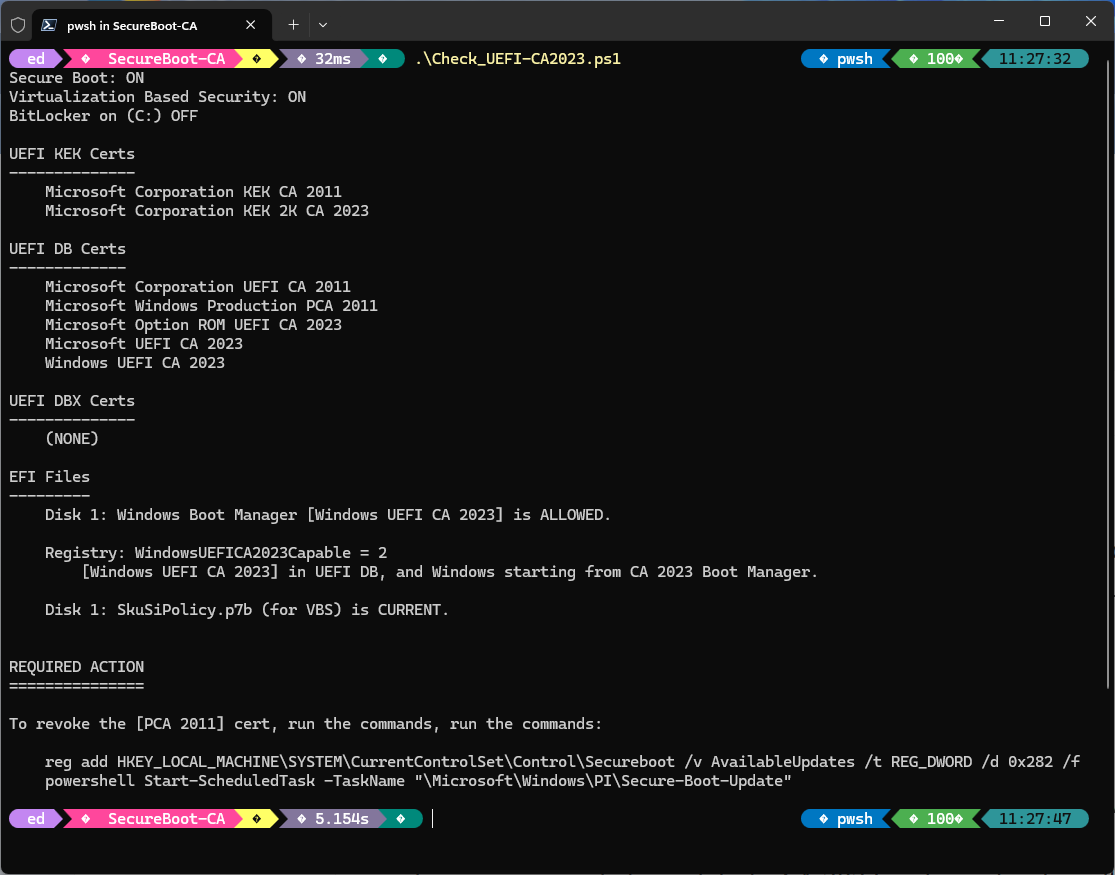
In addition to compatibility issues with specific brands, it is also common for devices to report unknown error status. Many devices report "Secure Boot Status Unknown" even though all prerequisites are met. In this regard, Microsoft engineers only suggested running the relevant script diagnostic program, but failed to provide a fundamental analysis of the cause. In addition, regarding the phenomenon that the key exchange key (KEK) cannot be updated in some enterprise environments, although the manufacturer has provided troubleshooting steps, test results show that the problem still cannot be solved.
Currently, this pain of secure boot deployment has become an industry-wide problem across vendors. Analysts believe that this is not a mistake by a single manufacturer, but due to the inconsistency in UEFI firmware implementation standards across the industry, which has caused a routine certificate update to become a severe test for the stability of the system firmware. Some analysts even pointed out that Microsoft has begun to pause update push on specific device and firmware combinations to prevent the system from being paralyzed by incorrect updates.
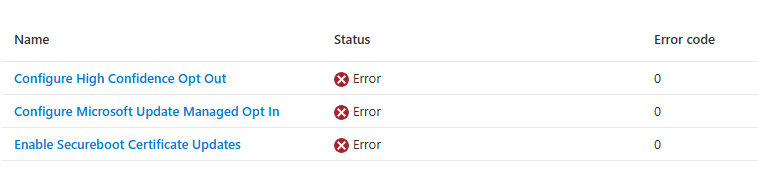
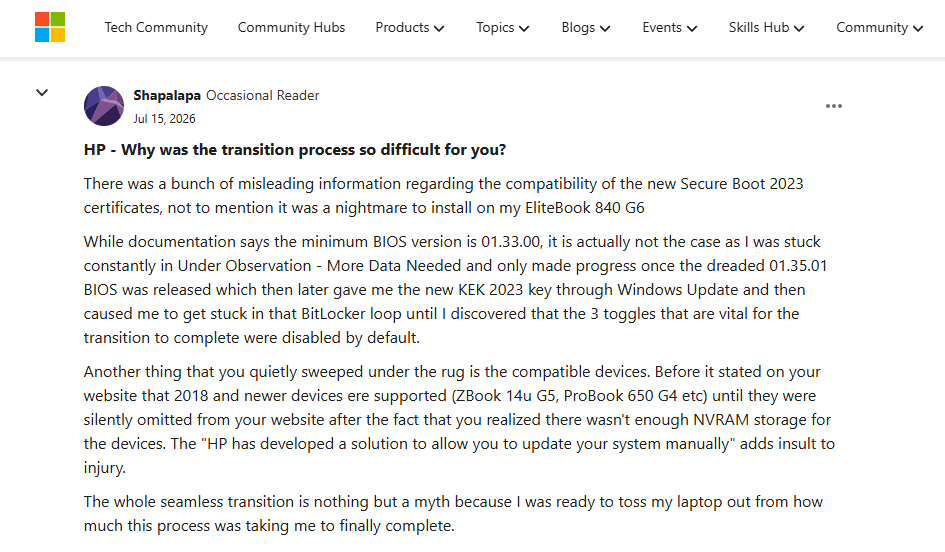
In view of the current complex and unstable technical status, relevant professionals recommend that enterprise IT departments must conduct sufficient pilots on representative hardware and strictly back up BitLocker recovery keys before large-scale deployment. For IT administrators, the safest strategy right now is to always pay attention to the latest announcements from various OEM manufacturers for specific models, rather than relying solely on Microsoft's general guidance. In this complex ecosystem, BIOS updates and the deployment of secure boot certificates are regarded as two independent risk points. Users must weigh carefully to avoid blind operations that lead to large-scale device failures.