Mozilla has officially released Firefox version 153, an update that brings significant performance improvements to Linux users, especially those with NVIDIA graphics cards. The most notable change in this iteration is the introduction of a Vulkan-based video decoding path.
For a long time, NVIDIA graphics card users on Linux platforms have often had to rely on complex driver workarounds (such as nvidia-vaapi-driver) when enabling GPU video acceleration in the browser, which is a cumbersome and poor experience. With the release of Firefox 153, by integrating the Vulkan Video interface, the browser can now more efficiently call the graphics hardware's dedicated video engine for decoding, significantly reducing CPU load, reducing system heat and improving energy efficiency.
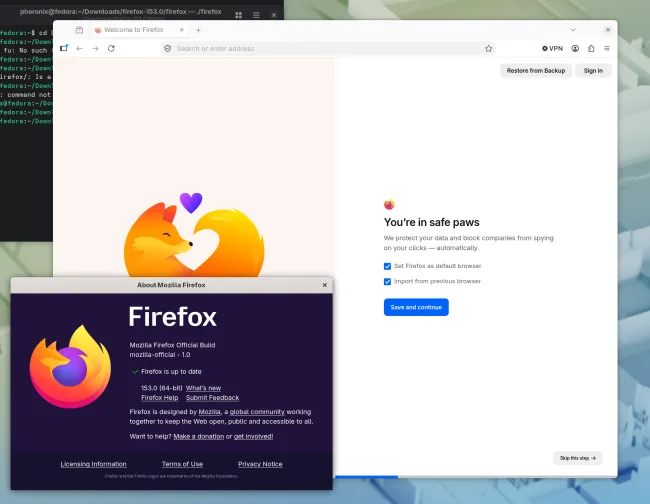
In addition to core decoding performance optimizations, Firefox 153 also has multiple upgrades in functionality and ease of use. In terms of user experience, the new version adds a page QR code generation function. Users only need to right-click on the tab to quickly generate a QR code for the current page, which is convenient for viewing on mobile devices. For office scenarios, the PDF editor has been enhanced, now allowing users to add images directly to PDF documents, and supports easy merging of multiple PDF files through drag and drop operations. In addition, the browser also simplifies access to experimental features, allowing users to quickly enter Firefox Labs by entering relevant commands in the address bar.
In terms of security and privacy protection, Firefox 153 also implements strict standardized updates. The new version officially supports validating and displaying Qualified Website Authentication Certificates (QWACs) according to eIDAS regulations. For extensions, permission management has become more refined. Extensions are no longer allowed to access local files by default. Users need to manually turn it on in permission settings. At the same time, local network access restrictions have been enabled by default for all users, requiring websites to obtain explicit authorization before they can connect to local network devices. For the settings interface, Mozilla has removed some outdated cookie setting options and guided users to switch to the "Isolate Cross-Site Cookie" mode that is more secure and complies with modern standards. Through this series of collaborative optimizations at the software and hardware levels, Firefox 153 not only improves the efficiency of audio and video playback on the Linux platform, but also takes a solid step forward in privacy protection and functional convenience. Download address: https://ftp.mozilla.org/pub/firefox/releases/153.0/