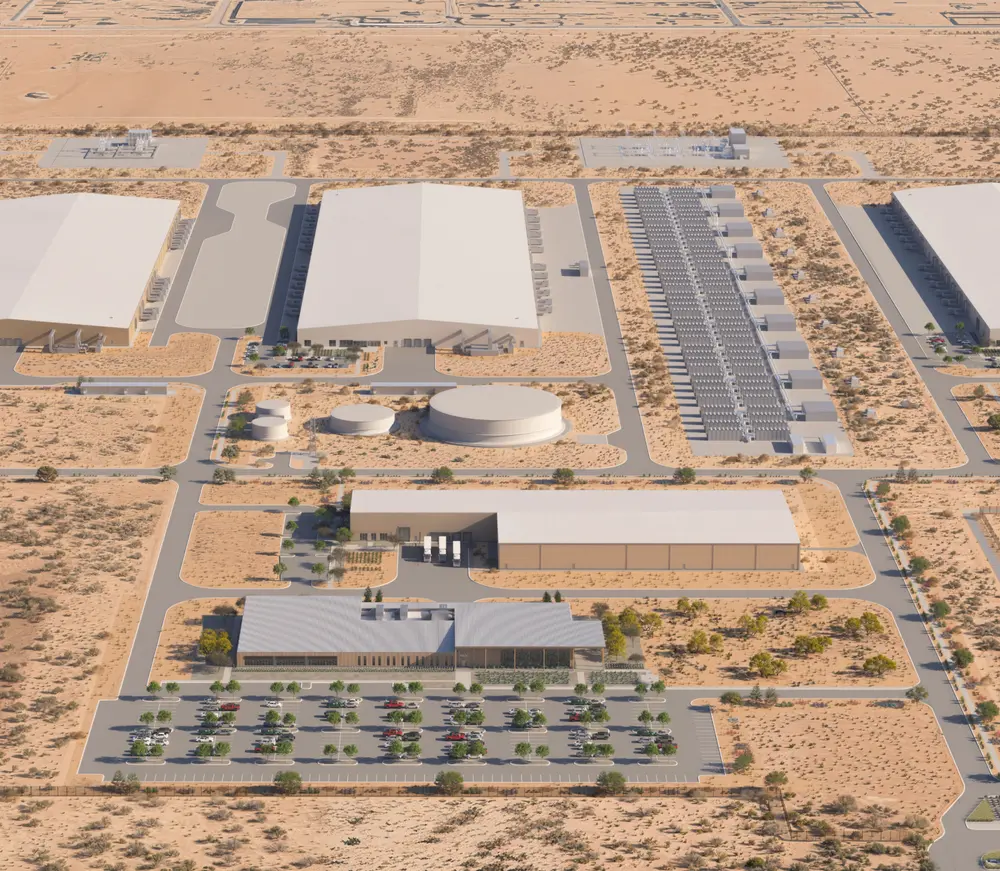
BlackRock is planning to issue more than $12 billion in bonds to finance Meta's data center campus in El Paso, Texas. It is the latest in a series of recent debt financing deals to fund large-scale artificial intelligence (AI) investments by technology companies.
In May of this year, it was reported that the total financing scale of the data center project Project Sopaipilla Holdings may reach approximately US$13 billion.
Project Sopaipilla is 80% owned by funds managed by Global Infrastructure Partners (GIP) and HPS Investment Partners, both currently subsidiaries of BlackRock, with Meta holding the remaining 20%.
People familiar with the matter said the issuer has tasked JPMorgan Chase and Morgan Stanley to organize a conference call with fixed-income investors on Wednesday and is expected to complete pricing early next week.
Meta previously stated that the 1 gigawatt (GW) data center is expected to be operational in 2028 and will provide more than 300 on-site jobs upon completion.
The financing of this data center project will further promote the bond issuance boom this year around the construction of global AI infrastructure, and a large amount of debt financing is also increasing the pressure on bond valuations in the technology industry.
In June this year, JPMorgan Chase strategists predicted that by 2030, capital expenditures by large cloud computing companies (Hyperscalers) such as Microsoft, Meta, Google, and Amazon in the field of AI will reach approximately 5.5 trillion U.S. dollars, a large part of which will be financed through the bond market.
Meta has previously used a joint venture structure to finance its largest data center projects.
In 2025, the company announced that it would cooperate with Blue Owl Capital to develop a data center called Hyperion in rural Louisiana, and received US$27 billion in debt financing from asset managers including PIMCO.
According to the arrangement at the time, Blue Owl held 80% of the equity of the joint venture and Meta held 20%. This structure eliminates the need for related debt to be recorded on Meta's balance sheet, while Meta remains responsible for the day-to-day operations of the data center.
However, Meta has since expanded the Hyperion project beyond the scope of the joint venture. This month, Meta announced that the data center’s computing capacity will be expanded to 5 gigawatts, with development costs expected to rise to $50 billion. The new expansion will be held independently by Meta and will no longer be included in the joint venture.