Recently, a research team led by Yiwen Chu, a physicist at the Federal Institute of Technology in Zurich (ETH Zurich), developed a new quantum chip that successfully stores information inside the chip in the form of tiny vibrations (i.e., packets of vibrational energy carried by phonons). Its operating principle is similar to the resonating notes on a guitar to some extent. This breakthrough is expected to revolutionize how future quantum computers are built.
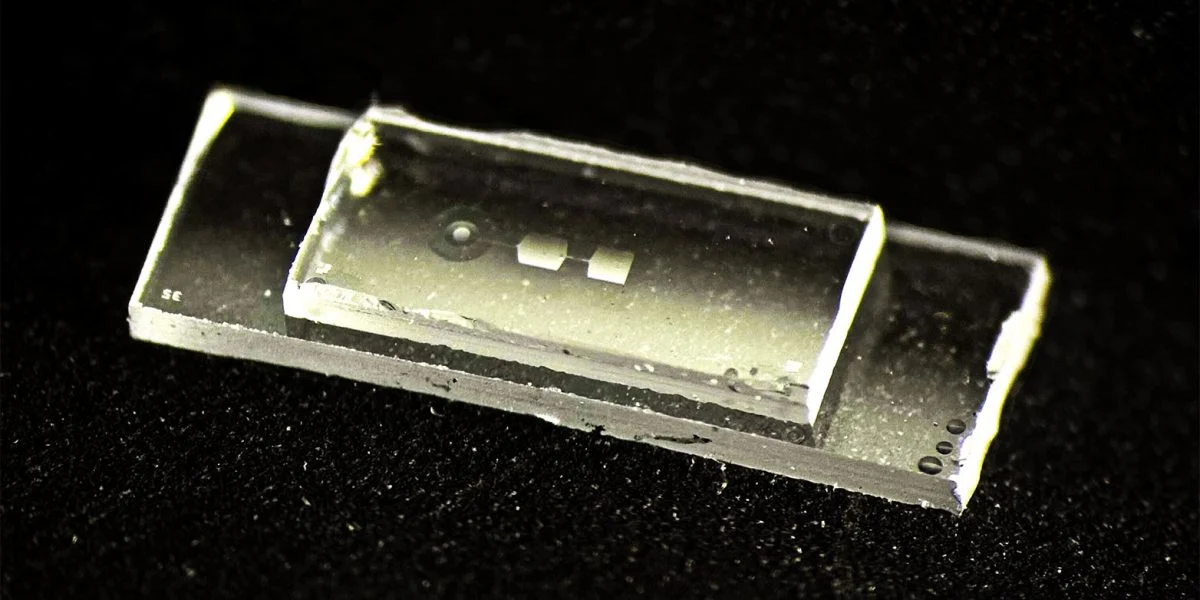
The dimensions of this experimental chip are approximately 7.5 mm long, 2.5 mm wide, and 1 mm thick, which is roughly the same width as a human pinky fingernail. Although these movements occur inside high-frequency microscopic mechanical resonators and cannot be heard by the human ear, the research team successfully demonstrated a new quantum computer architecture by connecting these tiny resonators as working memories to a superconducting quantum processor, which is conceptually closer to the basic structure commonly used in today's classical computers.
In the vast majority of existing quantum systems, computation and storage are not clearly separated, and processing and information storage are often tightly integrated in the same hardware, making it difficult to scale the machine without adding bulky components. In contrast, the ETH Zurich research team drew on the classic model of traditional computing in which a central processing unit (CPU) is responsible for calculations and a random access memory (RAM) is responsible for temporarily storing data. In this new quantum working memory, information is not stored in the usual electromagnetic way, but in the form of mechanical vibrations.
In actual operation, superconducting qubits act as processors and control units, while mechanical resonators preserve quantum information during calculations. Whenever the processor needs specific information, the superconducting qubit interacts with the selected vibration mode, modifying its quantum state before placing it back into memory. This division of labor leverages the strengths of both technologies: superconducting qubits are capable of performing fast operations and providing the nonlinear behavior required for quantum logic, while mechanical resonators are compact, support multiple independent vibration modes, and maintain quantum states for longer periods of time.
To test this programmable quantum architecture, the researchers successfully implemented two core computational procedures: the Quantum Fourier Transform and the period-finding algorithm. Both tests require the system to prepare, store, connect and precisely manipulate multiple quantum states while transferring information between the processor and different mechanical storage modes without destroying coherence. Experimental results demonstrate that the system is capable of performing controlled phase operations and concatenating stored states in its available memory.
Although this research is still in the proof-of-concept stage and has not yet produced a commercial device that can surpass traditional computers, it has successfully proved to the outside world that vibration-based memory can fully function as a practical computing resource. The research team pointed out that the main challenge in the future lies in scalability, that is, significantly increasing storage capacity and processing power while maintaining low error rates and achieving reliable control of large quantum states. The research results have been officially published in the magazine Science.