On July 22, according to the Wall Street Journal,Trump administration plans to increase support for individual scientists and AI applications, rather than focusing on universities, to accelerate the reform of federal scientific research. It's the administration's latest attempt to speed up technology discovery to counter competition from China.
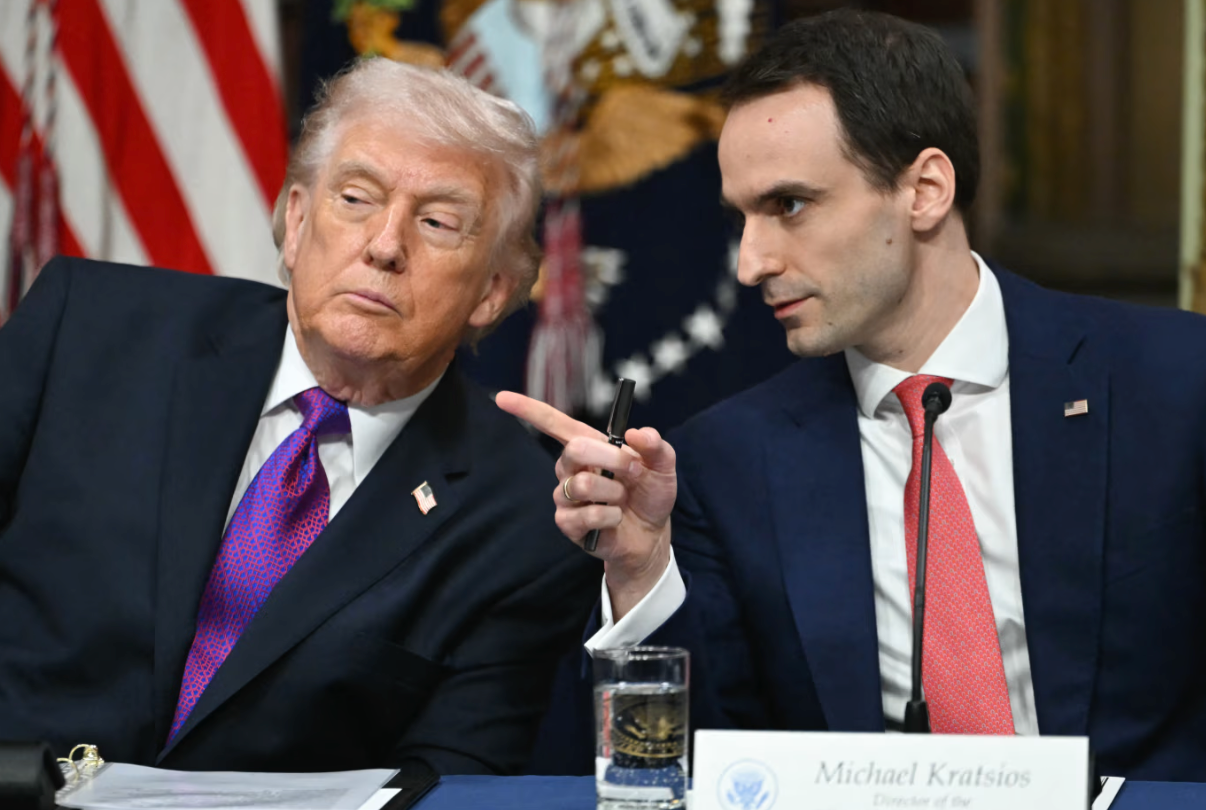
Trump and Kratsios
The White House Office of Science and Technology Policy (OSTP) said in a new report and memo released on Tuesday that individual scientists can help the United States use AI to conduct scientific research faster. These instructions issued by this office,It will affect the direction of the federal government’s annual scientific research and development budget allocation of approximately US$200 billion during the remainder of Trump’s second term..
The new guidelines could further hit large universities that rely on federal research funding. The White House stated in the report that the government hopes to prioritize supporting programs that provide opportunities for individuals rather than directly for universities, such as scholarships and various scientific research awards. Model programs that should be emulated include a prestigious National Science Foundation program for graduate students and a National Institutes of Health grant program for innovative scientists, the White House said.
Additionally, a proposed rule from the White House Office of Management and Budget could also hinder some colleges. The rules would give politically appointed officials greater authority in approving research funding and align research directions with government policy priorities.
“Over the past 20 or 30 years, we have become very rigid in funding scientific research, always believing that the same research should continue to be funded in the same way, in the same institutions.” Michael Kratsios, director of the White House Office of Science and Technology Policy, said in an interview. He said he met with the head of an Ivy League university on Tuesday about the new way to fund research and received a positive response.
The Trump administration believes that too much time spent on bureaucracy in government agencies and universities is another factor holding back the United States. Under the scheme, individual researchers at universities will receive funding directly, reducing the direct involvement of universities as an intermediary. Currently, in many cases, scientific research funds are usually allocated to universities, which then allocate them.
Another focus is to put AI at the heart of scientific research and set more ambitious national goals. For example, recent government goals include deploying a powerful quantum computer by 2028 and starting the construction of 10 new large-scale nuclear reactors by 2030 to increase power supply capabilities.
The U.S. government has tried to integrate the Department of Energy’s scientific expertise and supercomputers into a program called the Genesis Mission, which aims to use AI to solve research challenges by partnering with the private sector and researchers.
“Agencies should fund research that uses AI as a new tool for scientific discovery and not simply as an adjunct to enhance existing capabilities,” Kratsios and Office of the Budget Director Russ Russ wrote in a memo on research and development funding priorities.
Still, skeptics warn that AI models are prone to error and that too much emphasis on the technology could limit the type of research researchers can do.